All posts by Örn Óskarsson

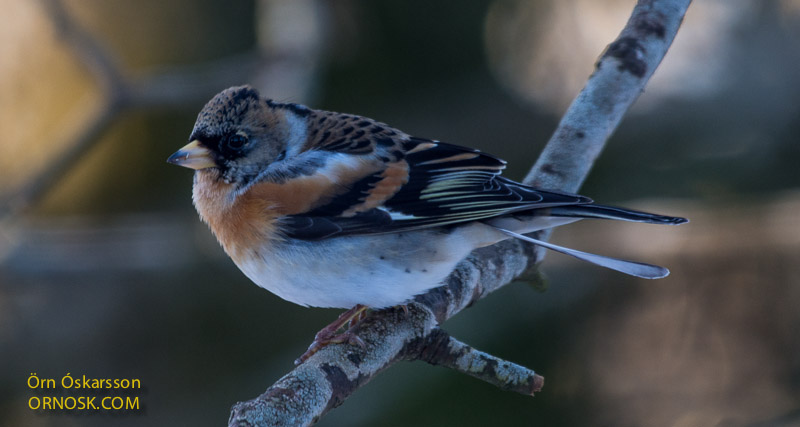
Male Brambling

Fjallafinka – Brambling – Fringilla montifringilla

A lone Brambling has been here in the garden all winter long. This male comes here daily and visits the feeding trays. He is very shy and not eager to be photographed. The males are different from the females, see: https://ornosk.com/2014/10/18/a-visitor-in-the-garden/
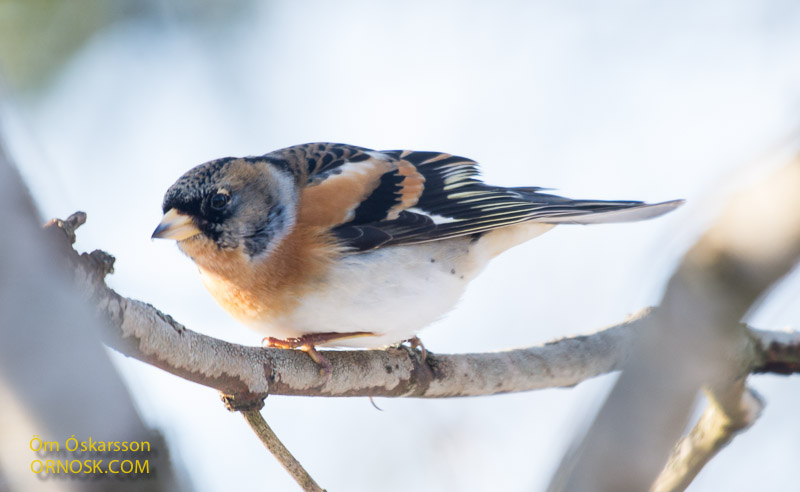
When this male Brambling turned up in the autumn he seemed familiar with surroundings so this could be the one that was spotted singing in and around Selfoss last summer.
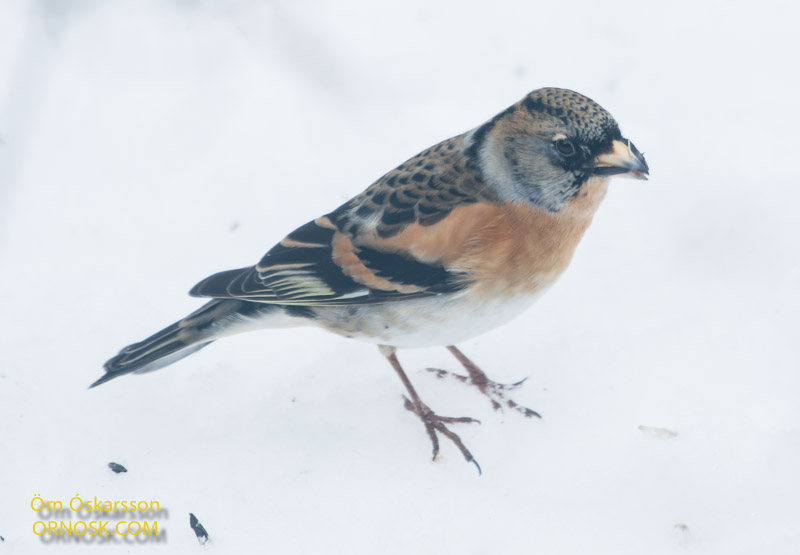
Bramblings are annual guests in Iceland. They come from Scandinavia but do not breed here regularly. Despite a difficult winter, with lots of snow and countless blizzards, this hardy bird has survived.
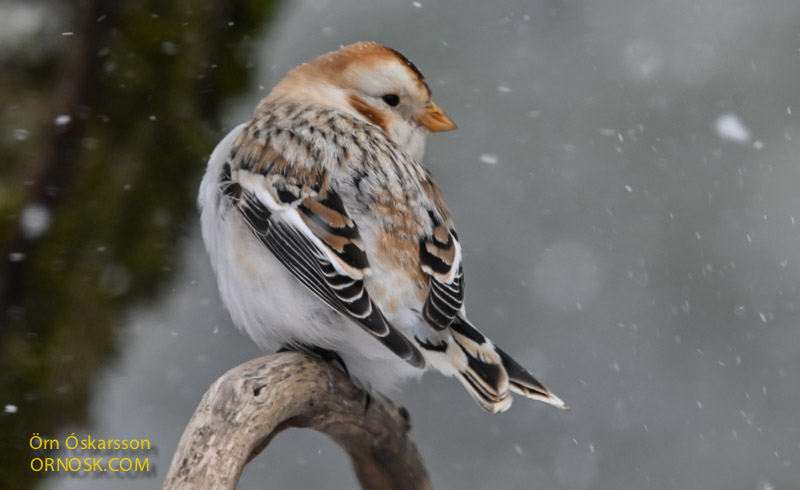
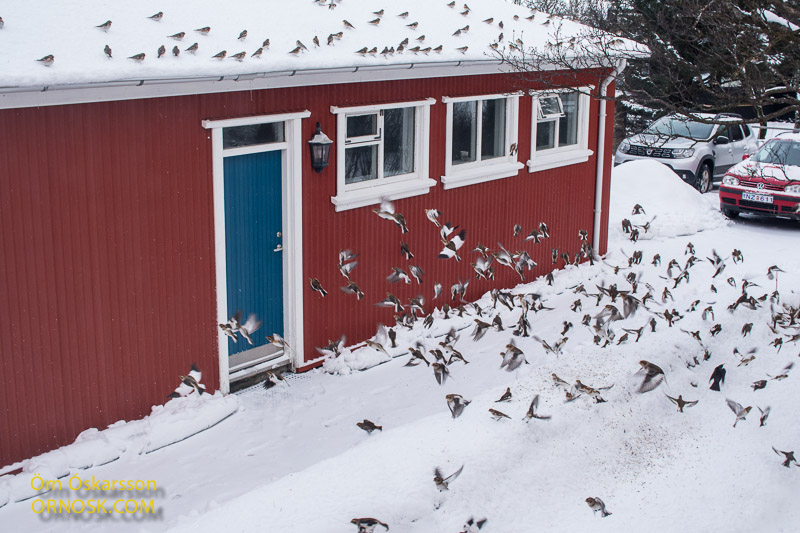
Sparkling snow flakes

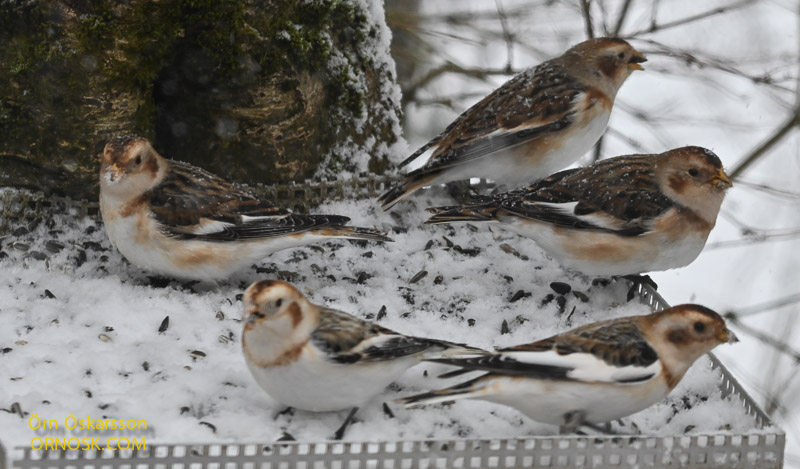
Snjótittlingur – Snow Bunting – Plectrophenax nivalis

Snow Buntings are like sparkling snow flakes and observing huge flocks of them in flight is a beautiful sight. They only appear in towns in the coldest of weathers when snow makes it impossible for them to find food.  Sometimes they can be counted in the hundreds.

For Icelanders the Snow Bunting, in Icelandic “snjótittlingur” (snjór=snow) is a winter bird. In the summer it is also a symbolic bird, representing the summer time.  Then it is referred to by a different name “Sólskríkja” (sól=sun). Its plumage changes with the seasons, see in summer time: https://ornosk.com/2017/07/28/a-good-year/

The Snow Bunting is a high Arctic bird that breeds as far as the northernmost regions of Greenland and Canada. It is common in Iceland where it lives the whole year round although in many countries it is a passerine. It used to be a very common breeding bird in the highlands but with rising temperatures the Icelandic stock is decreasing.

White-tailed Eagle near Selfoss

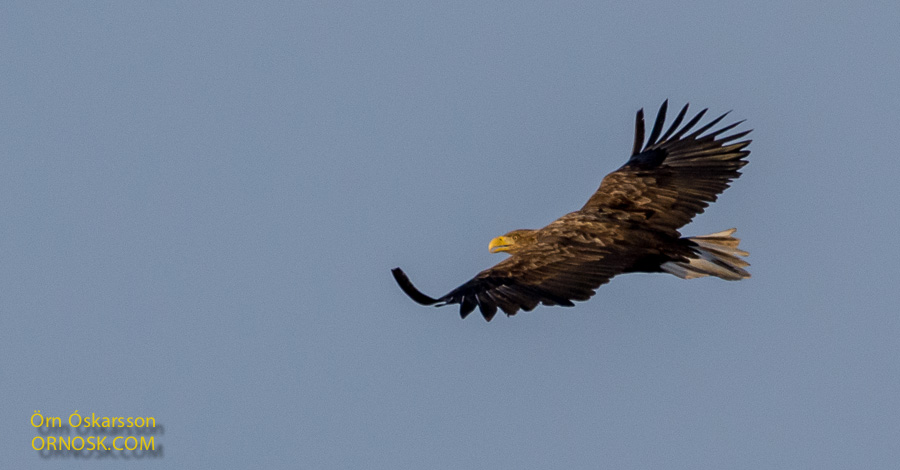
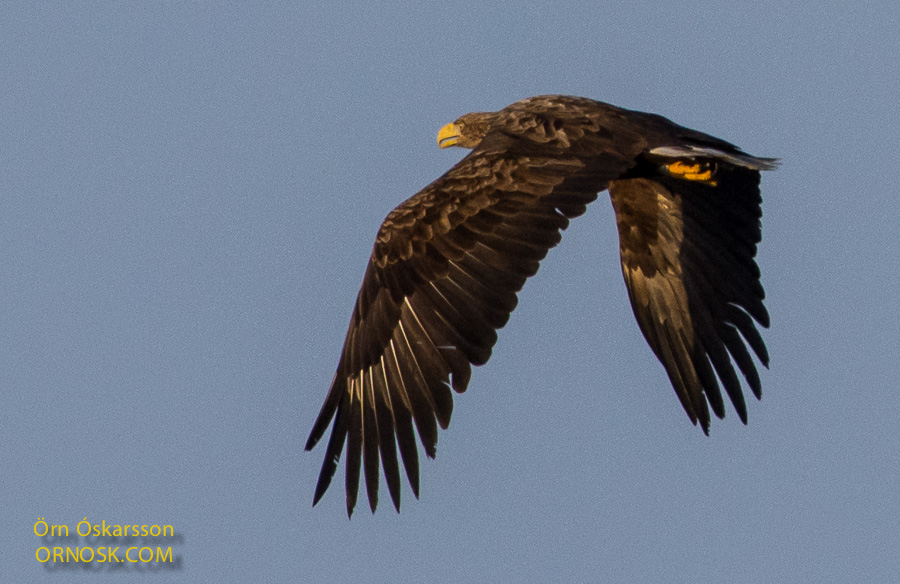
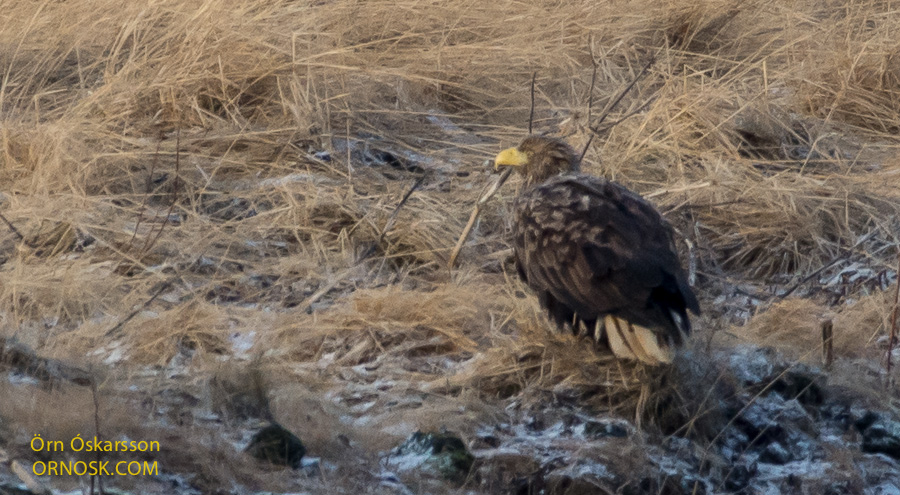
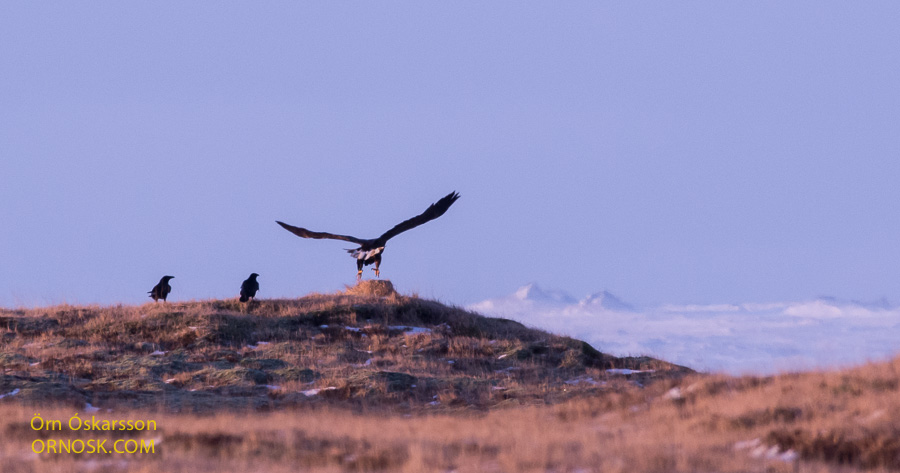
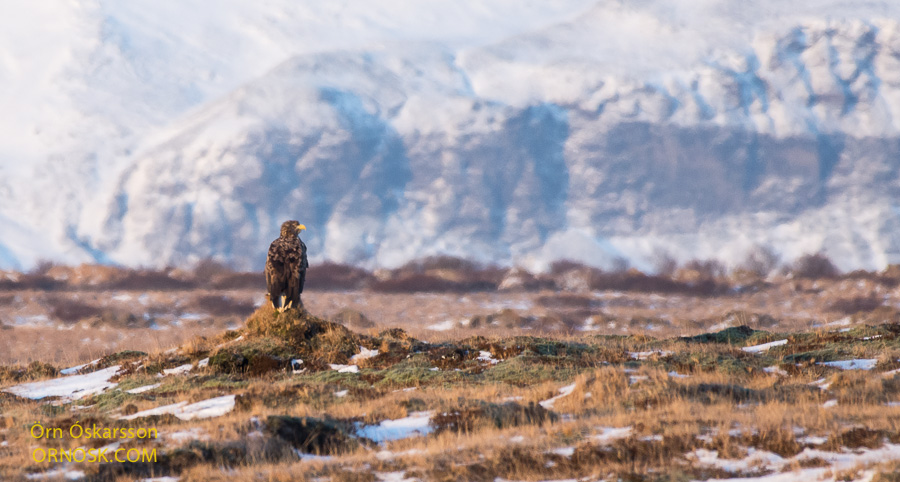
Haförn – White tailed Eagle – Haliaeetus albicilla

White-tailed Eagles are not so uncommon around Selfoss in winter although they breed in the Western part of Iceland. At this time of year they can sometimes be seen flying over the river in search of prey especially when it is cold and snowy.

River Ölfusá is the ideal winter habitat for ducks and geese because it never freezes over, thus making it also an ideal spot to visit for birds of prey such as White-tailed Eagles.

This adult White-tailed Eagle has been spotted several times in recents weeks in the area and I managed to catch these long distance photos on one of my trips.

The White-tailed Eagle’s main breeding territory is around Breiðafjörður Fjord in West Iceland.  In total around 75 pairs breed in Iceland and two thirds of the population in the area around Breiðafjörður.

Mother-of-pearl-clouds

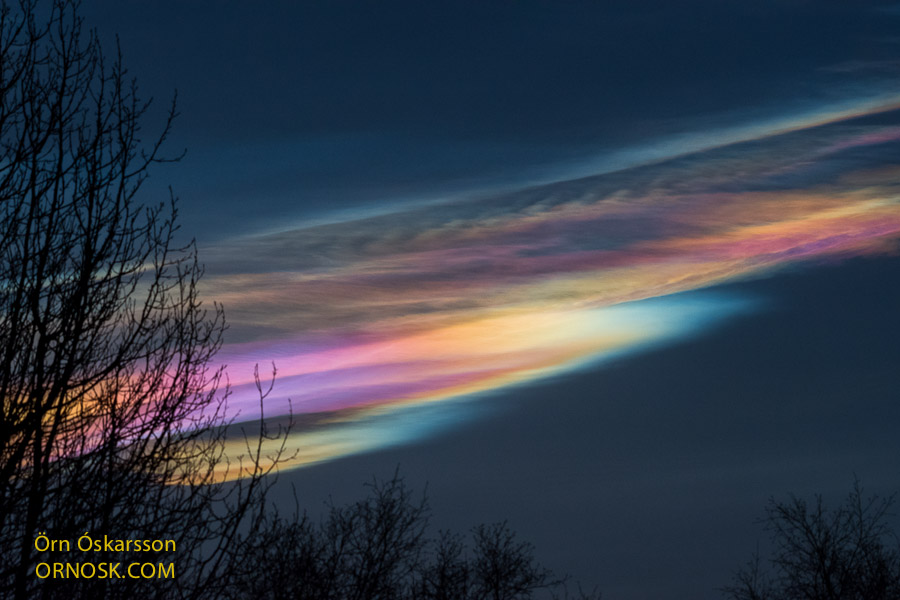
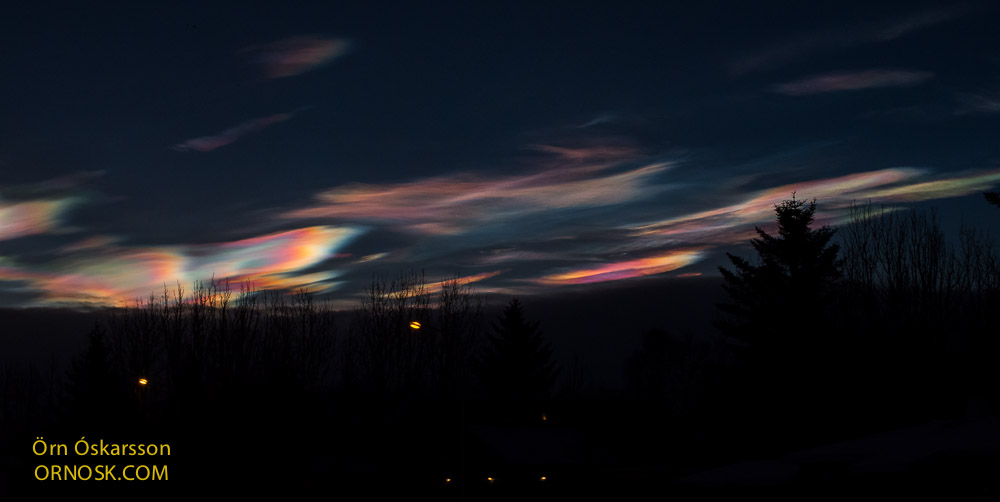
Glitský (perlumóðurský) – nacreous cloud

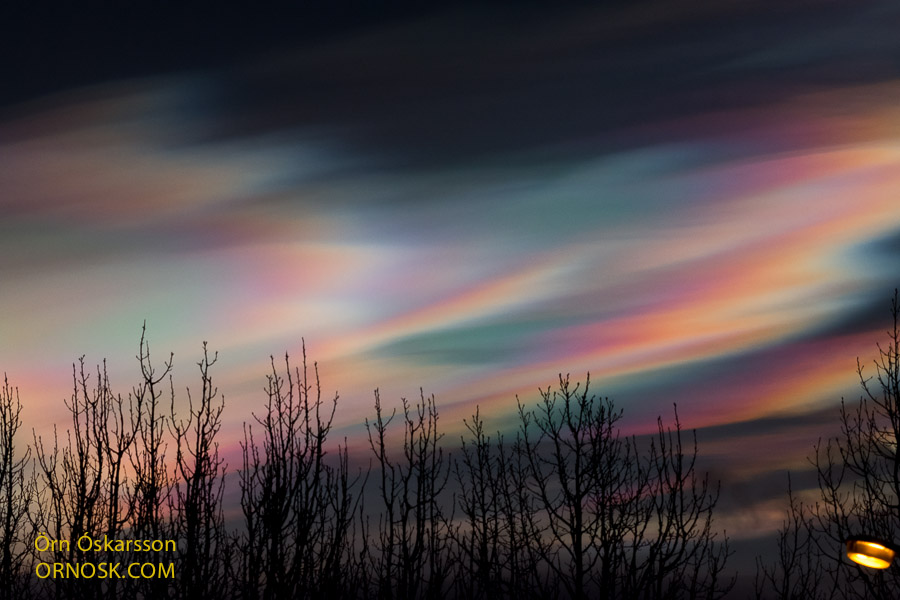
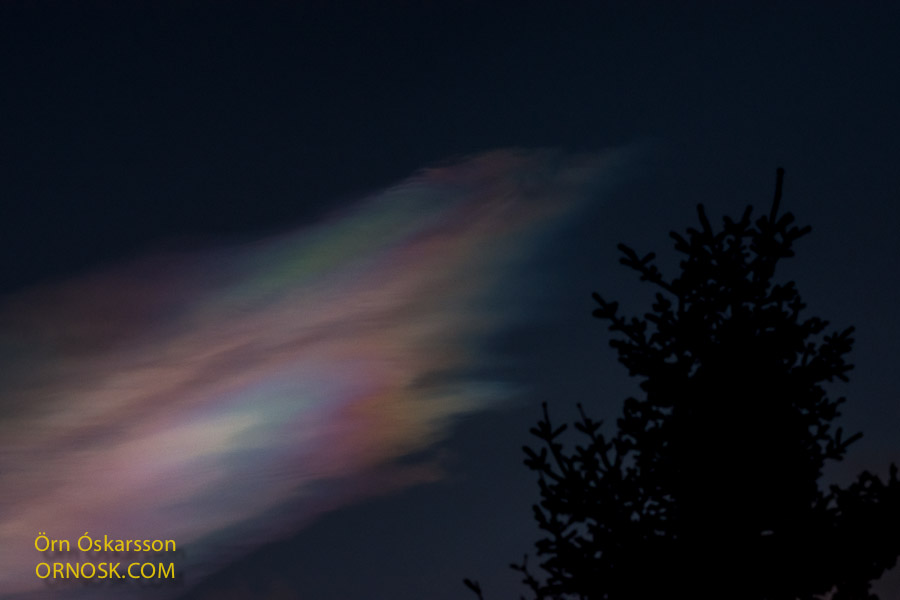
Mother-of-pearl-clouds have been seen in many places over Iceland in the last few days. These are magnificent manifestations that sometimes appear in Arctic regions from the end November to February. This only occurs in the twilight and can both be in the evening and morning.

This phenomenon appears when it is very cold in the stratosphere (in the altitude of 15–30 km) with temperatures below the ice frost point, near -80°, which turns all moisture in the air into ice crystals.

These luminous clouds are also referred to as Ice polar stratospheric clouds or Nacreous clouds. The photos are taken about one hour before sunrise, at about 10 o’clock, from our house in Selfoss, Iceland.

Gyrfalcon chasing ducks

Fálki – Gyrfalcon – Falco rusticolus

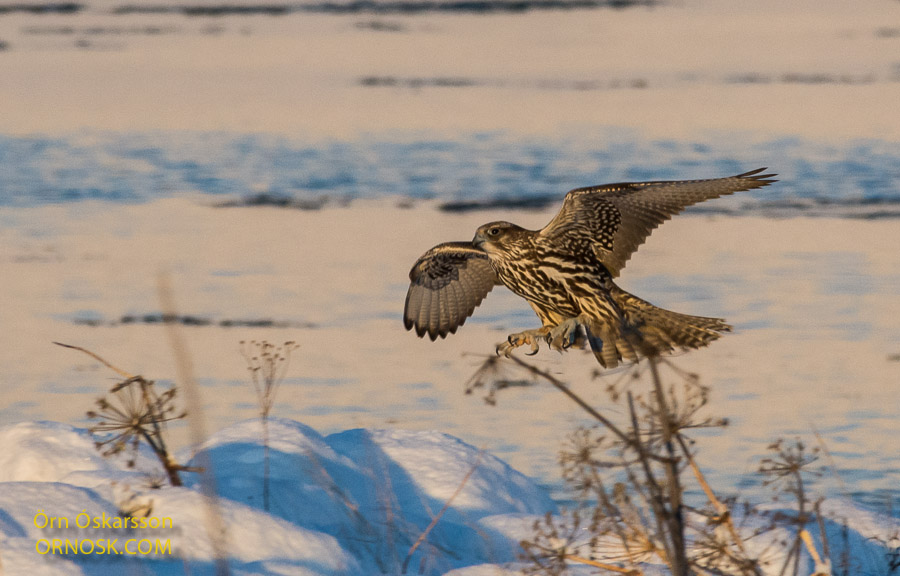
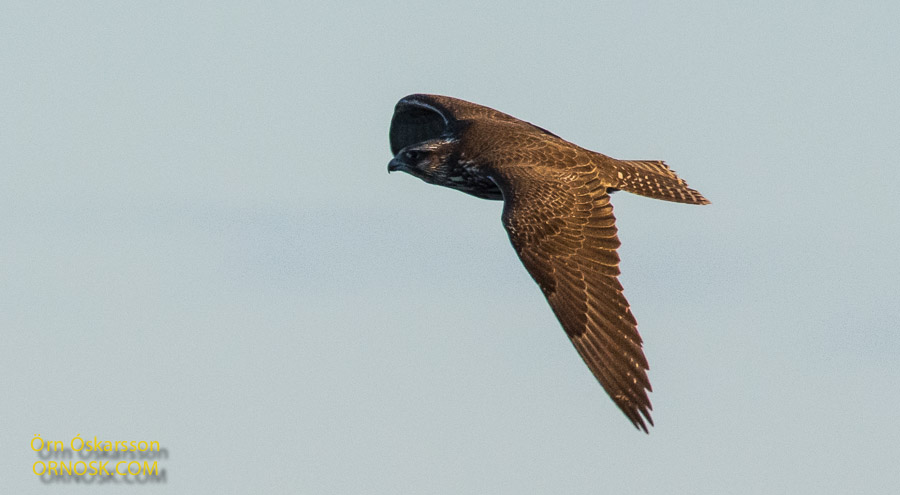
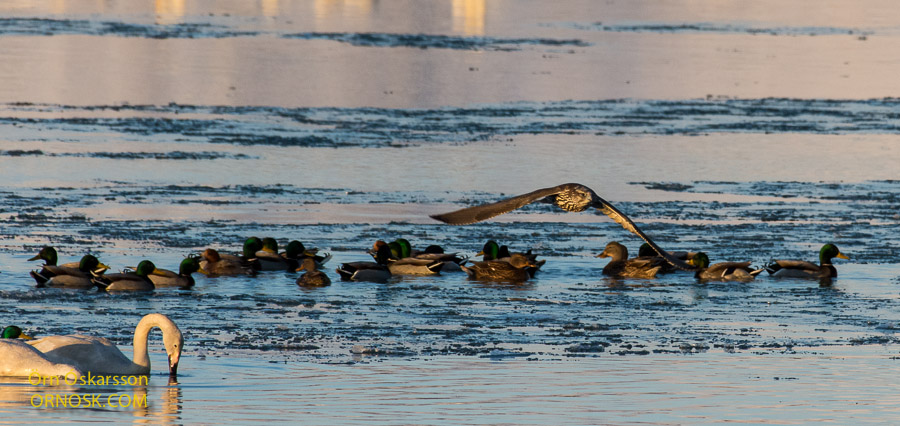
Gyrfalcons are out and about at this time of year in search of prey but they are annual guests here in the winter time.  At other times of the year they keep to their territories, most of them in the North. In the last two weeks an adult and a young bird have been spotted in the area. They fly over the river, chasing ducks and occasionally manage to succeed.

These predatory birds are always of interest and these photoes show the young Gyrfalcon. The ducks seemed to feel secure on the water although the falcon was in the air.


Christmas guests

Silkitoppa – Bohemian Waxwing – Bombycilla garrulus

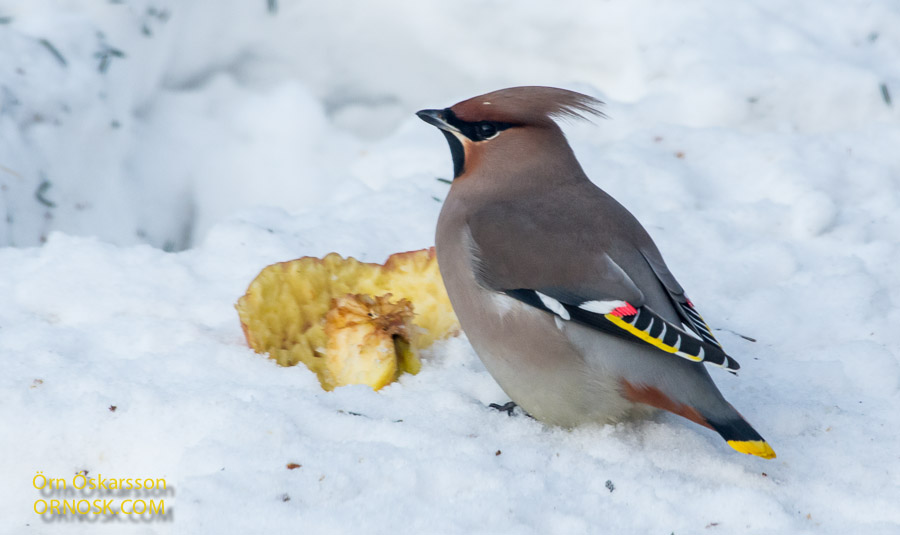
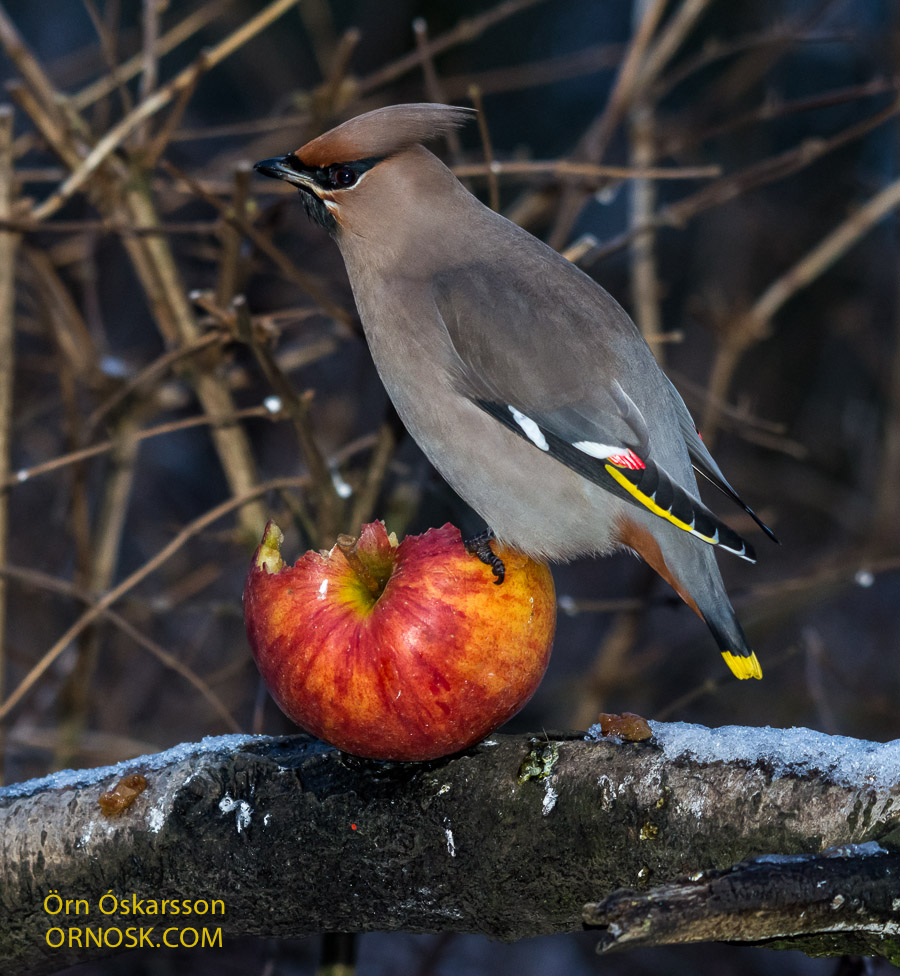
Not only did we have our precious family here for Christmas but also some very beautiful guests in the garden.  Two Bohemian Waxwings added to the festivities, as well as of course our usual Redpolls, Blackbirds, Redwings, Crossbills and Starlings. A lone Snow Bunting and a Brambling also enjoyed the Christmas feed we put out.

Merry Christmas and peace to everyone – in the hope that we can make our World a good place to live.

Two-barred Crossbill

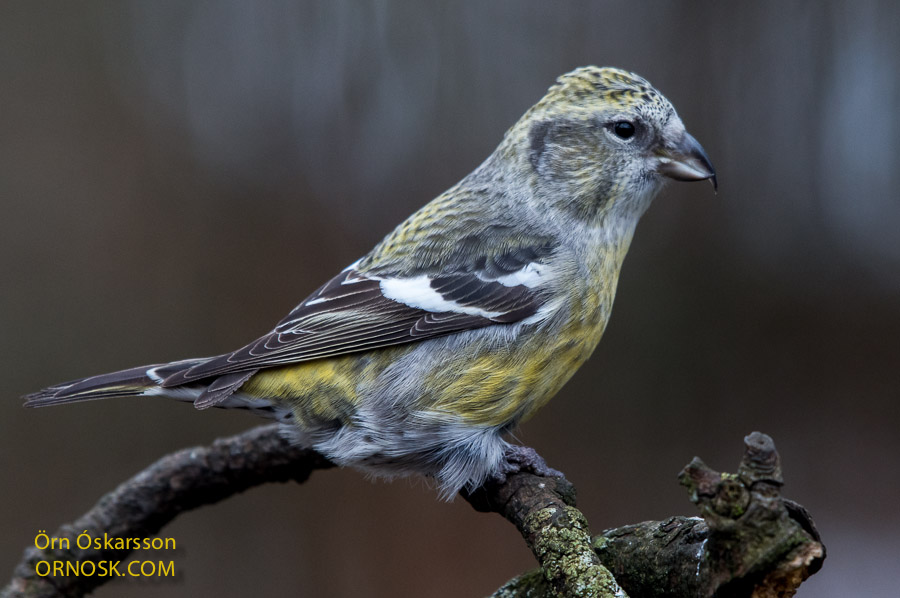
Víxlnefur – Two-barred Crossbill – Loxia leucoptera

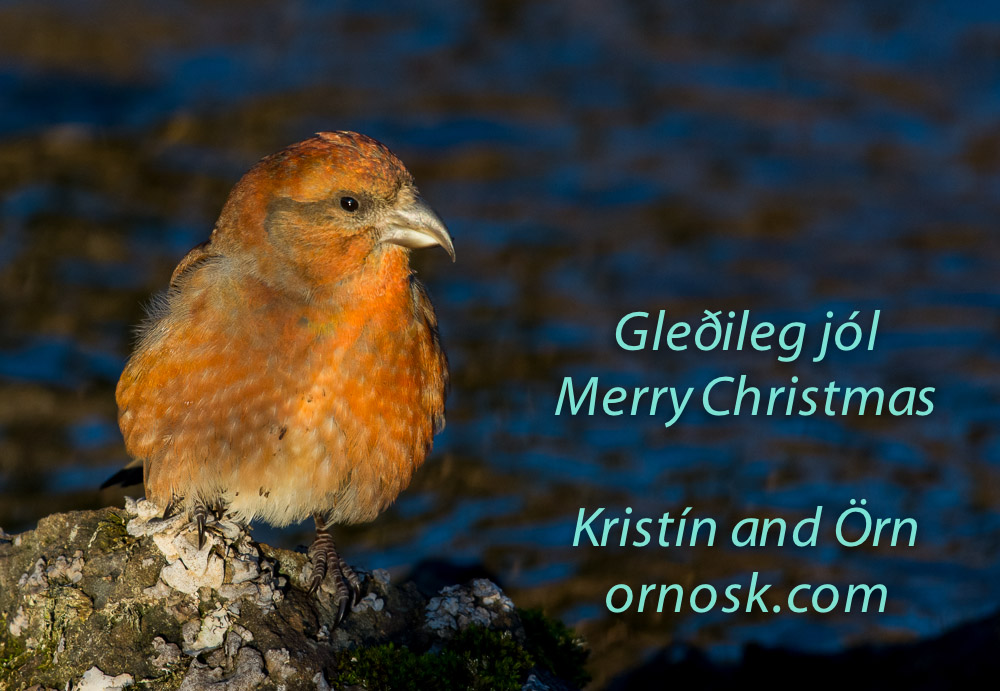
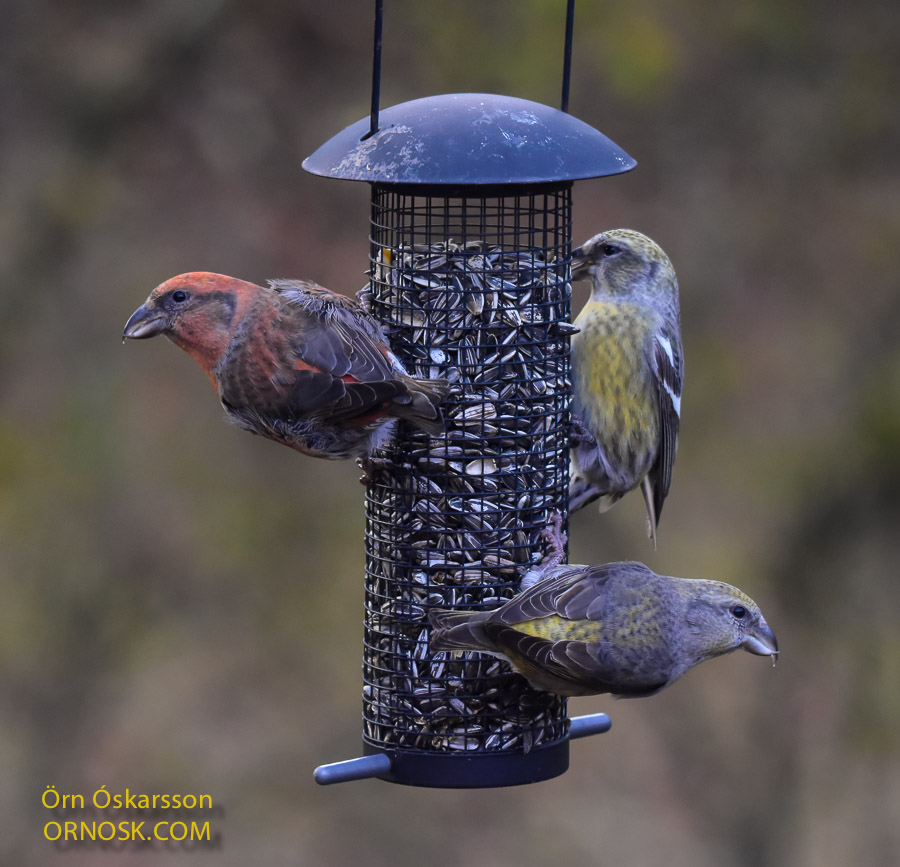
A female Two-barred Crossbill has been in outside our living room window now for about a week, much to our delight. This bird is a very rare vagrant in Iceland, making this all the more exciting. The first one of its kind was recorded in Iceland in the Eastfjords, Stöðvarfjörður, in 2009. This female Two-barred Crossbill appeared here in the company of Common Crossbills which have now all left the garden.

With Common Crossbills on the feeder

Speculation is ongoing whether this guest is American or Siberian. The call of the Two-barred Crossbill could give us the answer, but, as of yet, I have not been able to record it successfully. This bird is, however, most likely a guest from the East, i.e. Siberian, as groups of Siberian Two-barred Crossbills visited the country this summer. This is probably one of these summer guests that has decided to stay on.

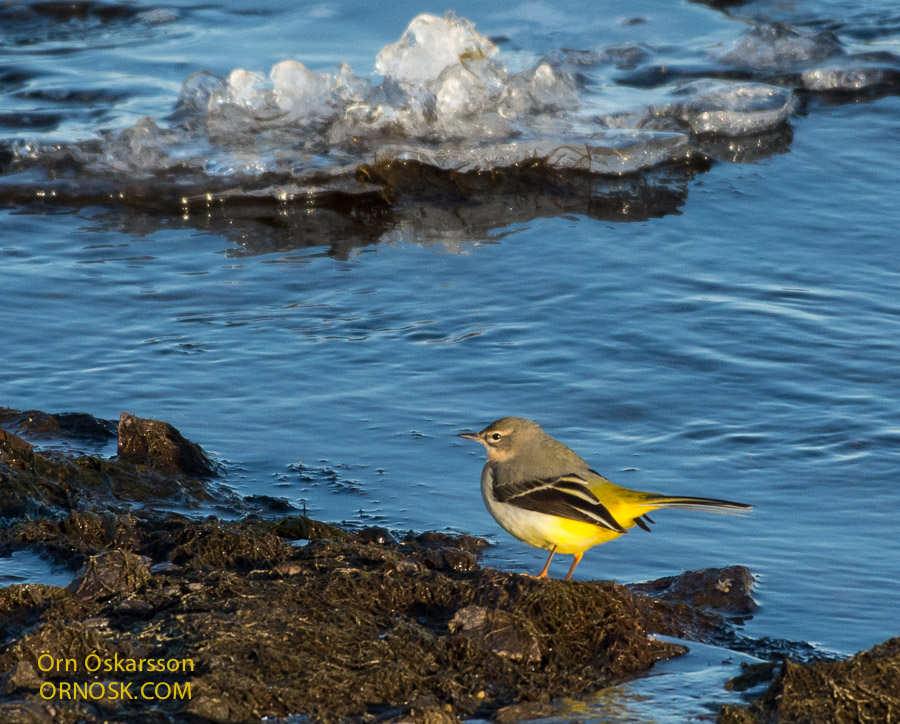
Grey Wagtail in Selfoss

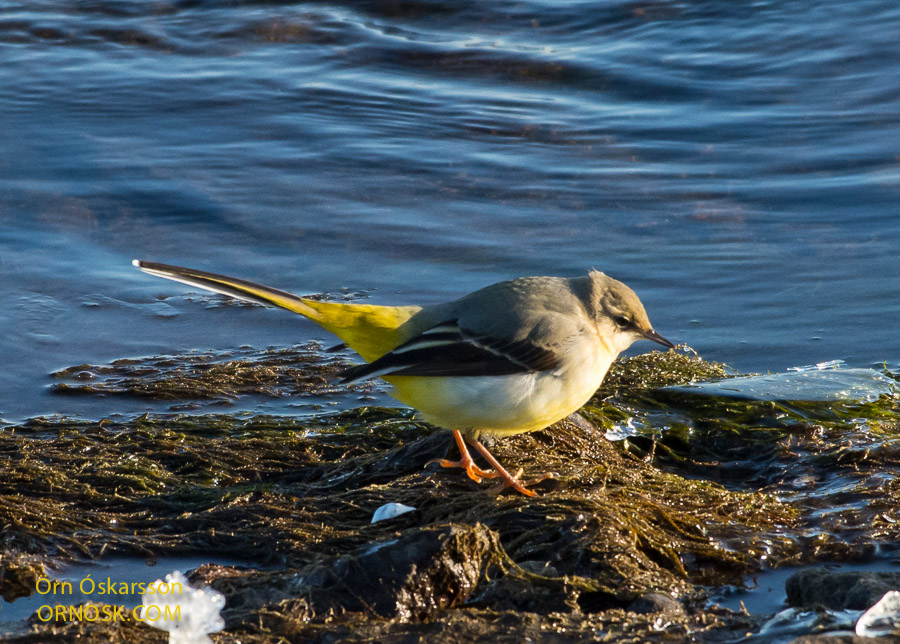
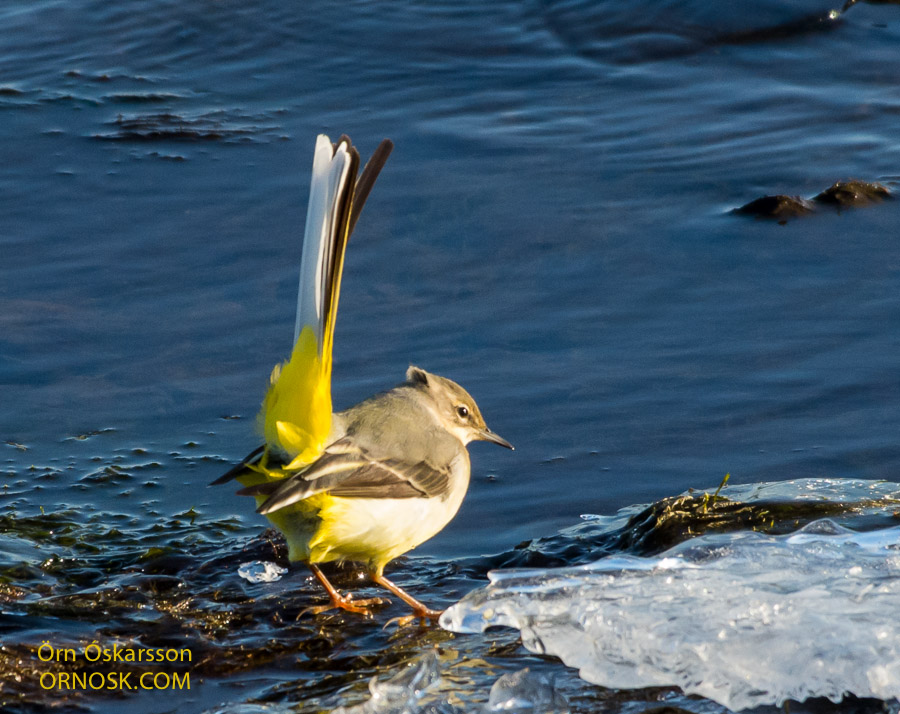
Straumerla – Grey Wagtail – Motacilla cinerea

The Grey Wagtail is an annual guest in Iceland. It is related to the White Wagtail and similar in size and shape, except the tail which is much longer.

They usually stay by streams or lakes and this bird was by River Ölfusá last week looking for and eating small animals from the moss by the riverbank.

This bird probably comes from Western Europe but different races of Grey Wagtails live farther south and east.

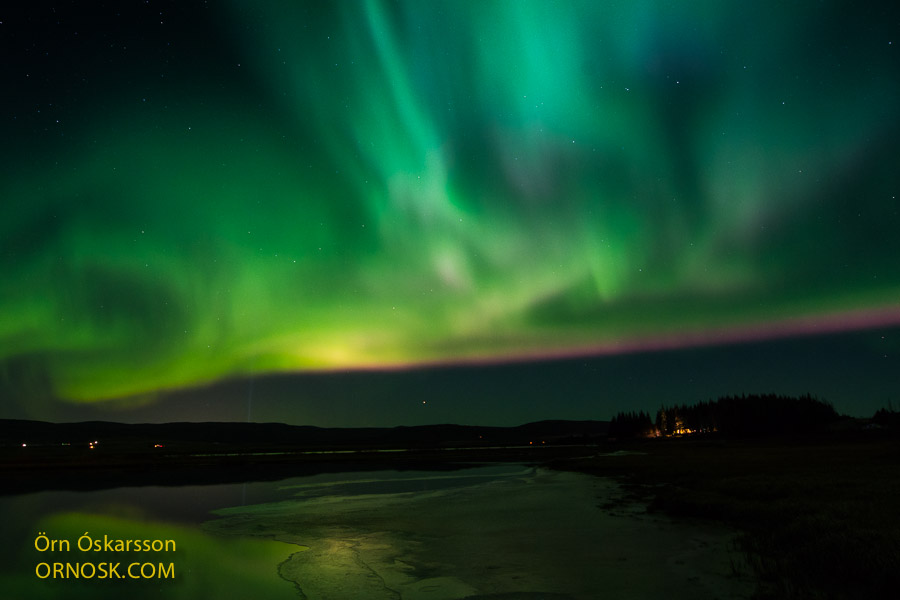
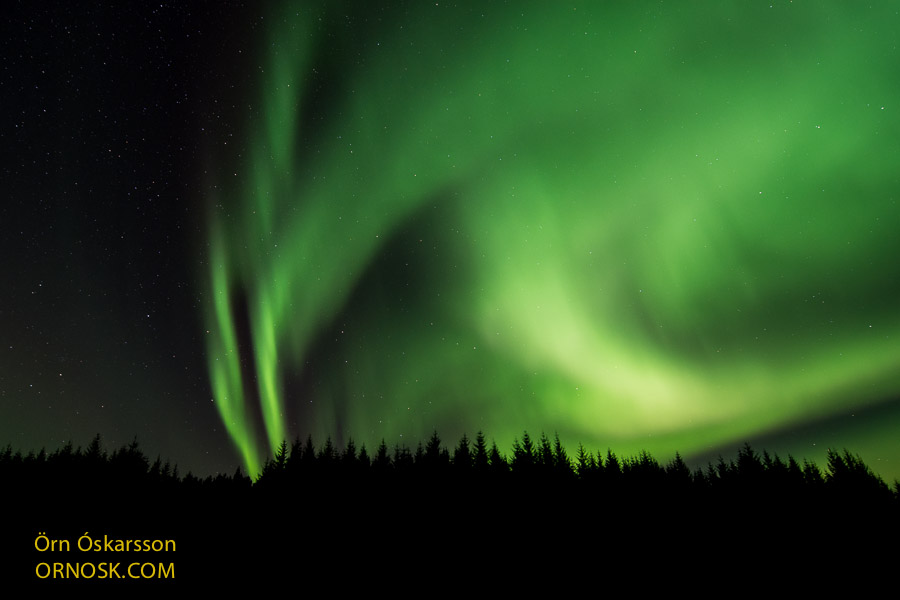
Low solar activitiy and Northern Lights

Norðurljós – Northern Lights – Aurora borealis

It’s Northern Light time and despite low solar activity they can still take your breath away. For a few days last week we had some Northern Lights albeit not the multi-coloured variety but beautiful all the same.

These pictures were taken around 8 – 10 o’clock in the evening in Grímsnes, South Iceland, temperature around 0° C.