Eider on Öflusá River

aedur-3
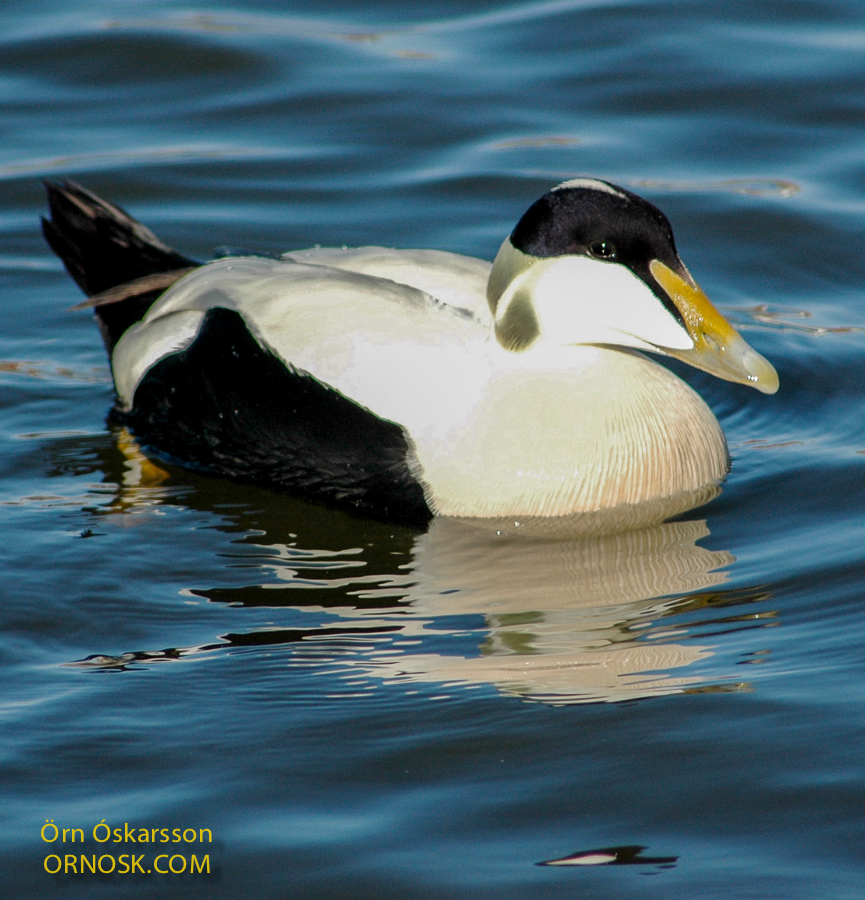
Æðarfugl – Eider – Somateria mollissima

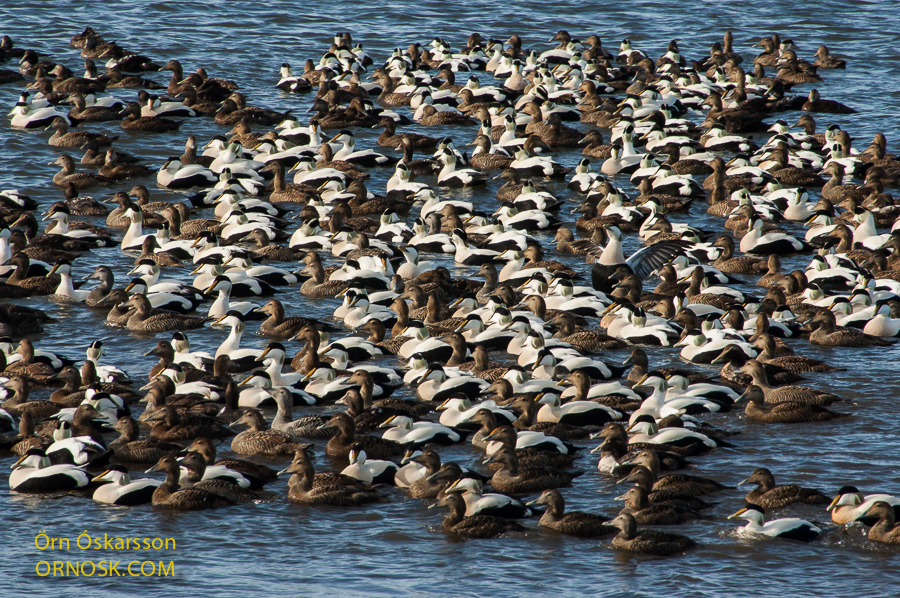
The first Eiders (Somateria mollissima) this spring were seen on Ölfusá River by Selfoss on April 4. The Eider usually keeps to the sea and breeds in dense colonies not far from the shore. It breeds by Öflusá River all the way up to Sog River which is the furthest from the sea that it breeds (20 km). The Eider is the most common duck in Iceland, the breeding population counting around 300,000 pairs. The male is black and white and the female is brown.

Eiders by the river mouth of Ölfusá River

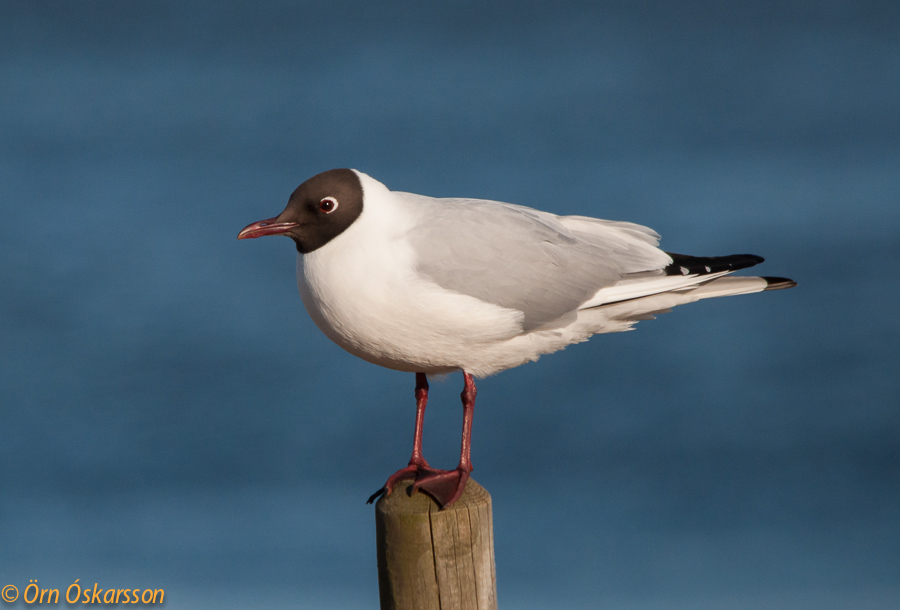
Black-headed Gull on the river

hettumafur
Hettumávur – Black-headed Gull – Chroicocephalus ridibundus

The Black-headed Gull is mostly a migratory bird in Iceland but some prefer to stay in the ocean around the country in winter time. It was first seen by the seaside some weeks ago but yesterday big flocks of them were seen in the south and south east part of the country. Yesterday we saw the first individuals flying up the river Ölfusá  by Selfoss.
It is estimated that there are around 25 – 30,000 breeding pairs in Iceland. The Black-headed Gull started breeding here around 1930.

Short-eared Owl feeling at home

brandugla-2
Brandugla – Short-eared Owl – Asio flammeus

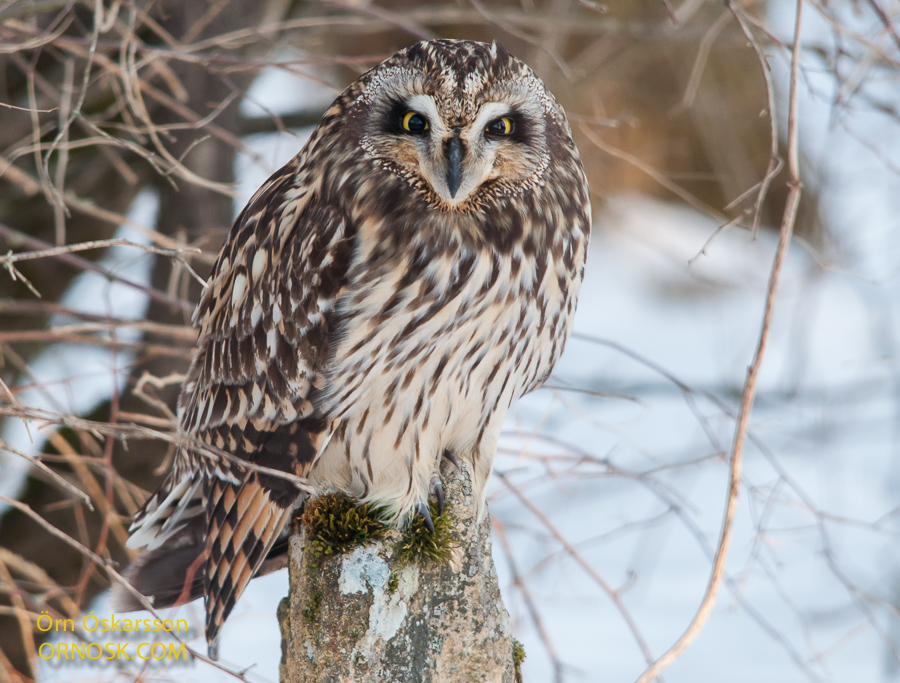
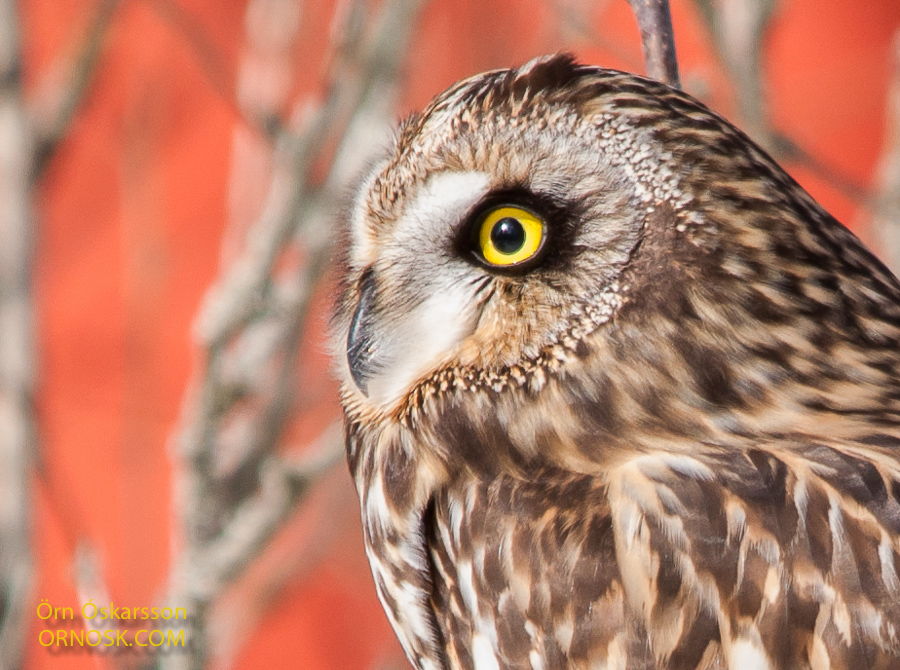
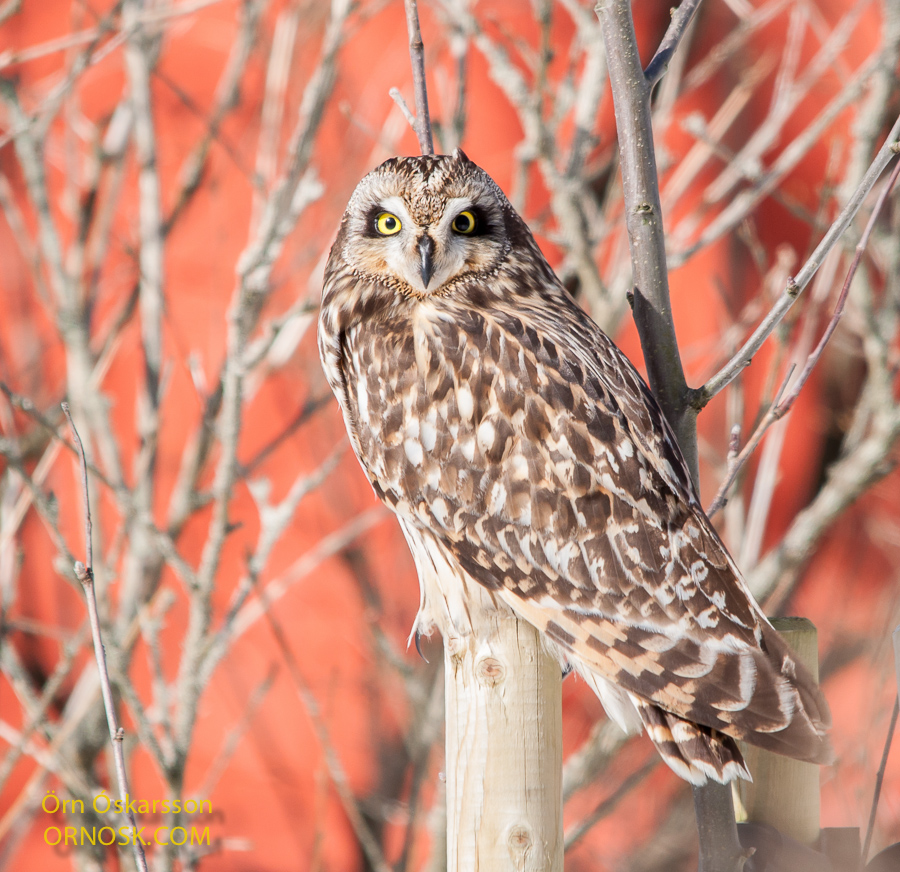
The Short-eared Owl that was here yesterday came and went several times during the day. It was obviously feeling quite at home and trying out different locations in the garden.

brandugla-3
Brandugla – Short-eared Owl – Asio flammeus

Someone said that the birds seemed to know that they would have their picture taken if they visited our garden. This Owl at least seemed quite keen on being photographed. Alas, it is probably not on-line to see how great it looks.

Surprise visit

A Short-eared Owl (Asio flammeus) surprised us with a visit this morning. We noticed it sitting relaxed on the ground for quite a while. The smaller birds were hopping around it giving it no notice and the Owl made no attempt to attack any of them.

brandugla
Brandugla – Short-eared Owl – Asio flammeus

A Short-eared Owl has been seen flying in Selfoss in the past few weeks and we saw it here in the garden one night around the middle of March. The photo was taken an hour ago in the garden when the Owl had flown and come back again.

Dyrhólaey – a cliff island

dyrholaey

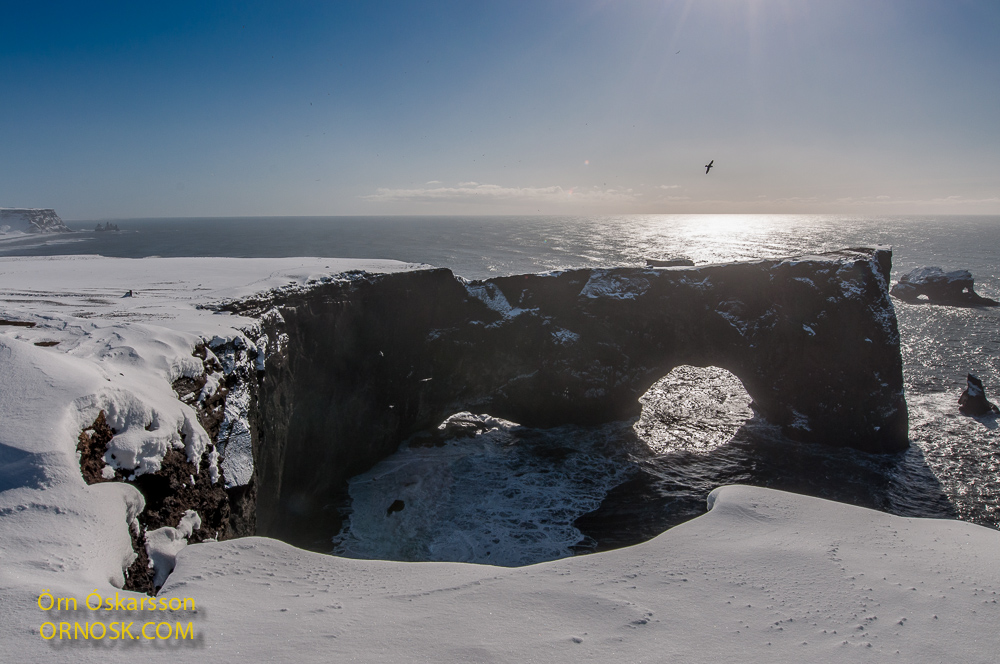
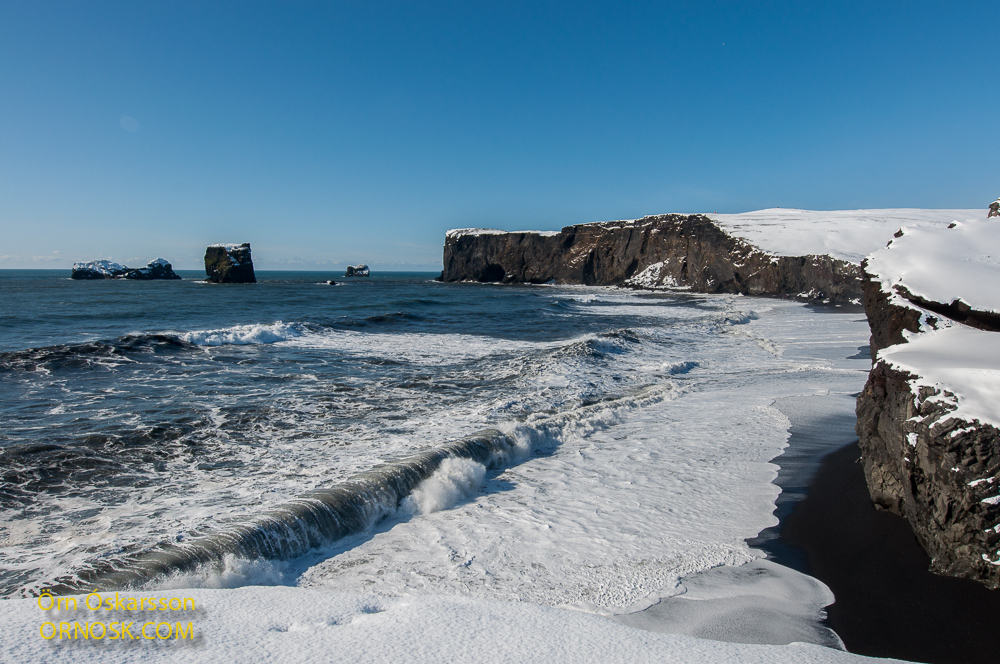
I had the day off from work and decided to make use of the beautiful weather. The clear blue skies and snow covered ground gave an excellent opportunity to have an outing after the dark and cold winter.
dyrholaos

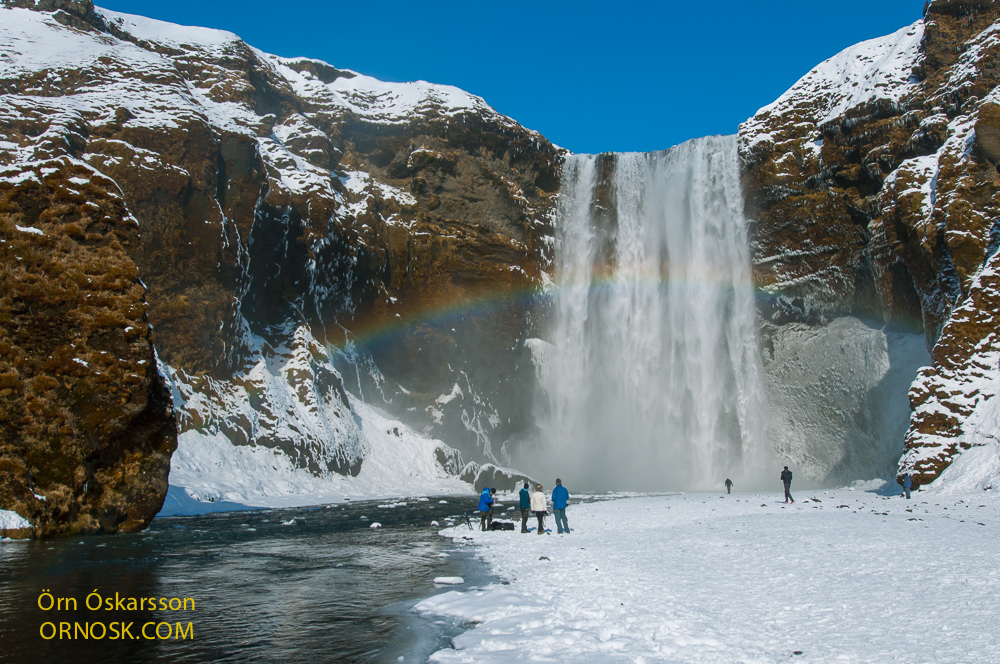
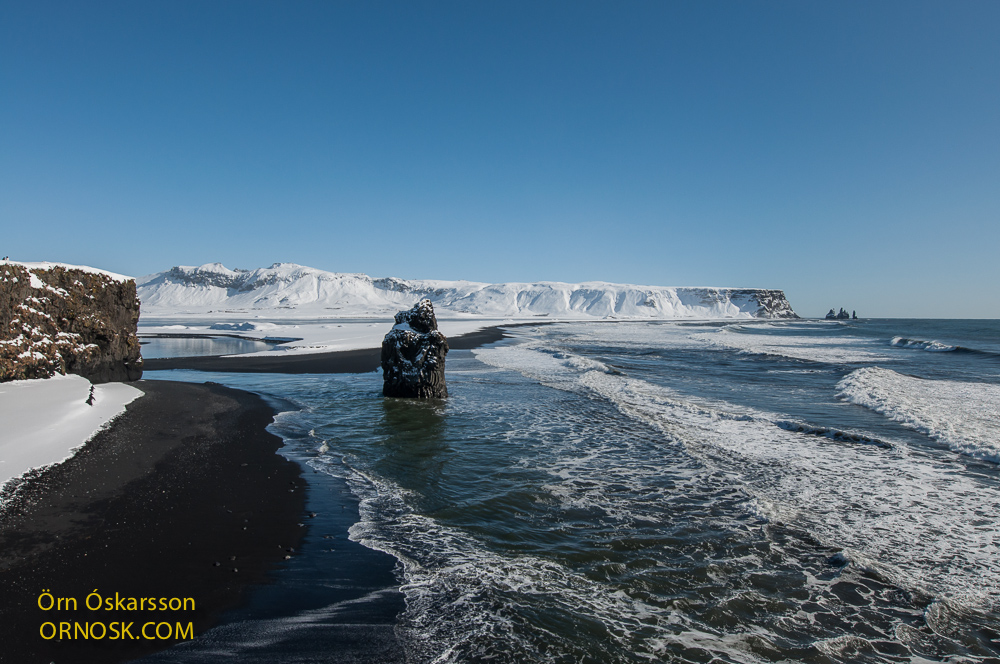
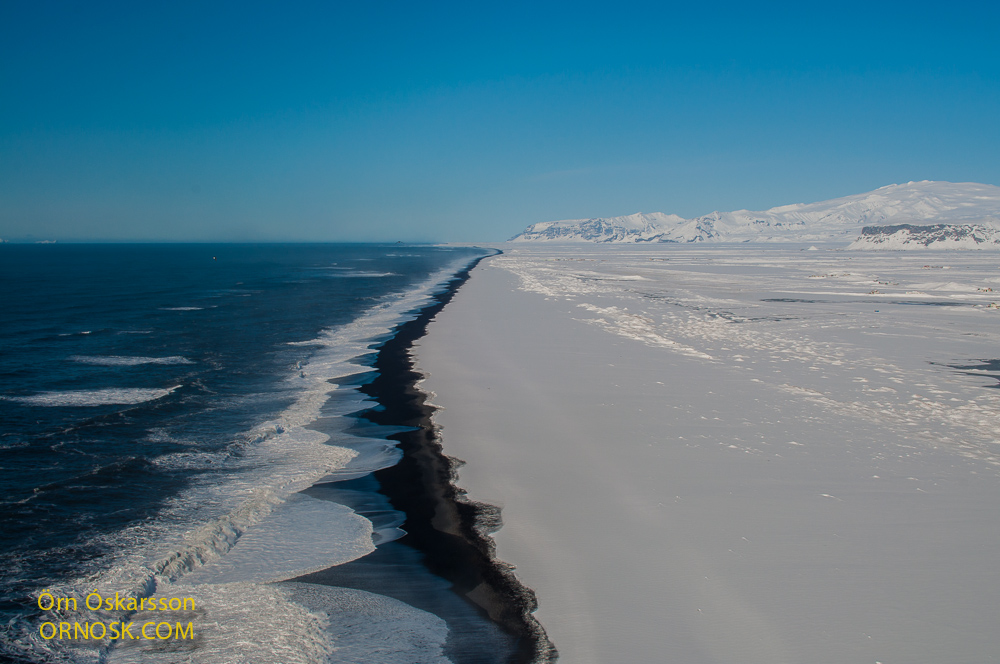
Here are a few photoes from yesterday taken in the South, in Dyrhólaey. You can see the Atlantic Ocean and Dyrhólaey, which is almost an island, jutting out to the sea. Now there is a road so you can drive there even when the tide is in. The view from this cliff island is magnificent and to the east you can see all the way to Reynisfjara and Reynisdrangar, out in the sea.
dyrholaey-2

The coastline seen from Dyrahólaey to the west.
dyrholaey-3

The waves reach the coast, view to Dyrahólaey.
More Robins than in recent years

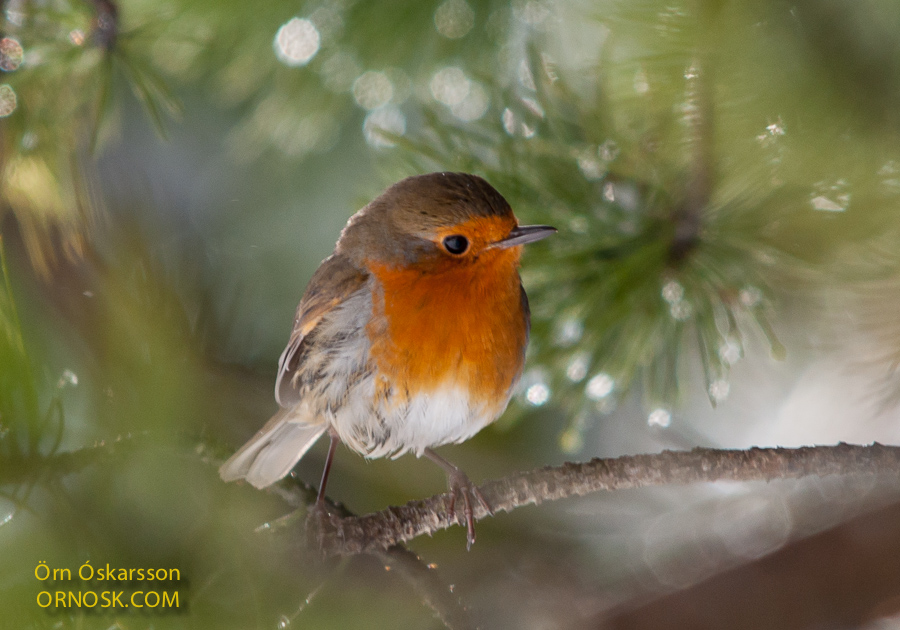
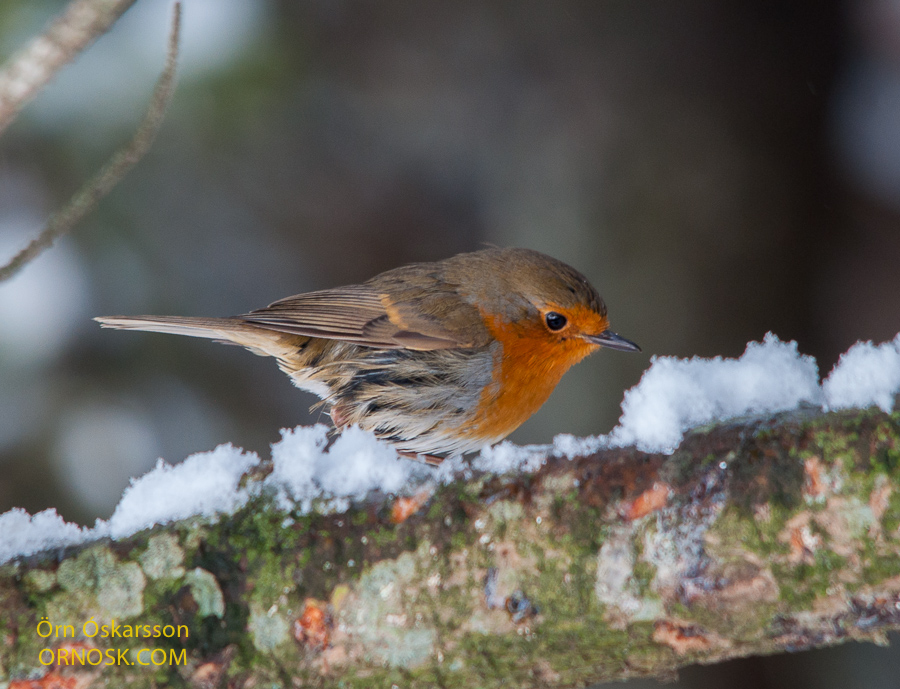
Yesterday we came across this European Robin (Erithacus rubecula) when we visited the family summerhouse. The snow was probably 30 cm deep and we just made it there. The Robin was not shy to come close to get to the feed. It was probably in dire need of food. Getting a good picture was not easy because of its rapid movements.

globrystingur-2
Glóbrystingur – European Robin – Erithacus rubecula

It seems that more Robins have been here this winter than in recent years. They are vagrants and probably annual visitors.

globrystingur

The Redwings are here

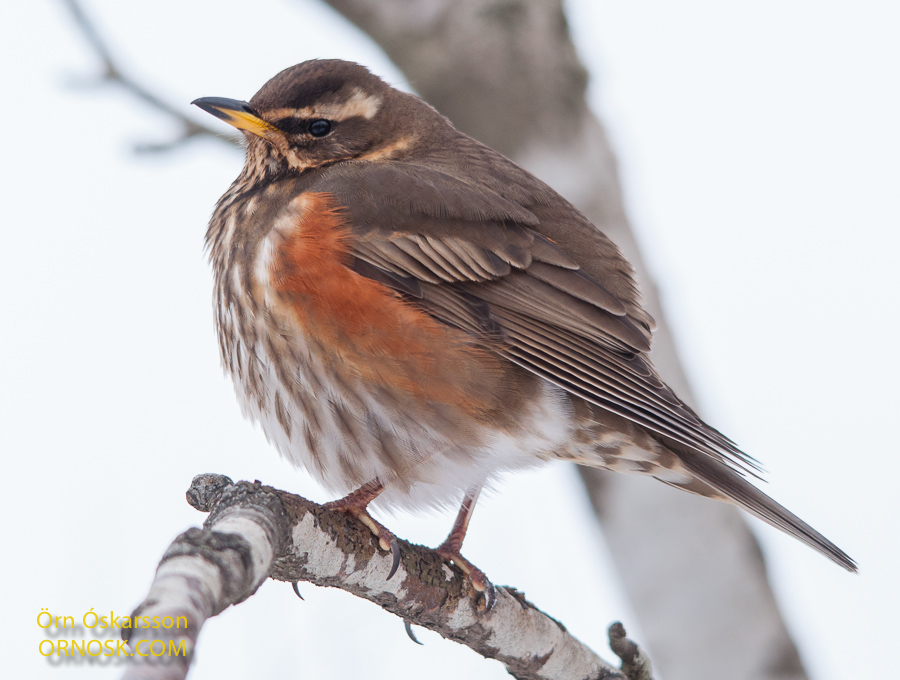
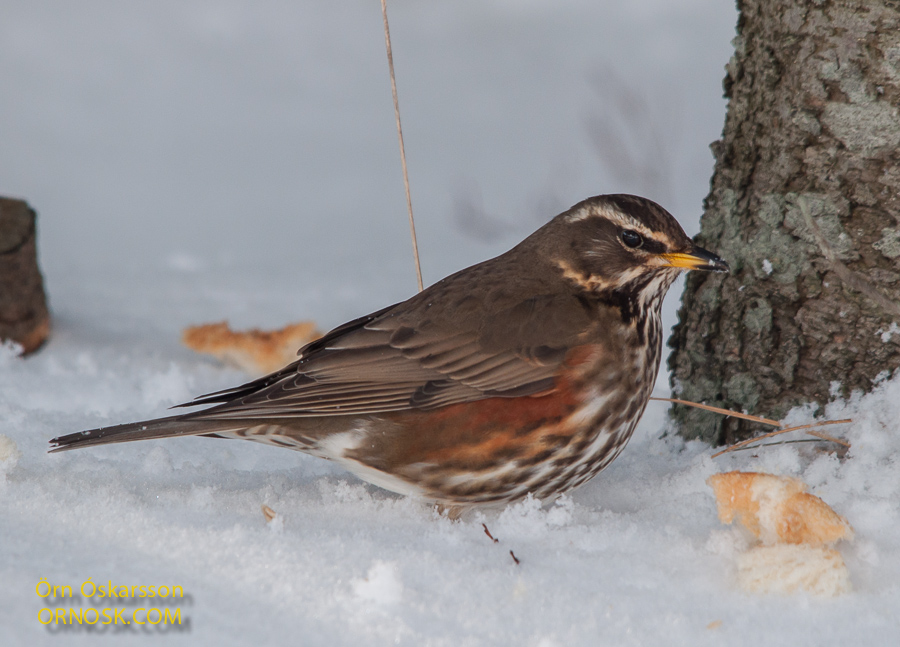
The first migratory Redwings (Turdus iliacus) were seen in gardens in Selfoss and groves in Grímsnes today. This afternoon ten Redwings were here in our garden, eating bread, apples and sunflower seeds. There are always some Redwings that stay in gardens during the winter time but the newly arrived birds can easily be recognised from the others. They are full of excitement, flying quickly from one garden to another in their search for food.

skogartrostur3
Skógarþröstur – Redwing – Turdus iliacus

Since snow covers everything these newly arrived birds have to depend on feed in gardens like the ones who stay here in the winter time.

skogartrostur4

Photoes from today.

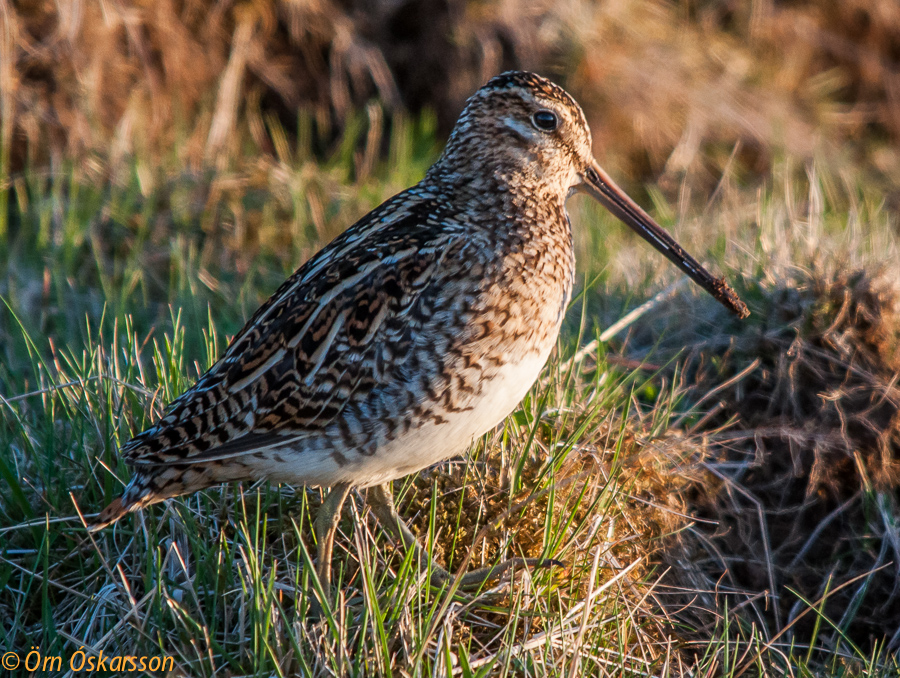
Common Snipe

The Common Snipe is a migratory bird in Iceland although a few stay behind and endure winter. These birds keep to warm springs and ditches. Early in April the migrators will be arriving in Iceland.

The Common Snipe is known for the special sound it makes on flight with its tail feathers.

hrossagaukur
Hrossagaukur – Common Snipe – Galinago gallinago

It lives in marshes, stream banks, bogs, wet meadows, and even the Arctic tundra, preferring lush vegetation for cover. The common snipe’s habitat ranges from North America, South America, Europe, Eurasia, and Africa.

The best place on Earth

More snow had fallen when we woke up this morning, as can be seen from these photoes. At 4 we woke up to a thick blizzard, something that belongs to the middle of winter. But here we are and we wouldn’t want to be anywhere else.

snjor-3

Örn went out around 8 to clear the snow so as to be able to feed the birds. He offered them some seeds from the palm of his hand but they were probably not cold enough to be tempted.

snjor

It will probably be a terrific day to play outside, make a snowman or snow house, or even go skiing if the wind stays calm. For us it is time to make coffee and admire the view over the snowy river from our kitchen window.  Would be nice to have some birders here to share some birding gossip and a nice cup of coffeee. – Hope you have a terrific day and that you too feel that where you are is also the best place on Earth 🙂

snjor-2

Enjoy nature with us