All posts by Kristin

Ornosk photoes

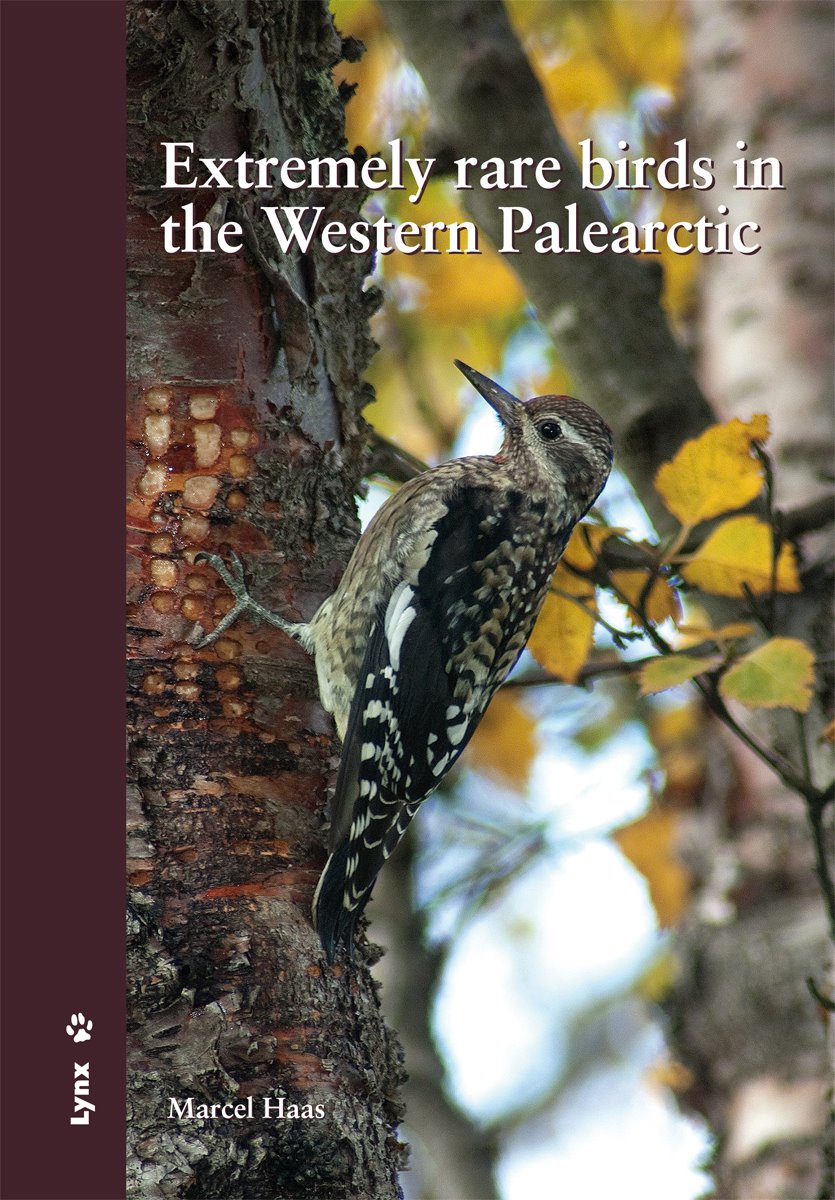
Extremely Rare Birds in the Western Palearctic, 2012
Extremely Rare Birds in the Western Palearctic, by Marcel Haas, 2012

The cover photo of this book is by Örn Óskarsson/ORNOSK. This is the Yellow-Bellied Sapsuckers which has only been spotted twice in Iceland. Photo taken in  Selfoss, see blog.

The book is for sale on Amazon.com
This book describes in detail the 155 species of extremely rare birds that have occurred in Europe, North Africa and the Middle East. All species that have occurred less than 10 times have been included. The records are listed with full details and references to books and articles, and include a photograph of the actual individual, if available. Some of these images are published in this book for the first time. The book on Amazon.com

The Secrets of Backyard Bird-Feeding Success, 2011 by Deborah L. Martin

 There is a photo in this book by Örn Óskarsson /ORNOSK. It’s page 206, Common Crossbill/Red Crossbill.

The book is for sale on Amazon.com
Discover the joys of attracting winged wonders to your backyard. From seeds and suet to the best bird-attracting plants and other bird-friendly fare, you’ll find easy, practical, and low-cost ways to entice birds into stopping by regularly. You’ll learn the best tips and secrets from experienced birders, experts, and longtime backyard bird-feeders to welcome birds to every part of your yard and garden. The book on Amazon.com

Nature plays its tricks

rjupa
Rjúpa – Ptarmigan – Lagopus mutus

The Ptarmigan changes its colour to white in the winter. Nature is peculiar. The male stays whiter longer but the female gets its camouflage colours earlier to match the colours of nature. The female needs to go unnoticed while keeping the eggs warm in the nest. The male is white and thus catches the attention of predators, keeping them away from the nest.

This photo is taken in the Icelandic Westfjords in the beginning June, 2012.

Inland Seabird

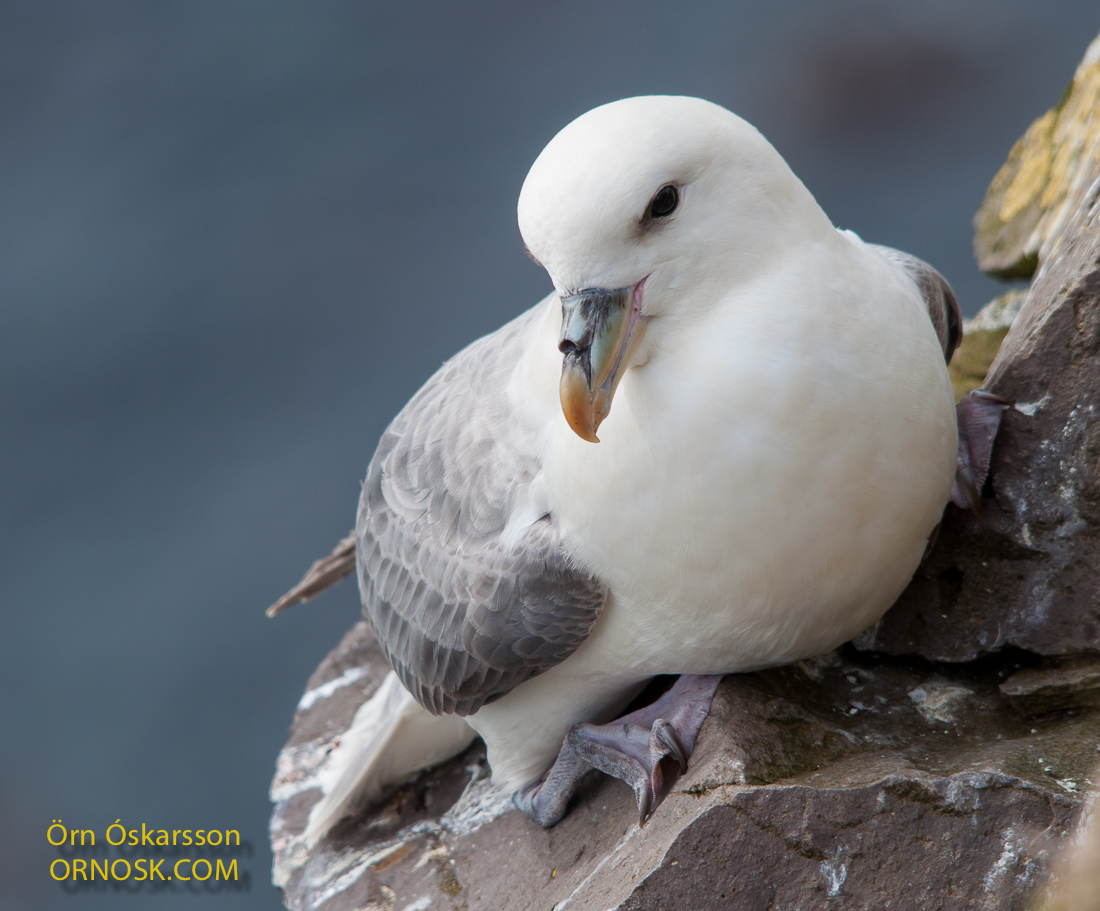
The Northern Fulmar’s first known breeding in Icelandic territory was in Grimsey, an island north of Iceland, in the beginning of the 19th century. Since then they have spread over the whole country, first in ocean cliffs and now they have started breeding in mountains and cliffs, even 70 km inland.  Despite this they get all their food in the ocean.

fyll
Fýll – Northern Fulmar – Fulmarus glacialis

They look for breeding places as early as February and start laying eggs in March. To protect their eggs and chicks they throw up foul smelling bile.

This photo is taken in Látrabjarg, Westfjords, Iceland, 2011.

Great Northern Diver / Common Loon

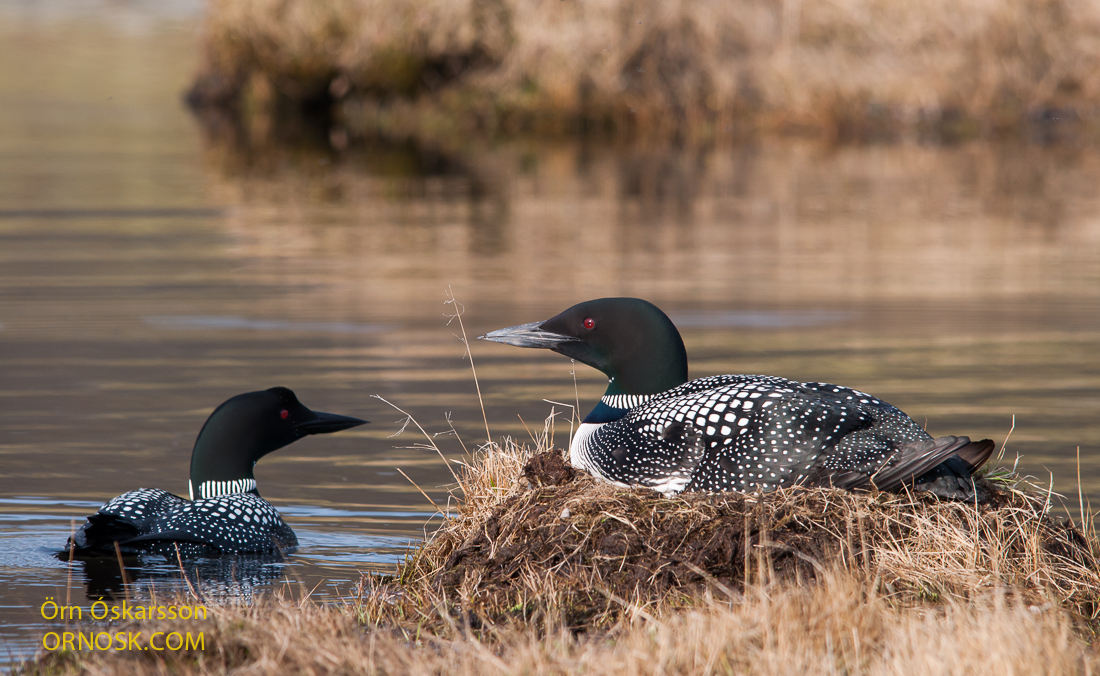
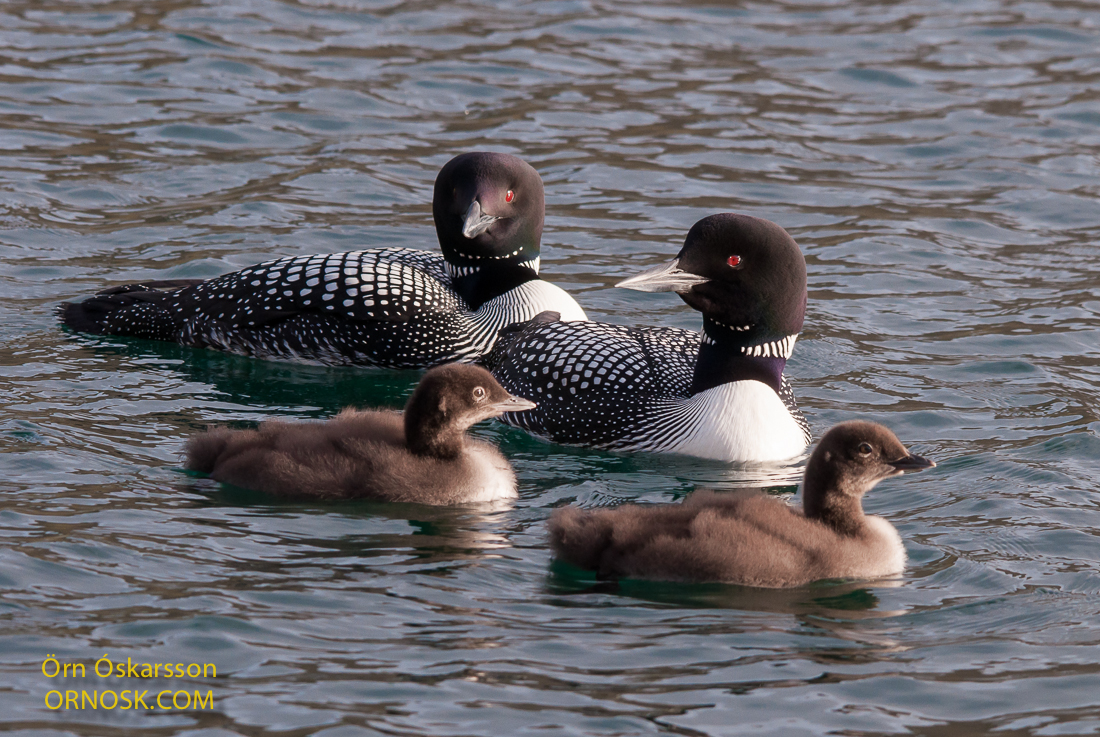
The Great Northern Diver is a characteristic bird on Icelandic mountain lakes.  You can hear its a special laughing call on the lakes and in flight its wailing calls resound in rocks and craters, creating an unforgettable atmosphere, memories of quiet summer nights. In USA it is called the Common Loon but in UK it is called the Great Northern Diver.

himbrimi-4
Great Northern Diver / Common Loon

The Great Northern Diver chooses its nesting place on islands or islets or else by the banks of the lakes. The nests are most often in moss or grass but sometimes on sandy lakeshores. The nests are usually about 1 – 2 meters from the water level. The eggs are usually two.

himbrimi-3
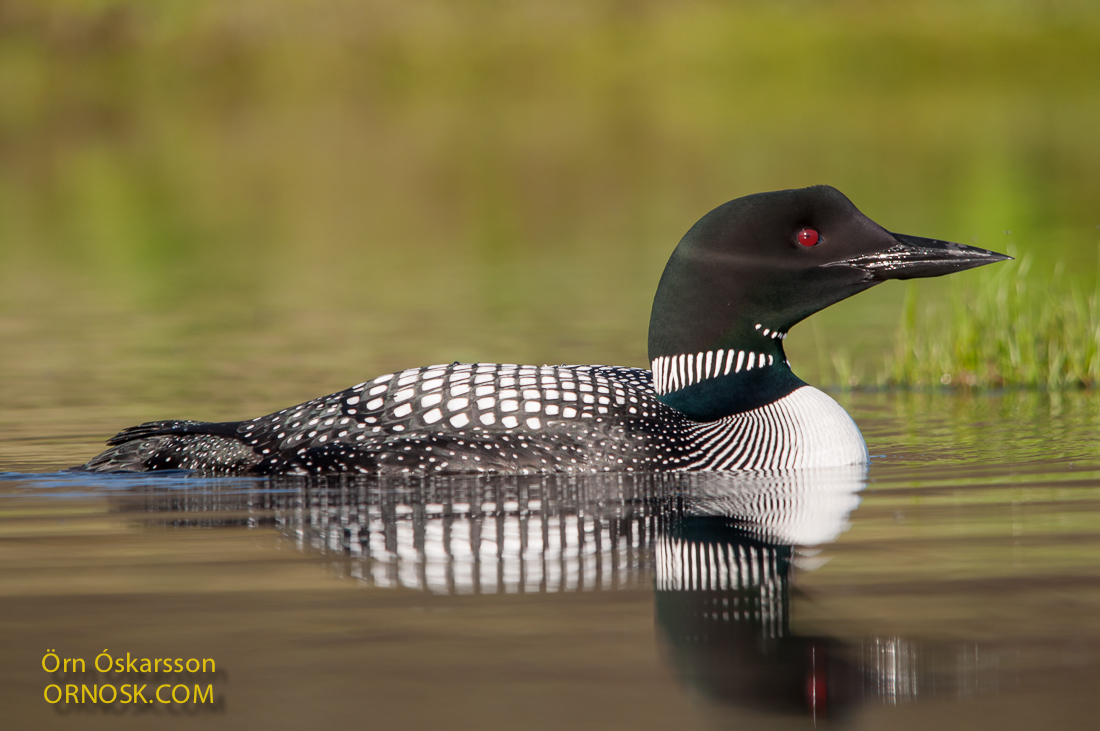
Himbrimi – Great Northern Diver / Common Loon – Gavia immer

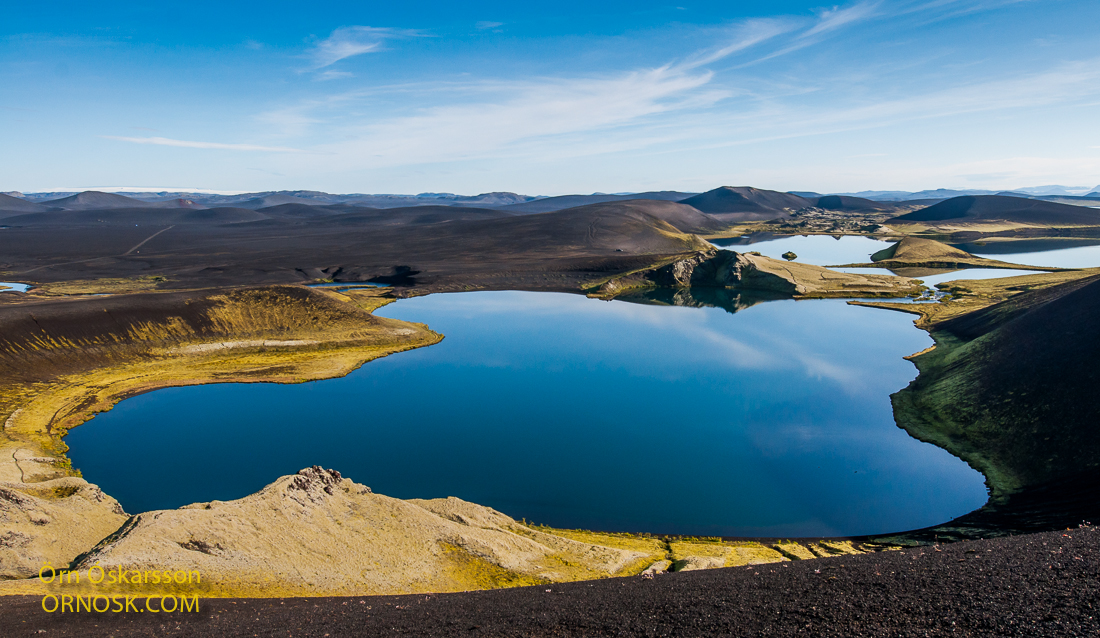
Big clear mountain lakes full of fish are the Great Northern Divers favourite nesting place. Their main food source is trout. There is usually just one pair on each lake unless the lake is very big.

himbrimi-2
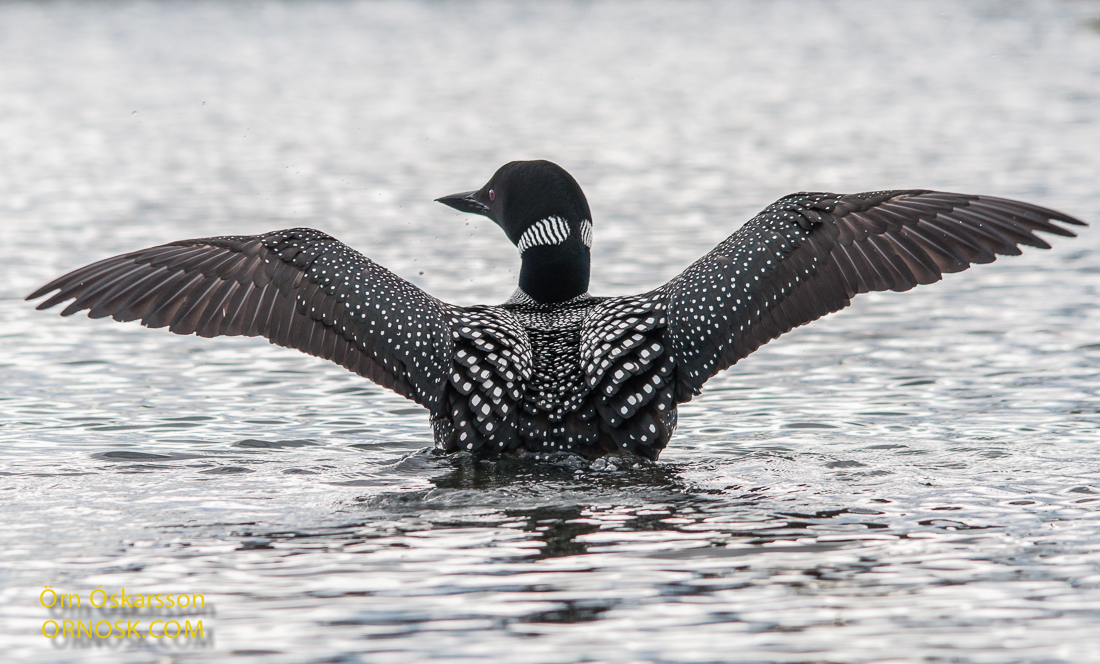
Fanning its wings

A nesting pair usually claims a whole lake as its territory and makes sure that no one gets too near and uses force to keep other Divers away.

himbrimi
A pair with a 2-3 week old chicks

Most Great Northern Divers stay in the ocean around Iceland over the winter time, a few go to the UK or West Europe.

fossvotn
A perfect place for the Great Northern Diver – Veiðivötn in the South Iceland highlands

There are around 300 breeding pairs in Iceland and it is the Great Northern Divers only nesting place  in Europe.

Hi there look at me

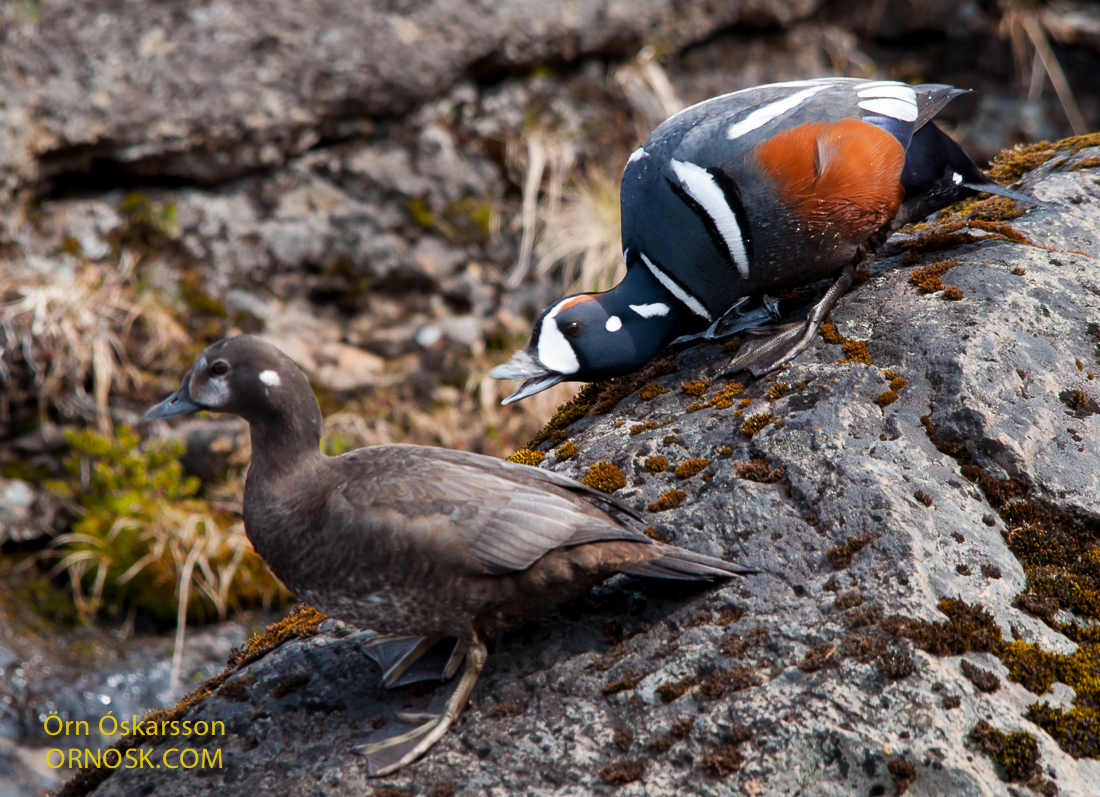
The male Harlequin Duck here is trying to get the female’s attention.

straumond
Female and male Harlequin Duck

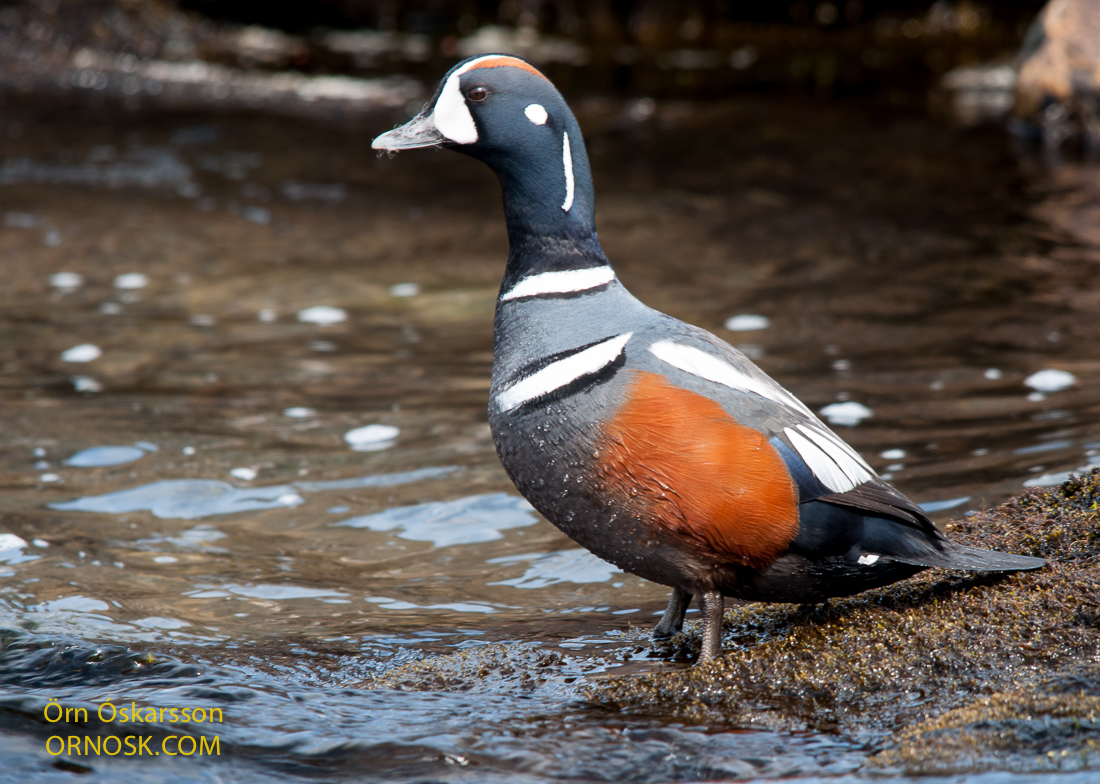
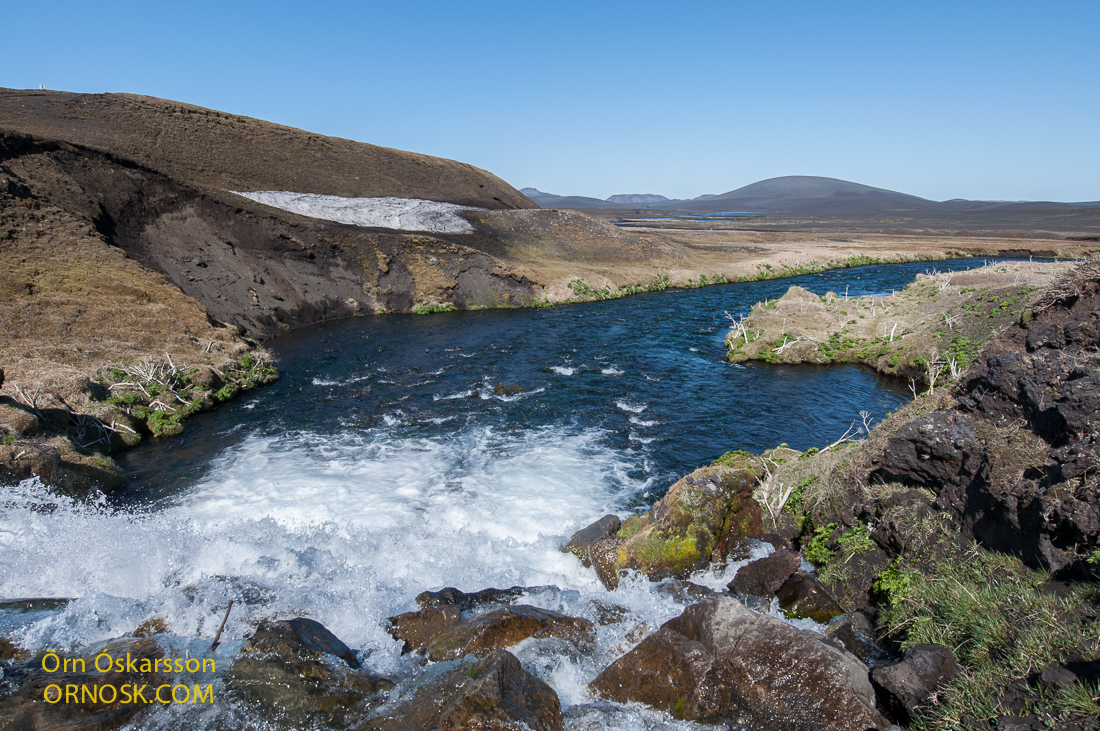
The Harlequin Duck’s habitat is rapid spring water rivers with benthic in abundance.  The larva of the the Blackfly is its main food source.  The breeding population in Iceland is around 2000 to 3000 pairs.

straumond-2
Straumönd – Harlequin Duck – Histrionicus histrionicus
vatnakvisl
Rapid spring water rivers are the Harequin Duck’s habitiat

The Brunnichs Guillemot

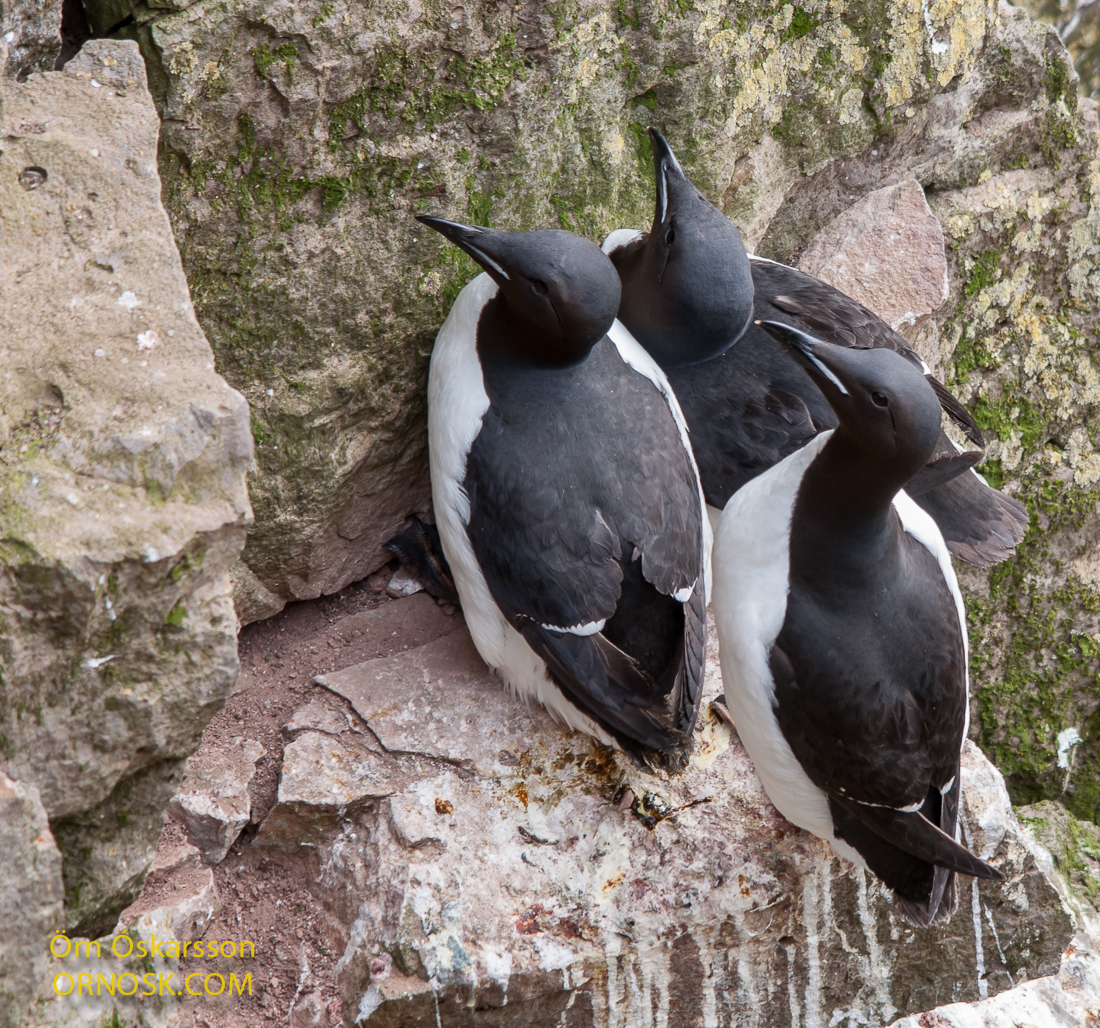
The Brunnichs Guillemot (Uria lomvia) is similar to the  Common Guillemot. The main difference is a shorter beak with a white beak line and the sides that are whiter. It breeds in big bird colonies in ocean cliffs. No care is taken in the nest making and they lay their eggs on bare rock ledges.

stuttnefja
Stuttnefja – Brunnichs Guillemot – Uria lomvia

Látrabjarg and other ocean cliffs in the Westfjords are the main nesting places for the  Brunnichs Guillemot. There are around 300,000 breeding pairs in Iceland. The Brunnichs Guillemot is one of the species whose numbers have been decreasing in the last decades.

Winter Snow

gardurvetur-4

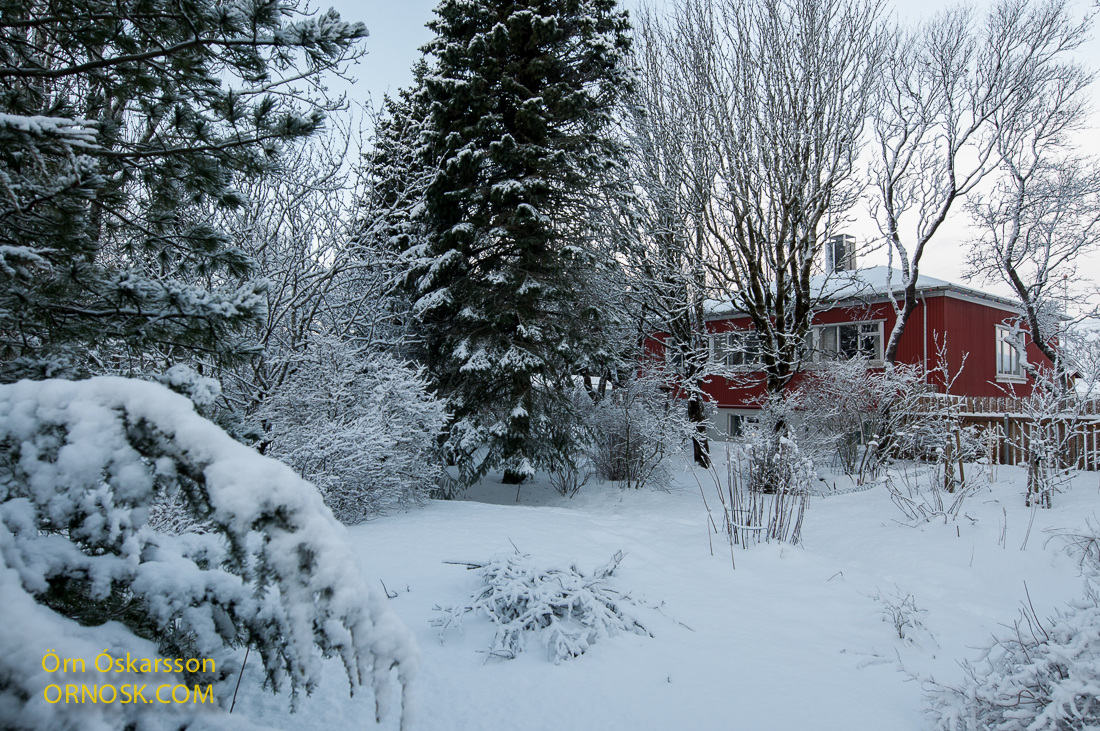
You might say that asking for a White Christmas has gone a bit out of hand here in Iceland during the last month. There is such a lot of snow everywhere that when it melts there will be tons of water everywhere. Now they are predicting temperatures above zero, and even above 5° C,  so the roads will probably be more suitable for going skating than driving.  – Drive carefully everyone :*

Continue reading Winter Snow