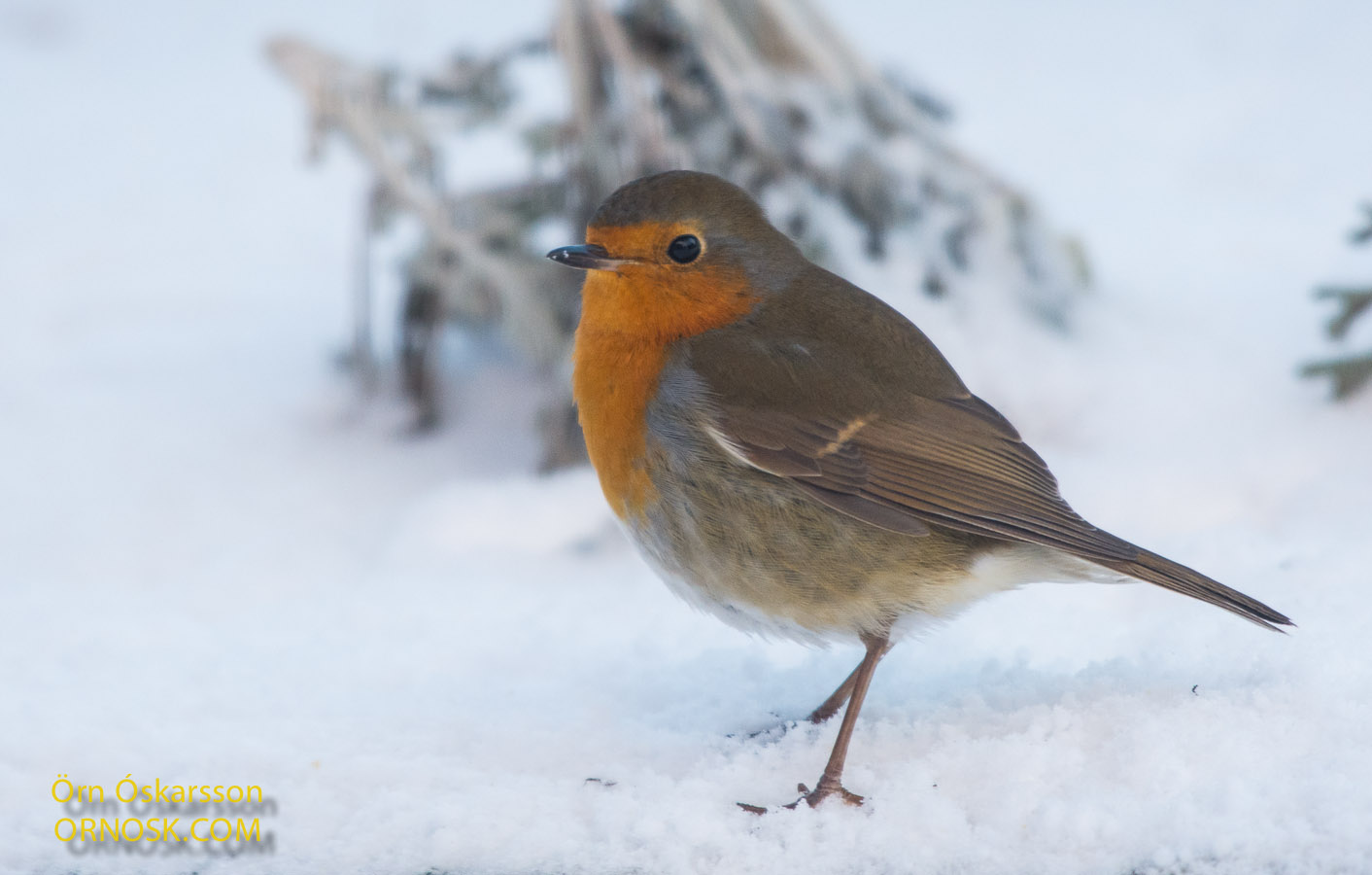
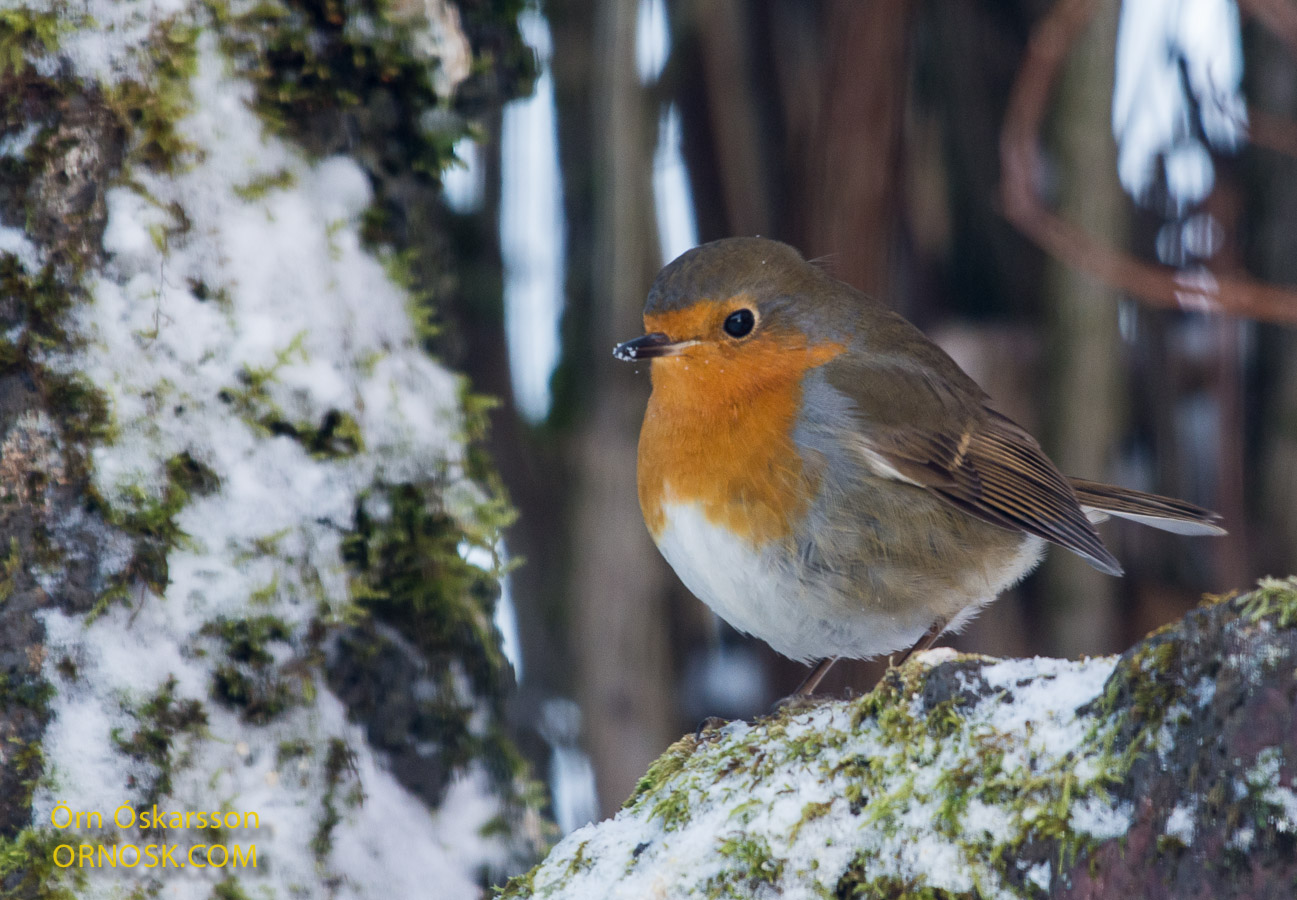
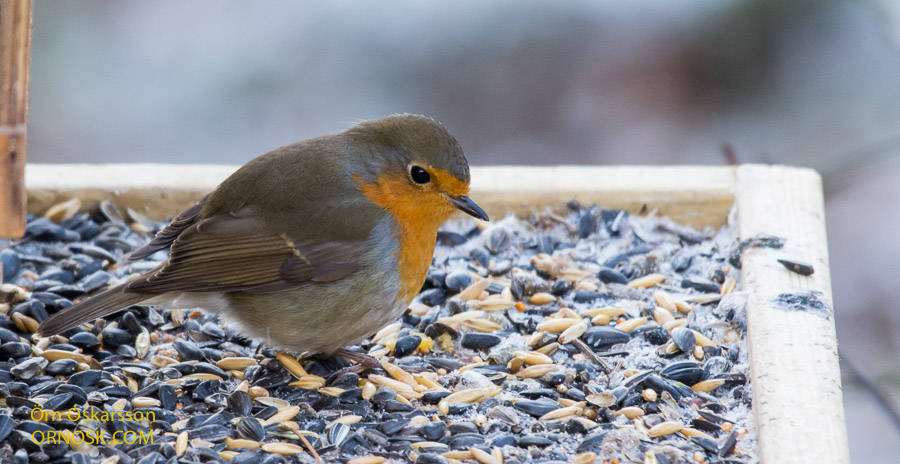
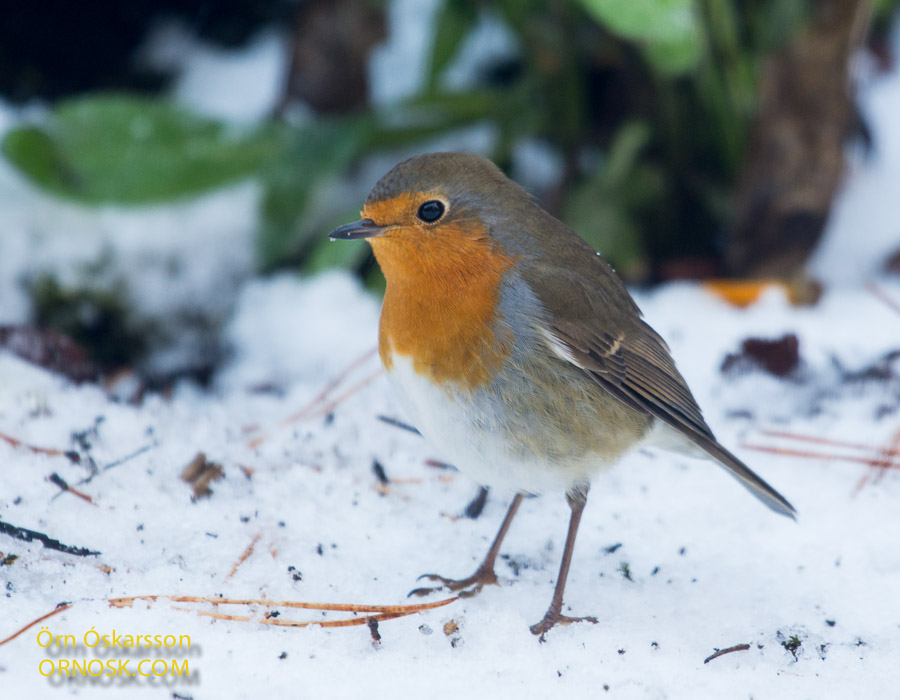
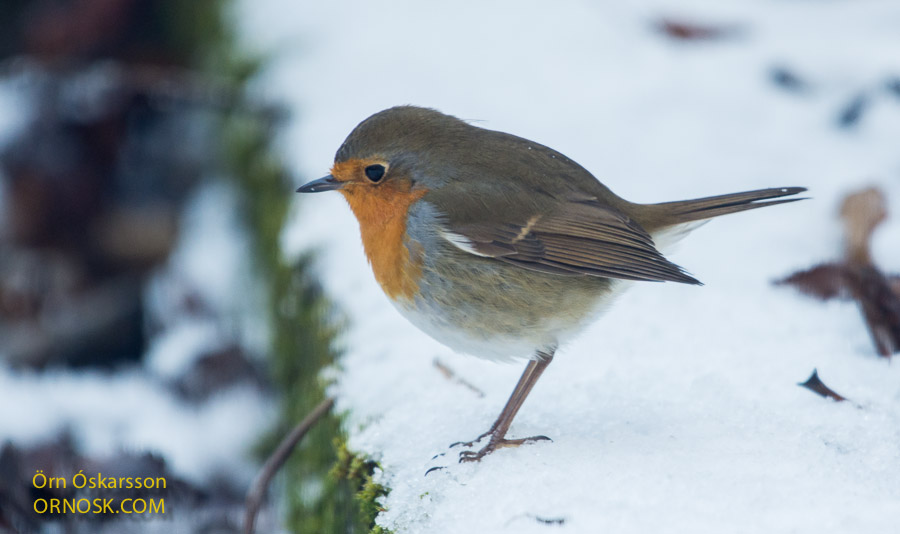
Glóbrystingur – European Robin – Erithacus rubecula
Since autumn this Robin has been a daily guest in the garden. Our Robin roams the neighbourhood but always turns up again. We have news of another one just over the river. Hopefully they are a male and a female that will pair up and breed here in the spring.
The Robin is a rather common vagrant in Iceland and is known to have breed here.
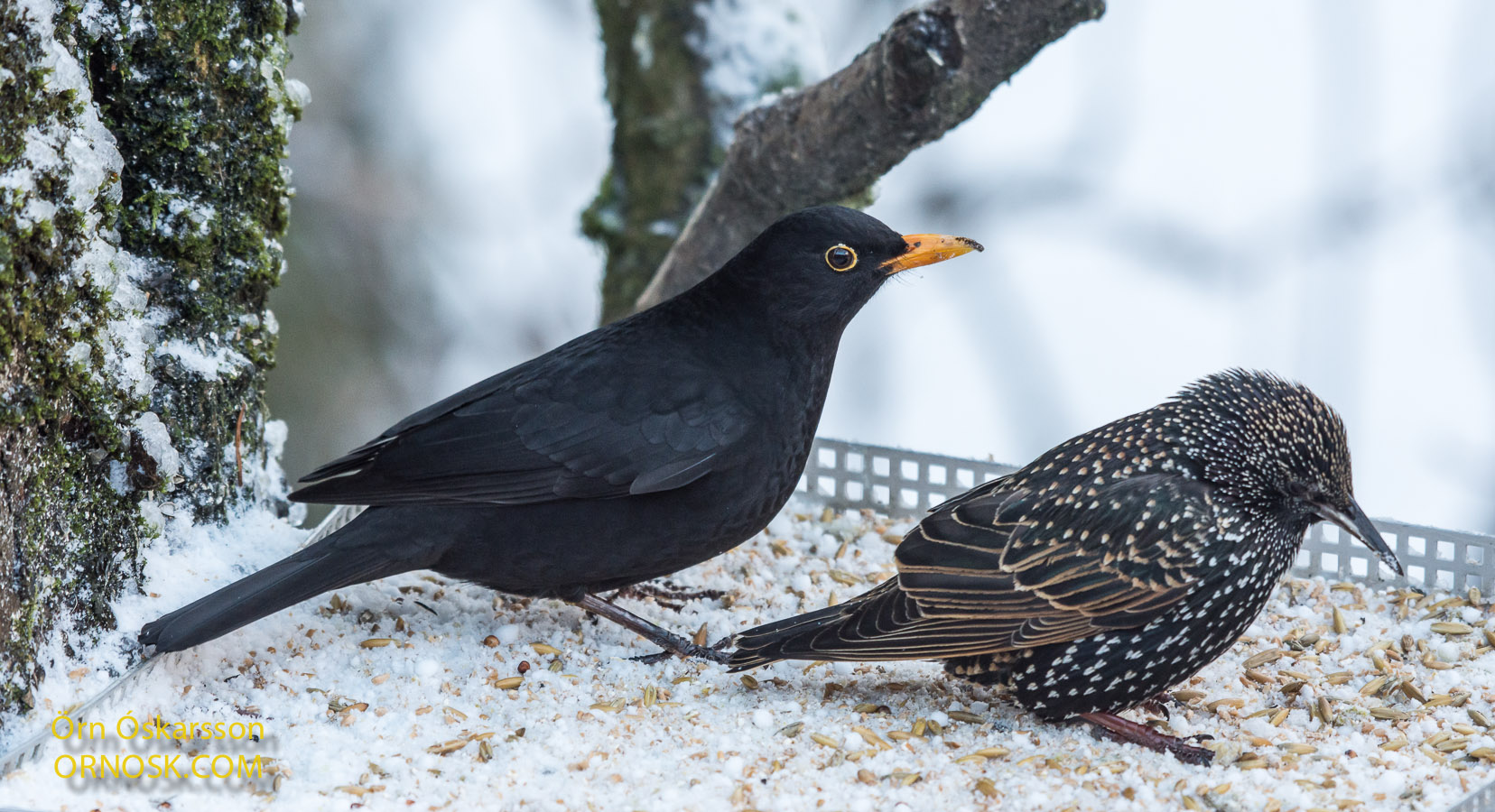
Today there is a blizzard and a lot of birds in the garden. It is their shelter from the storm, an oasis with food and shelter. The photos are from today.
The most voluminous river in Iceland is River Ölfusá. Around this time of year you can expect to see a lot of ducks and gulls there, some Greylags and Swans and a Gyrfalcon, a Merlin or even a White-tailed Eagle flying above.
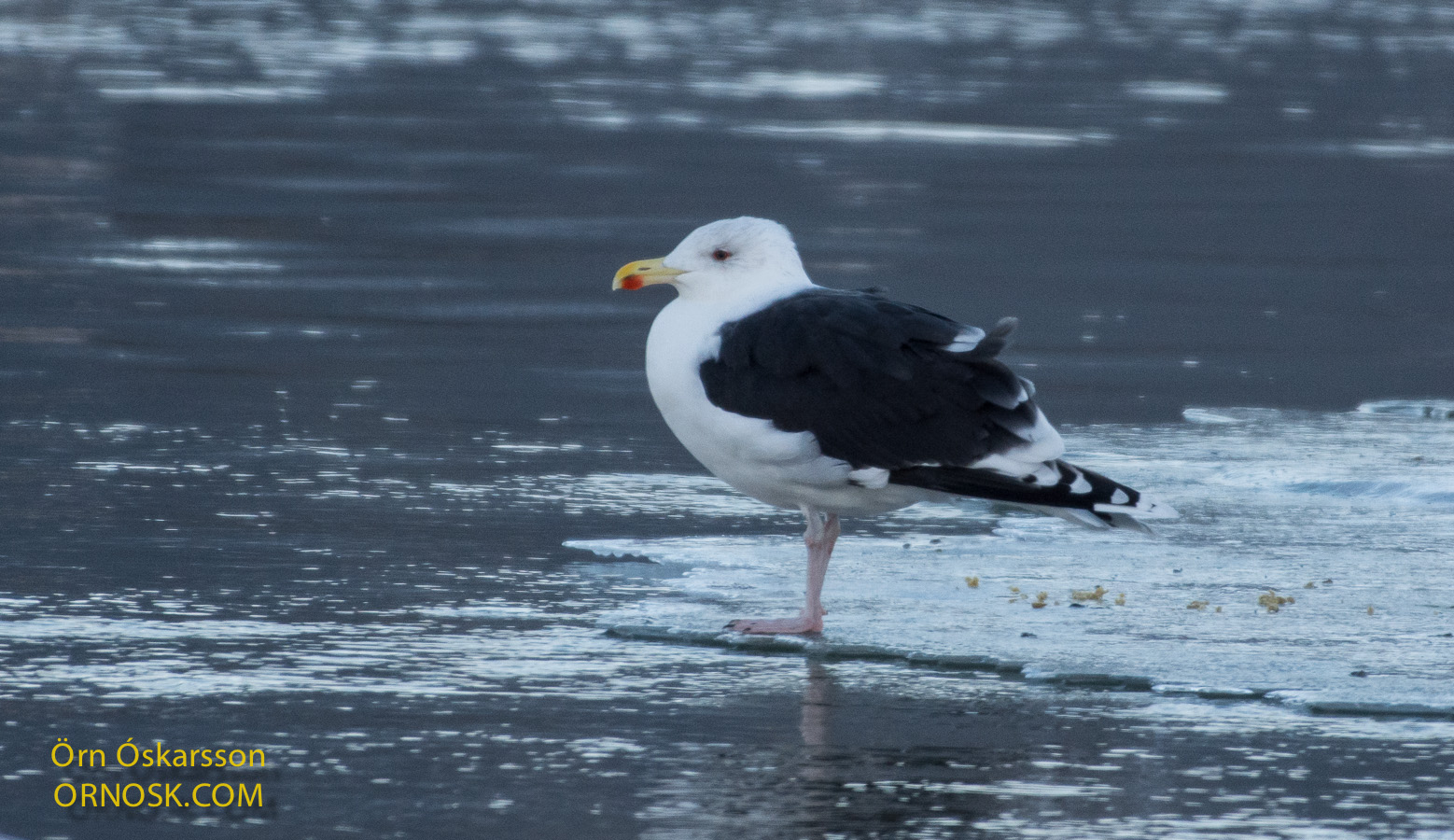
Svartbakur – Great Blackback – Larus marinus
Due to spring water a big part of the river never freezes. When creeks and lakes are frozen over, River Ölfusá is the perfect winter habitat for birds. The river flows just outside our window about 50m away from our house.
Goosander, Iceland Gulls and Common Gulls (gulendur, bjartmáfar og stormmáfar)
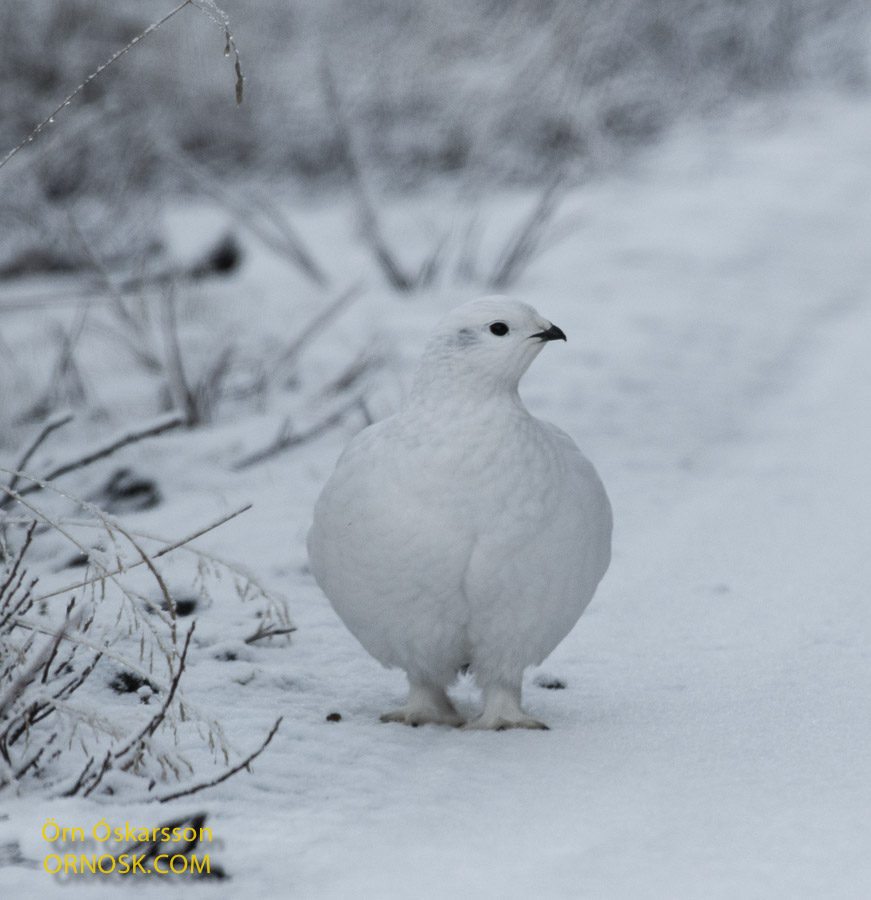
The Ptarmigan blends well into the snow covered landscape in its winter plumage. Predators such as foxes, falcons and the human can not easily spot it in the winter twilight. This Ptarmigan has survived the hunting season which is limited to a few long weekends in October and November. Ptarmigan used to be a popular Christmas dinner in Iceland but as the stock has been decreasing in numbers and the hunting season limited, fewer and fewer families chose to eat this beautiful bird. That is something to be thankful for.
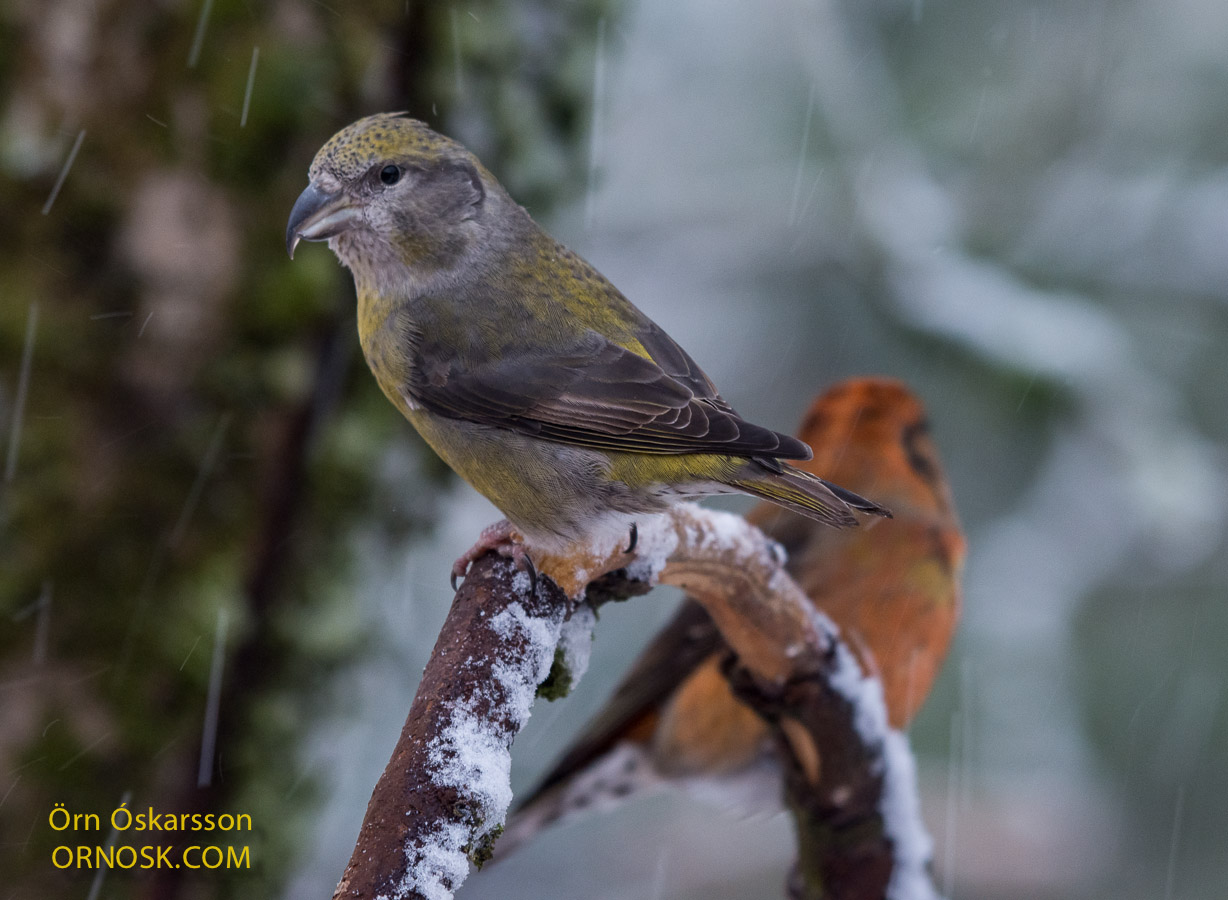
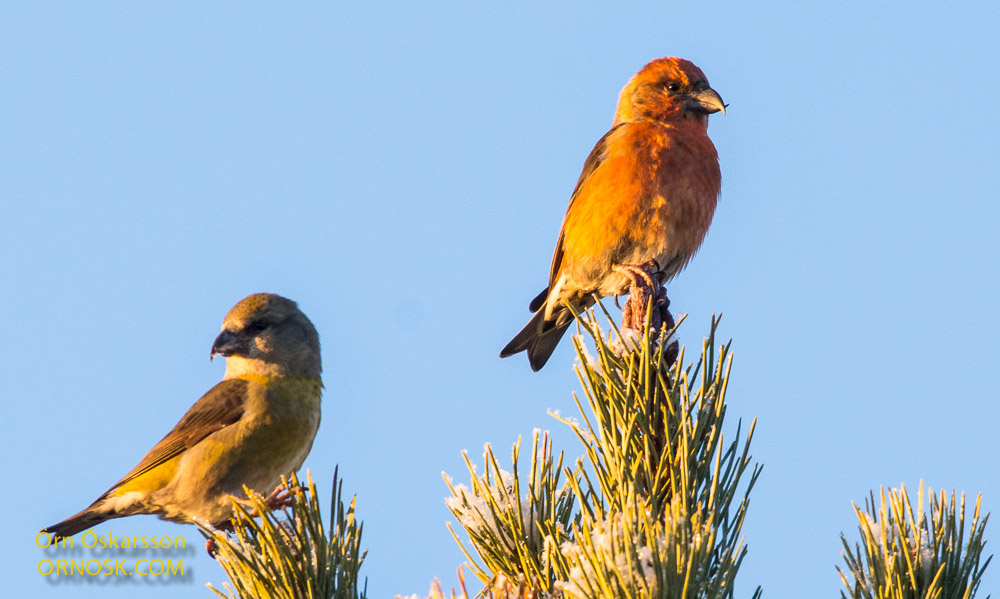
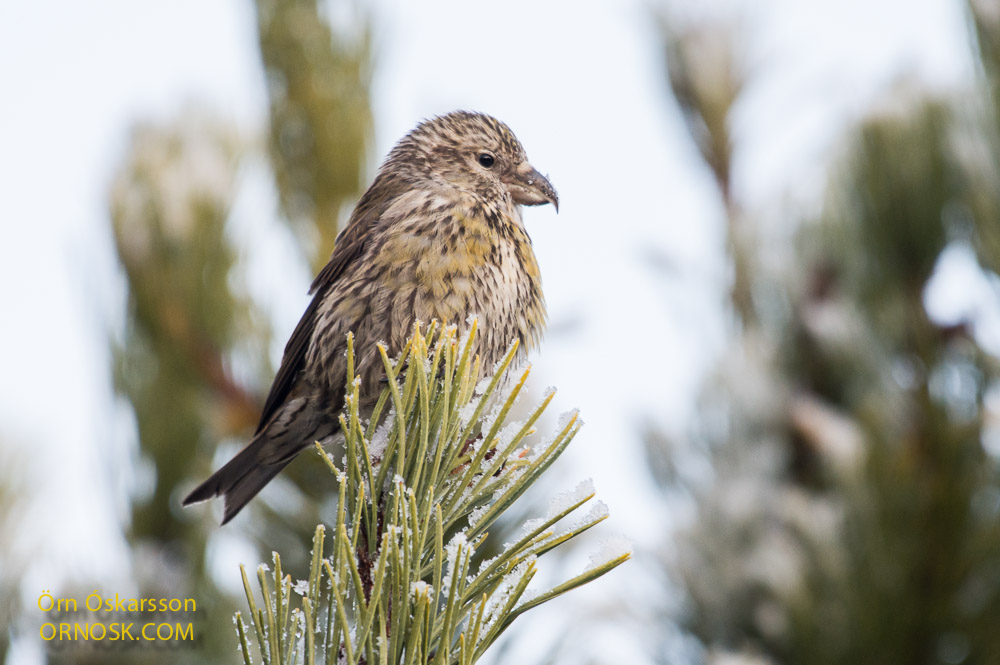
Krossnefur – Common Crossbill / Red Crossbill – Loxia curvirostra (pair)
There are a lot of Common Crossbills in spruce and pine forests now but these settlers seem to thrive well in Iceland and have become part of the Icelandic fauna.
Young Common Crossbill chick in December
Cones are in abundance and the Crossbills are therefore well fed. They have been breeding since autumn and even now in December we have seen young chicks, although February is the month you would expect them to start breeding.
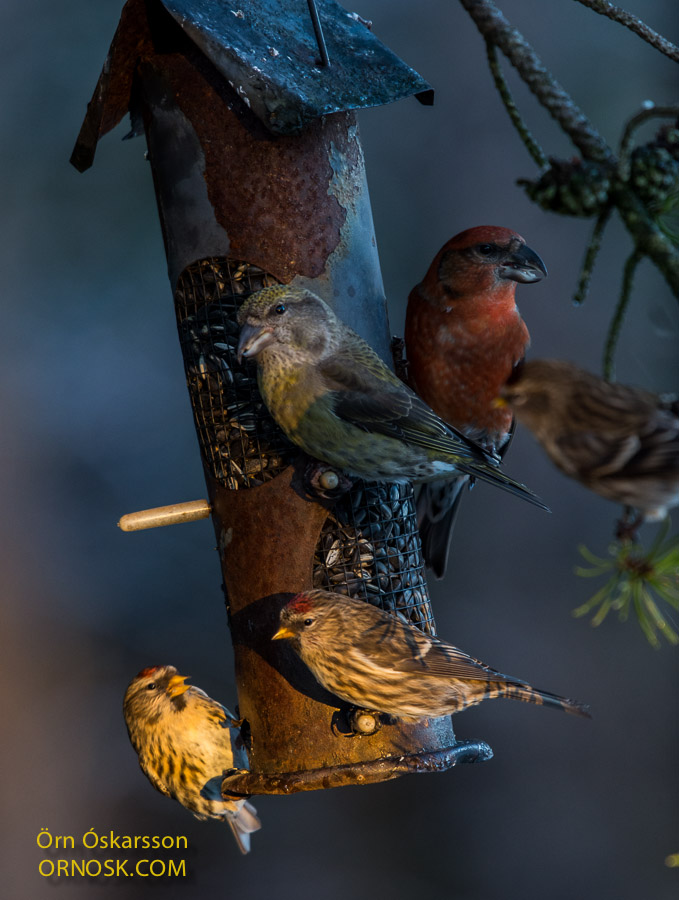
Common Crossbills and Redpolls on a feeder
Chicks from the autumn are now feeding on their own but we still get them here in the garden where they can indulge themselves on sunflower seeds. The photos are from last week in Grímsnes, South Iceland.
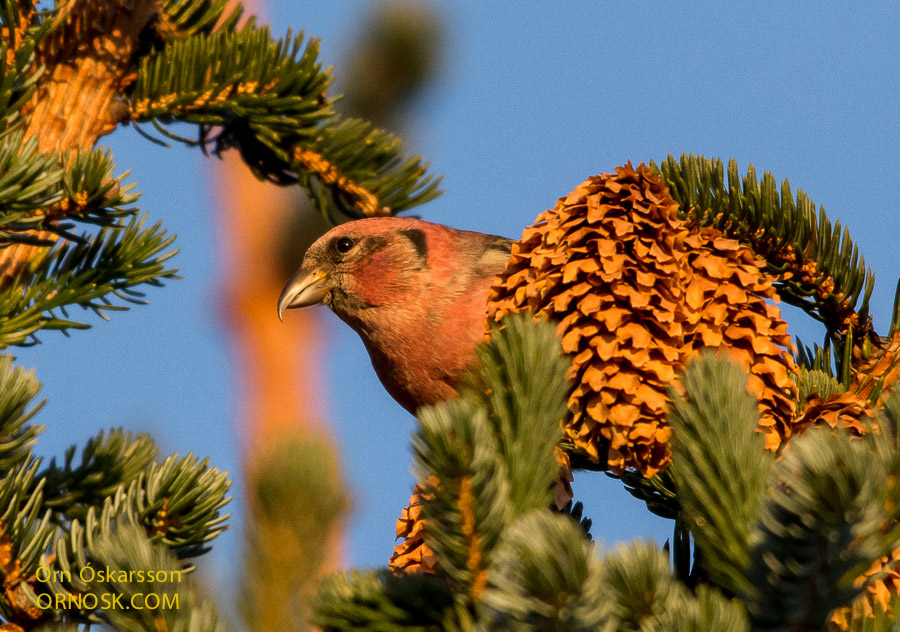
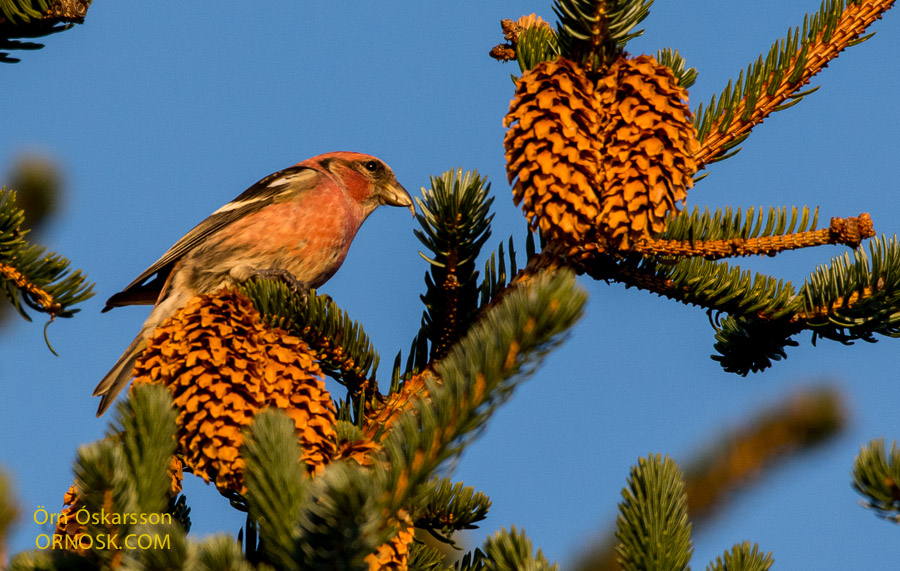
A rare North American vagrant has been the number one diversion for Icelandic birders in the past week. This is the second time that a White-winged Crossbill is spotted here but the first time that a bird of Western Palearctic origin is recorded, the North American subspecies. It was first seen in a small forest clearing called Sólbrekka, near the Blue Lagoon in Reykjanes Peninsula. It is still there and has been since November 8. It is now with a group of Common Crossbills and seems delighted in their company. The females especially seem to have taken a liking to this brightly coloured foreigner.
The American White-winged Crossbill is a breeding bird in the conifer forests of North America and well adapted to severe frosts. However, the White-winged Crossbill that was first spotted here in 2009 in East Iceland was of North Scandinavian/Siberian origin.
Glóbrystingur – European Robin – Erithacus rubecula
The European Robin has been an annual autumn guest in our garden for the last four years but before that we did not see one here for more than 15 years. From the beginning of November a Robin has visited us. It usually appears when there are few other birds around, quietly sneaking about in the undergrowth and visiting the feeders.
Usually one Robin claims the garden as its territory and drives other Robins away.
A number of European Robins were spotted around the country after a Southeast storm in October. They are annual vagrants in Iceland and are known to have bred here.
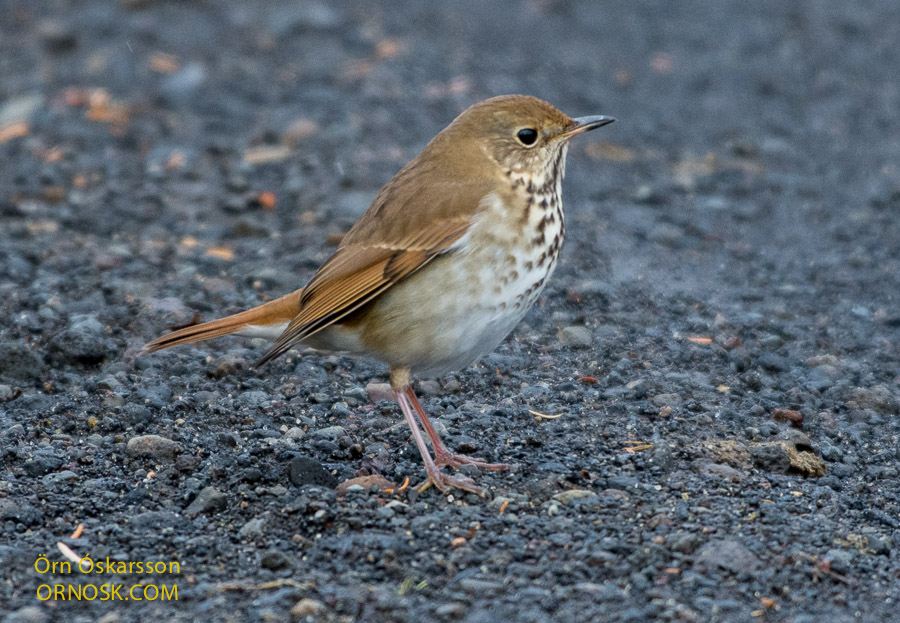
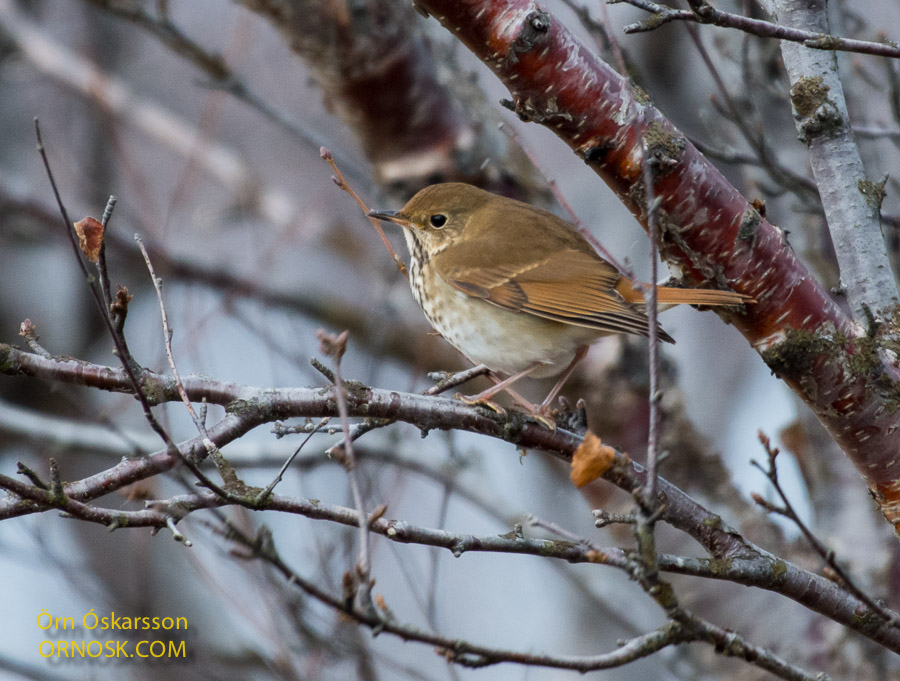
The Hermit Thrush, a very rare American vagrant, was spotted in Iceland this week by Lake Thingvallavatn. This is the12th time that a Hermit Thrush is seen in Iceland. It breeds in North America, as northerly as Alaska and Canada. It winters in South America or the southern states of USA – so this poor little guy is very far from home.
The Hermit Thrush lives in woodlands and is often seen in the undergrowth, foraging in leaves and foliage looking for food. It is not a garden bird and is almost never seen at feeders. It might come into gardens in winter to look for berries. – So we are probably not going to see one in our garden.
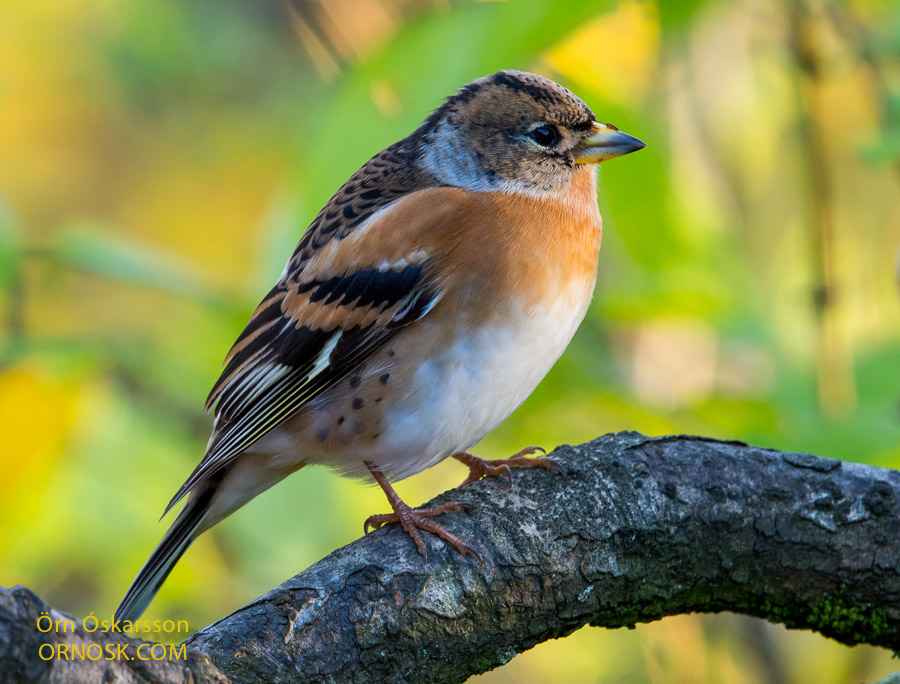
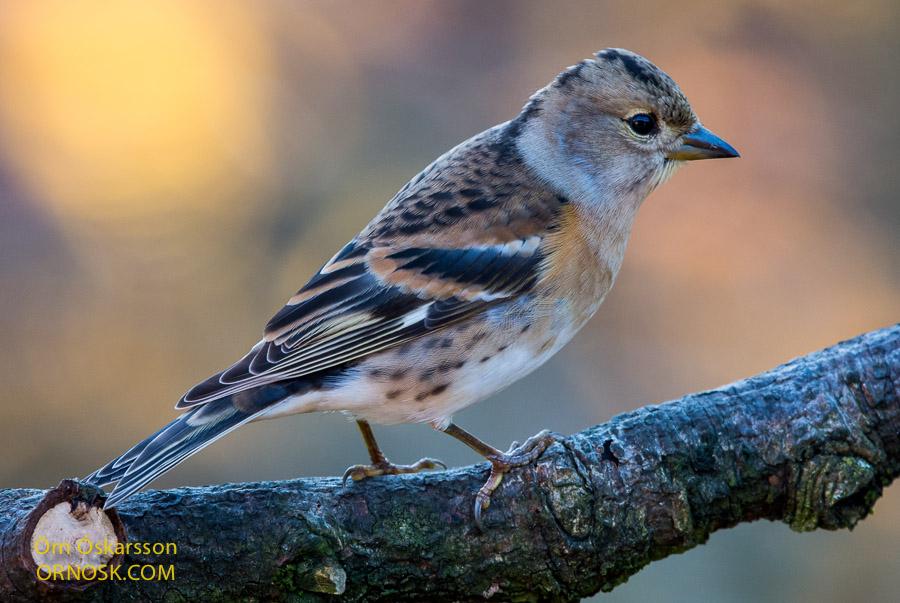
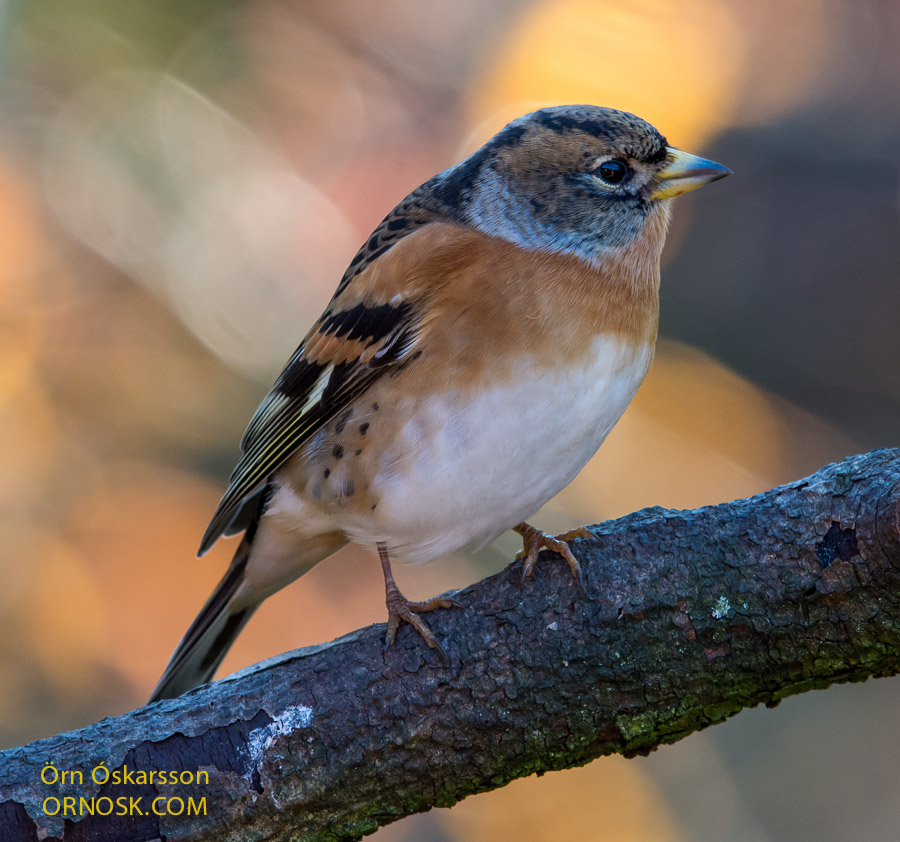
Never before have we been visited by so many Bramblings. In late October big groups could be seen in the East, probably more birds than have ever been seen in Iceland. These have now spread around the country and we are so fortunate as to have our own group here the garden.
For two weeks now we have counted three to seven Bramblings every day. Yesterday there were at least seven outside our living room window. The Brambling is a breeding bird in Northern Europe and usually flies southwards for winter. Although the Brambling is a vagrant in Iceland, some instances of breeding have been recorded.
These are beautiful birds and mostly peaceful so a good addition to our usual lot. We hope they will join our group of garden birds, Redpolls, Blackbirds, Crossbills and Starling, – and stay for the winter.