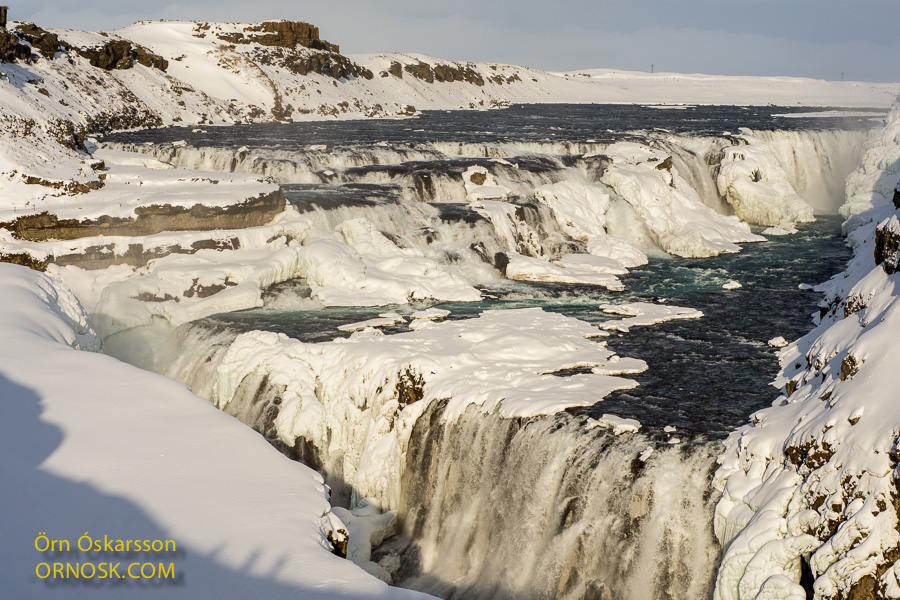
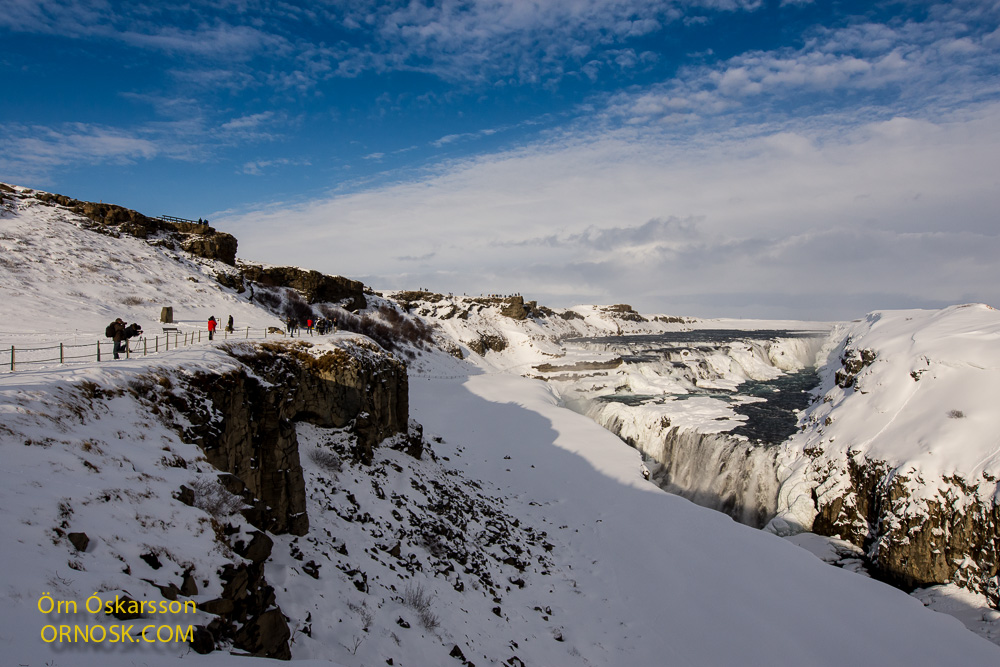
The waterfall Gullfoss is one of Iceland’s most visited tourist attractions, along with Geysir. Both are on the Golden Circle, the route that most tourists in Iceland travel. It runs from Reykjavík, the capital, to Thingvellir, the site of the old Icelandic parliament, to Geysir and then Gullfoss.
Gullfoss is a massive waterfall and special for its two steps. It is in the river Hvítá and is originated in Langjökull Glacier. Gullfoss is very spectacular both in summer and winter.
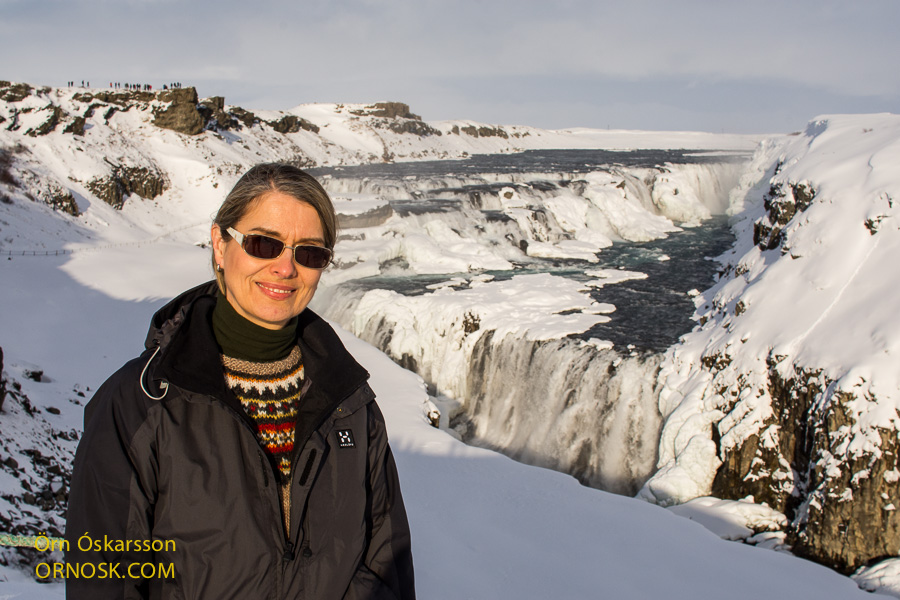
One of the tourists last weekend, my wife Kristin.
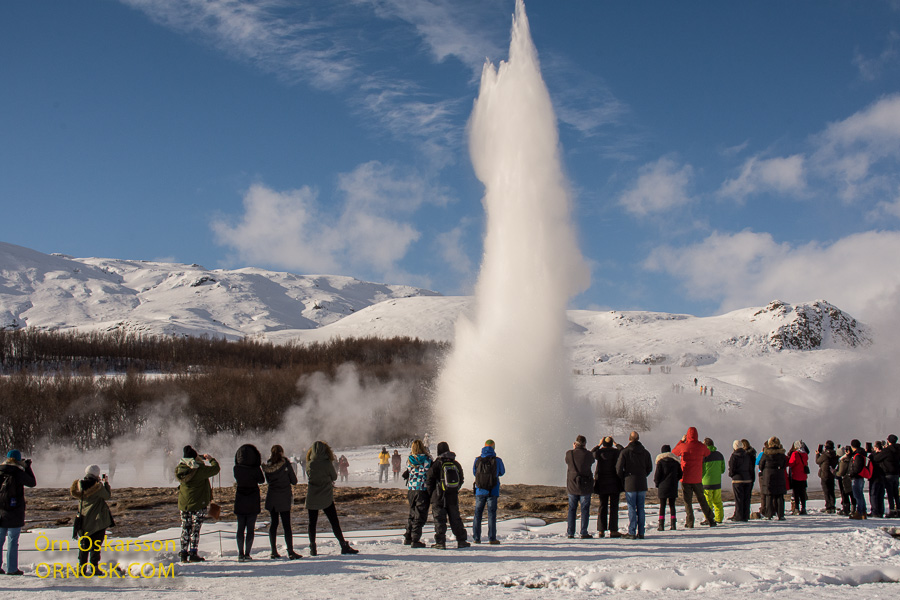
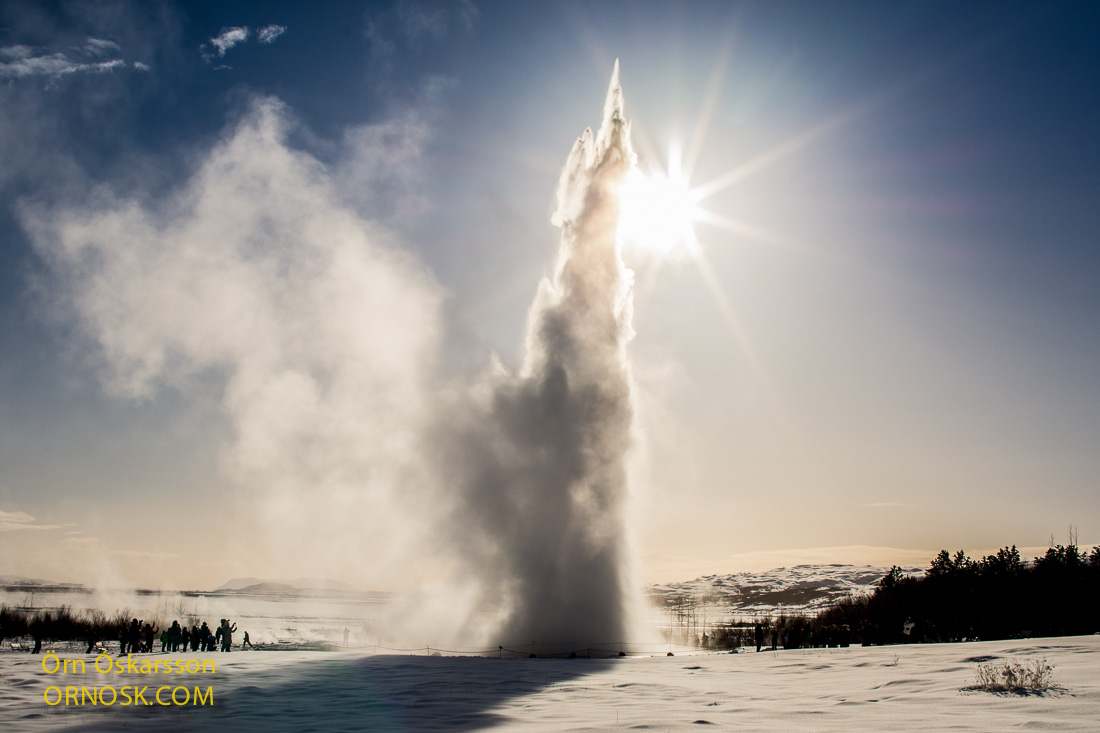
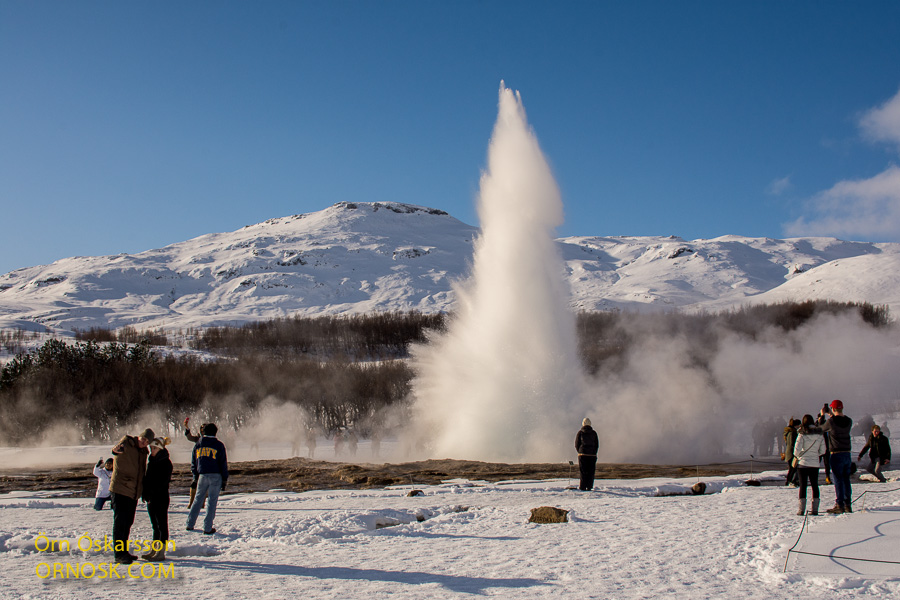
The area is called Geysir although today Strokkur geyser is the one that people come to see. Geysir is a geyser, the ONE that gives its name to the phenomena. Only once in a while does the old Geysir erupt whereas Strokkur erupts every 5-10 minutes. The term geyser is described: “A geyser… is a spring characterized by intermittent discharge of water ejected turbulently and accompanied by steam.”
Last weekend was beautiful, the countryside was covered with snow and the sun was shining brightly, as can be seen in the photos.
The Geysir area is one of the most popular tourist attractions in South Iceland and an increasing number of tourists visit it daily. It is situated inland in the South of Iceland about one and a half hours drive from Reykjavík, the capital. From Selfoss it is about one hours drive. A trip to Geysir usually also involves a visit to Gullfoss which is only about 10 minutes drive away.
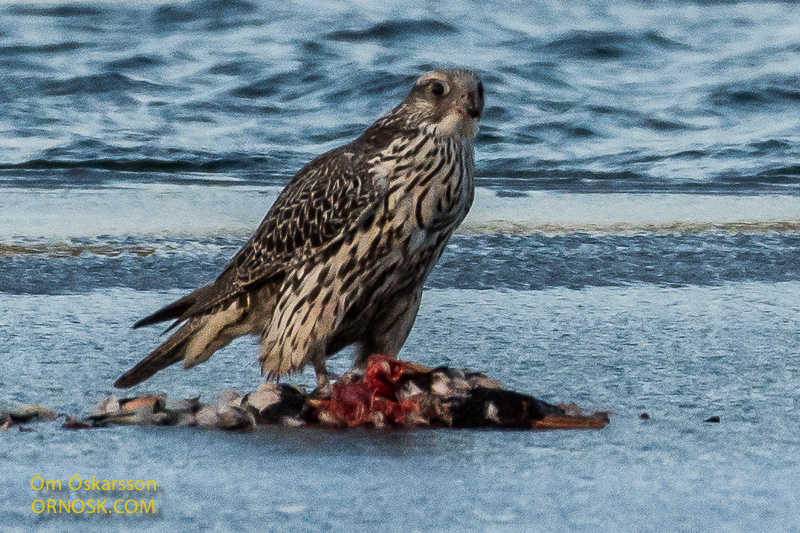
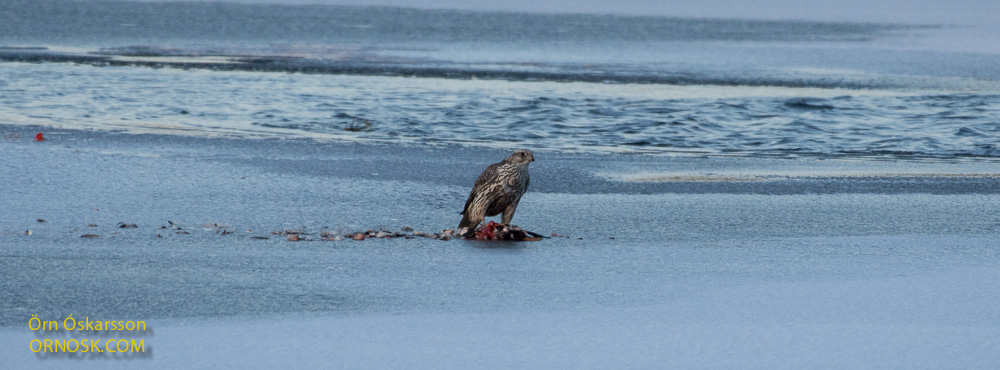
It is always exciting to see a Gyrfalcon, the biggest falcon in the world. Its main food source in Iceland is the Ptarmigan but it also hunts other birds such as ducks, geese and gulls. Last weekend we saw a Gyrfalcon eating a duck far out on the ice on Ellidavatn Lake, just outside Reykjavik. The Gyrfalcon was shy and not prepared to let a photographer get anywhere near.
By cropping the photo identification was possible and this time the Gyrfalcon had managed to catch a male Red-breasted Merganser.
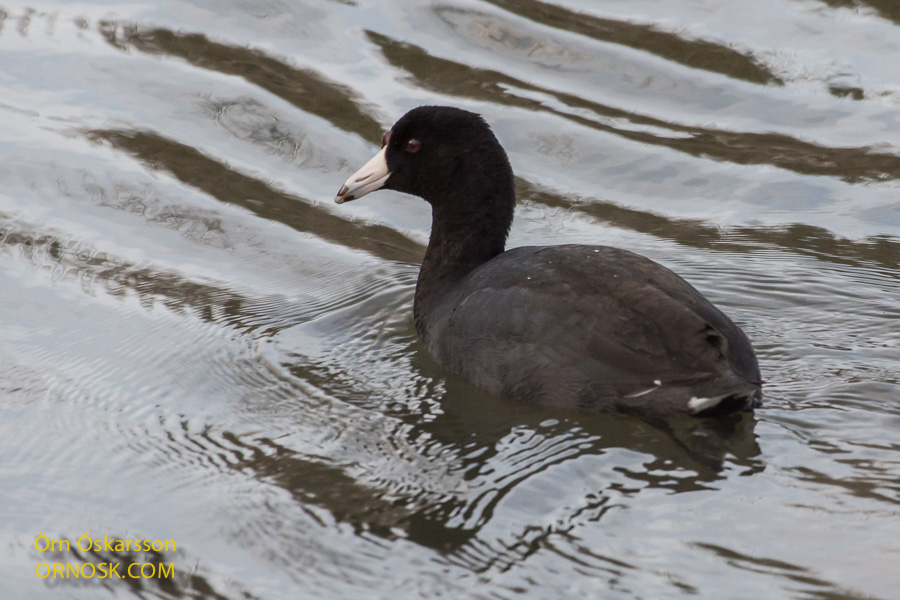
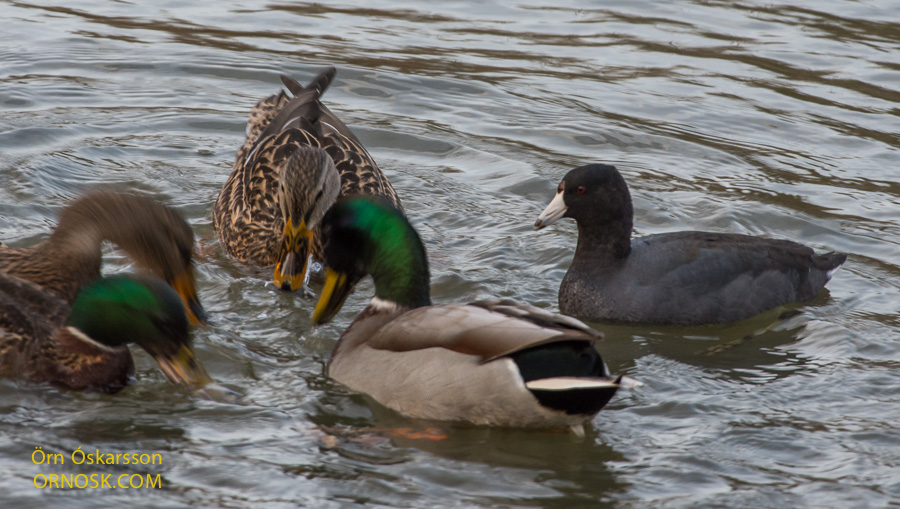
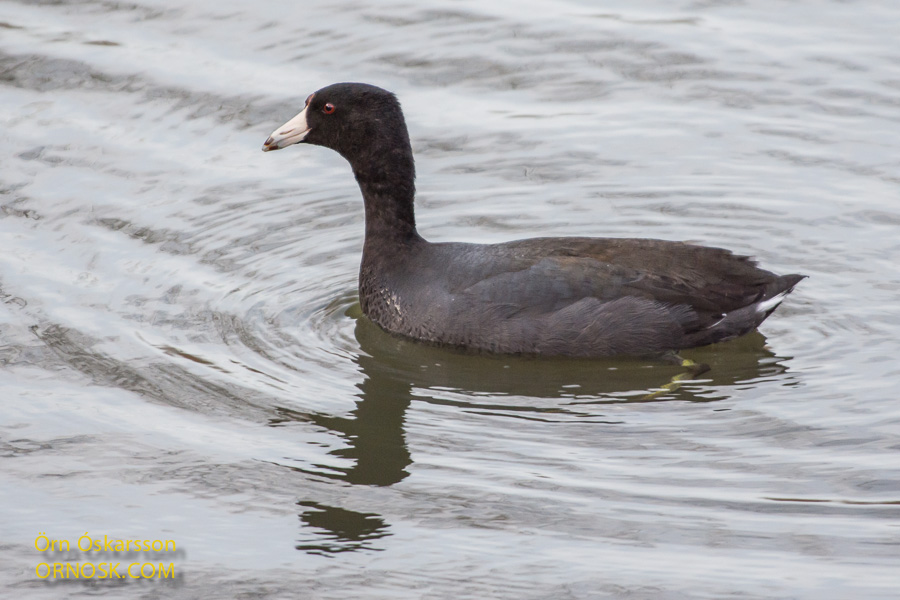
The American Coot is a very rare visitor in Iceland but one is now staying in the Reykjavík area. This is the sixth bird seen in Iceland so far. In North America the Coot is a common bird in freshwater wetlands. The American Coot is not a duck. It is a relation of the European Coot and is in lineage with cranes and rails.
The Coot is in the company of a group of Mallards that mostly stay on a pond where the birds are fed.
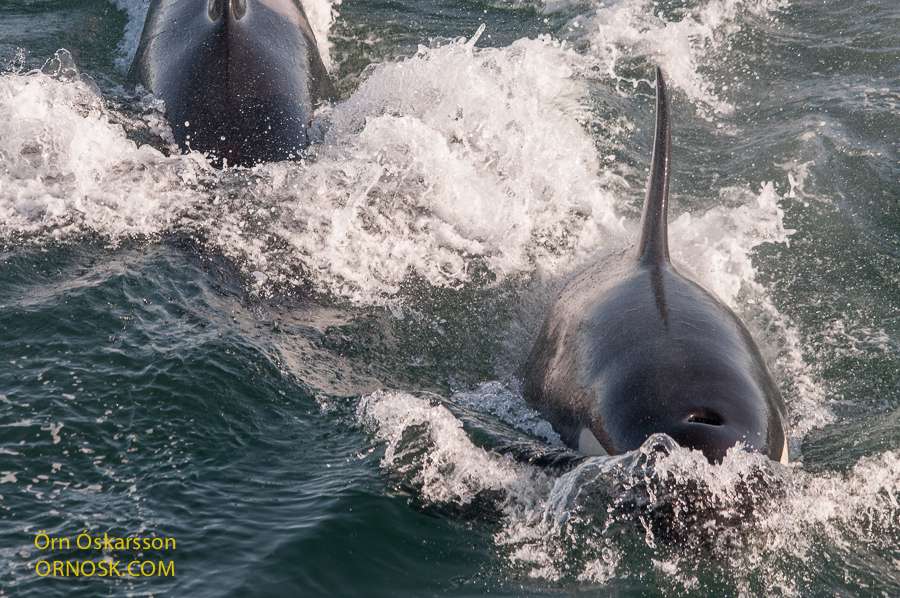
Killer Whales (Orca) under the Kolgrafafjörður bridge
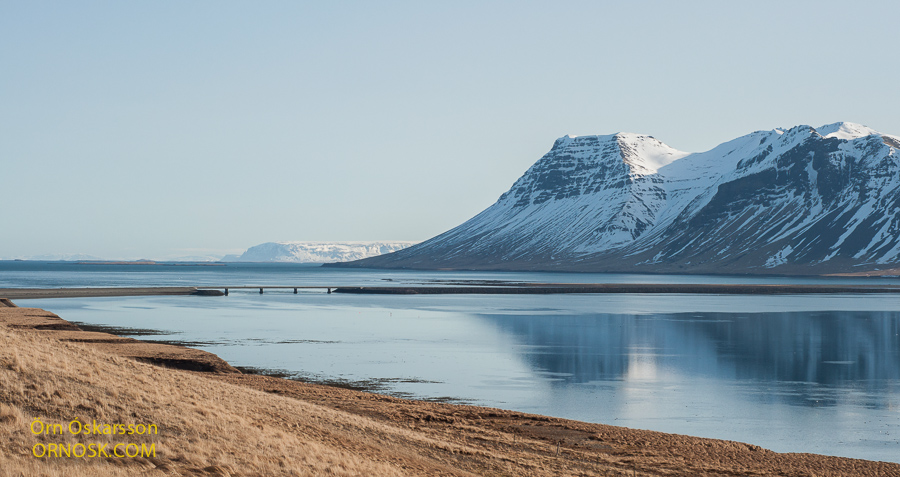
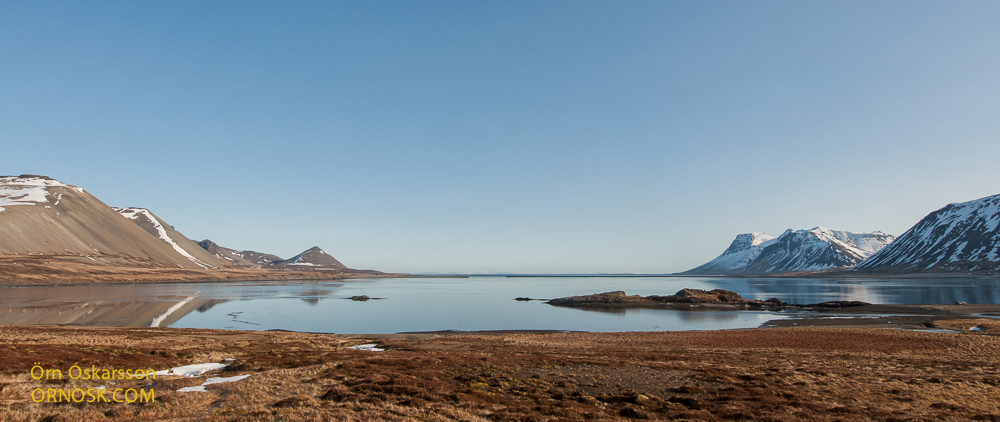
After a collapse in the biota, Kolgrafafjörður is again teeming with life. The silver darlings have returned to the fjord. Kolgrafafjörður is a shallow fjord on the northern side of Snæfellsnes. It is known for being a good food source for birds and sea mammals. In 2004 a road was constructed and a bridge built on the outer side of the fjord resulting in less renewal of seawater inside the fjord.
Kolgrafafjörður
Once in a while huge amounts of herring used to come into the fjord during the winter months and the bridge did not change that. A lot of birds and small sea mammals followed the herring. This created a sensational spectacle by the bridge when the tide went in and out as Gulls, Northern Gannets and Great Cormorants fought to catch the herring. Harbour Seals, Grey Seals and Killer Whales were also a common sight by the bridge.
Kolgrafafjörður
In 2011 – 2014 huge amounts of herring gathered in the fjord inside the bridge. In the winter of 2012 – 13 the herring died probably from lack of oxigen. It is estimated that around 50,000 tons of herring died this winter. This resulted in the collapse of the biota. Now the herring is back and Kolgrafafjörður is again full of life, – an attraction for bird watchers and nature lovers.
Today is St. Thorlakur’s Day. Thorlakur was an Icelandic bishop in Skalholt and died on December 23, 1193. This is the day for last minute gift shopping, decorating the Christmas tree and many eat the traditional fish Skate, which smells horrible.
Three days to Christmas. It snowed today and the forecast predicts temperatures below zero. In the North it will be the coldest, with temperatures down below minus 20°C. In the South it will be warmer with temperatures down to around minus 10-12° C.
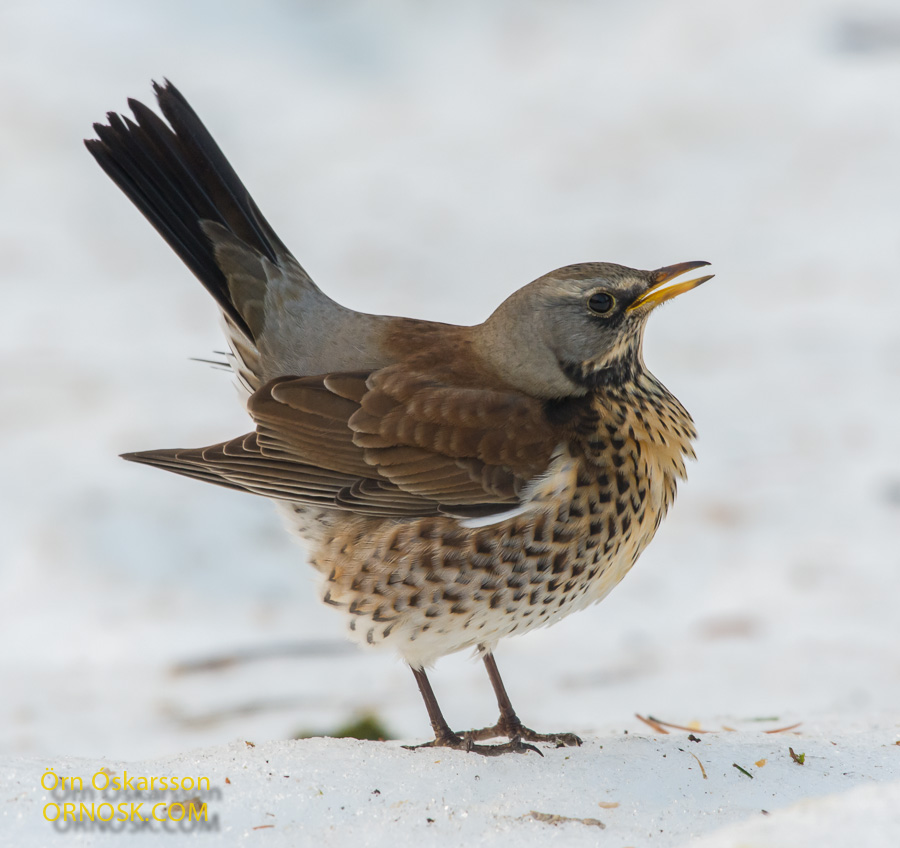
This is one of the Fieldfares that has made the garden his home in the last month. He is all puffed up and self-important. Perhaps he is eagerly awaiting springtime but we are sure that no one will consciously invade his realm when he is in this mood.
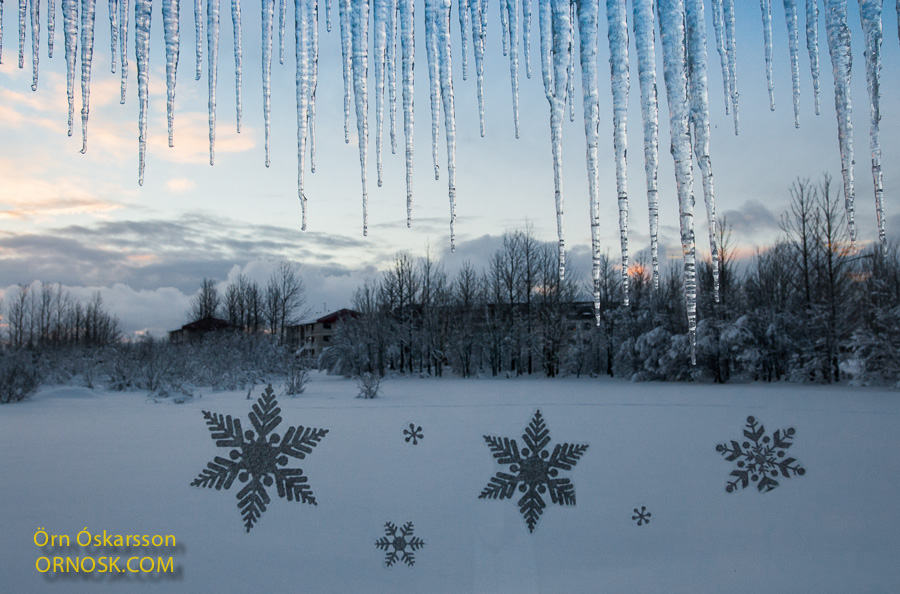
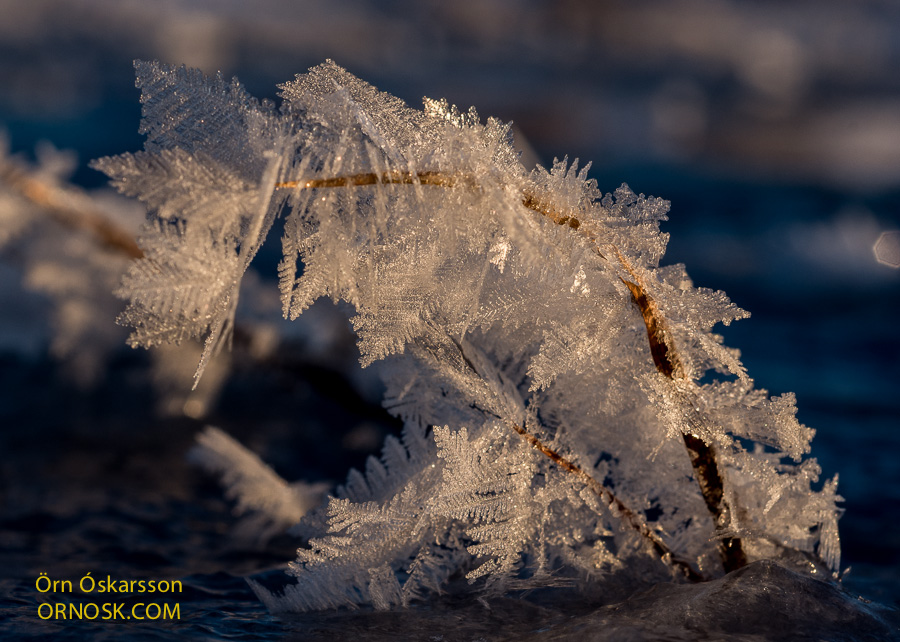
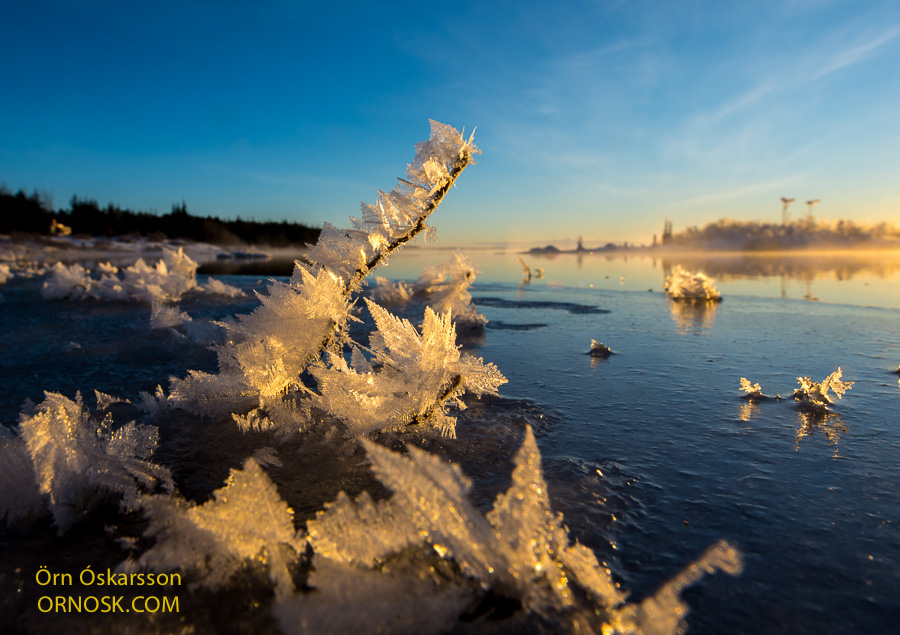
It is 8 days to Christmas. The ice crystals from last weekend have melted away and the snow has changed into huge slabs of ice that is melting slowly away. The long term weather forecast predicts a white Christmas with snow and frost in the last days before Christmas.