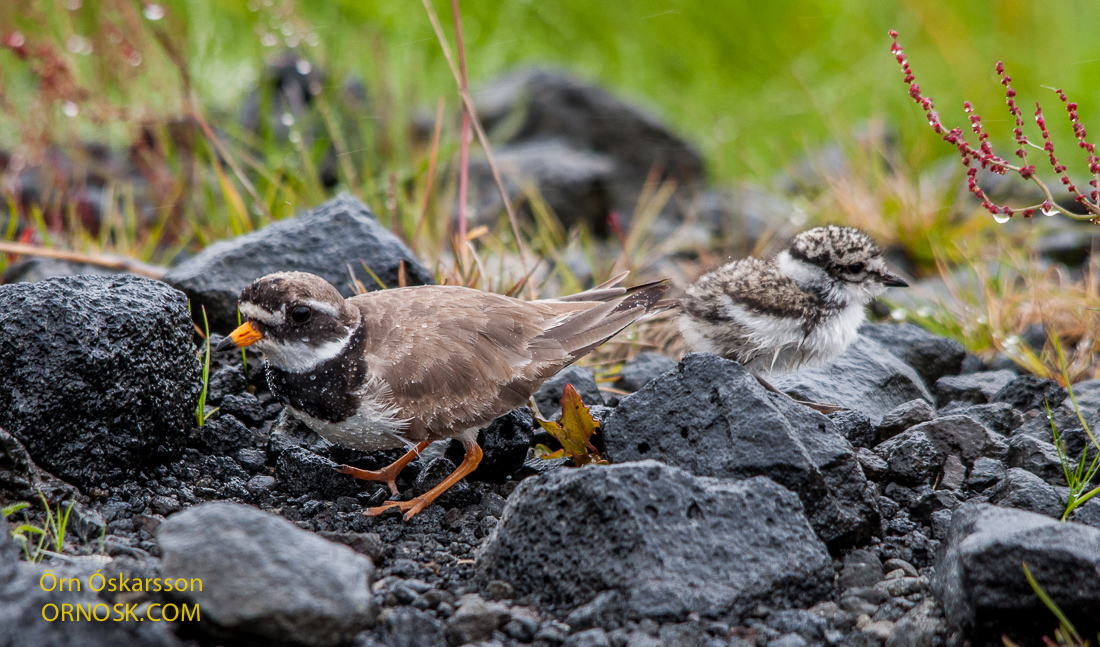
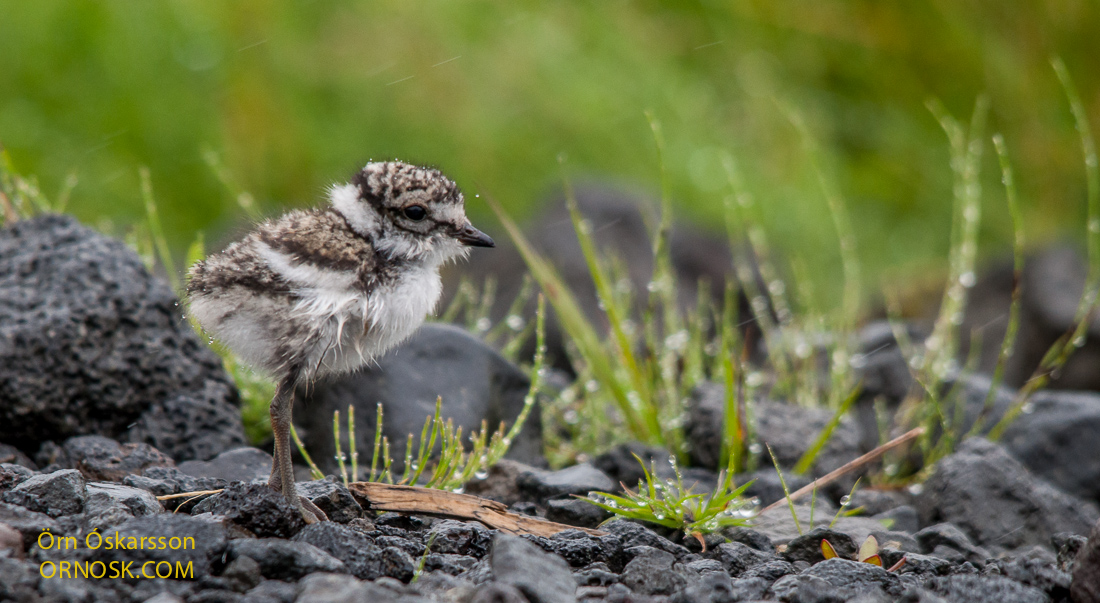
The Ringed Plover (Charadrius hiaticula) is one of the migratory birds that arrives in Iceland in April. In the winter time it stays in South West Europe.
The Ringed Plover lays its eggs in sand and gravel all over the country. The breeding population counts around 50,000 pairs.
The photoes of the chick are taken on the banks of Ölfusá River.
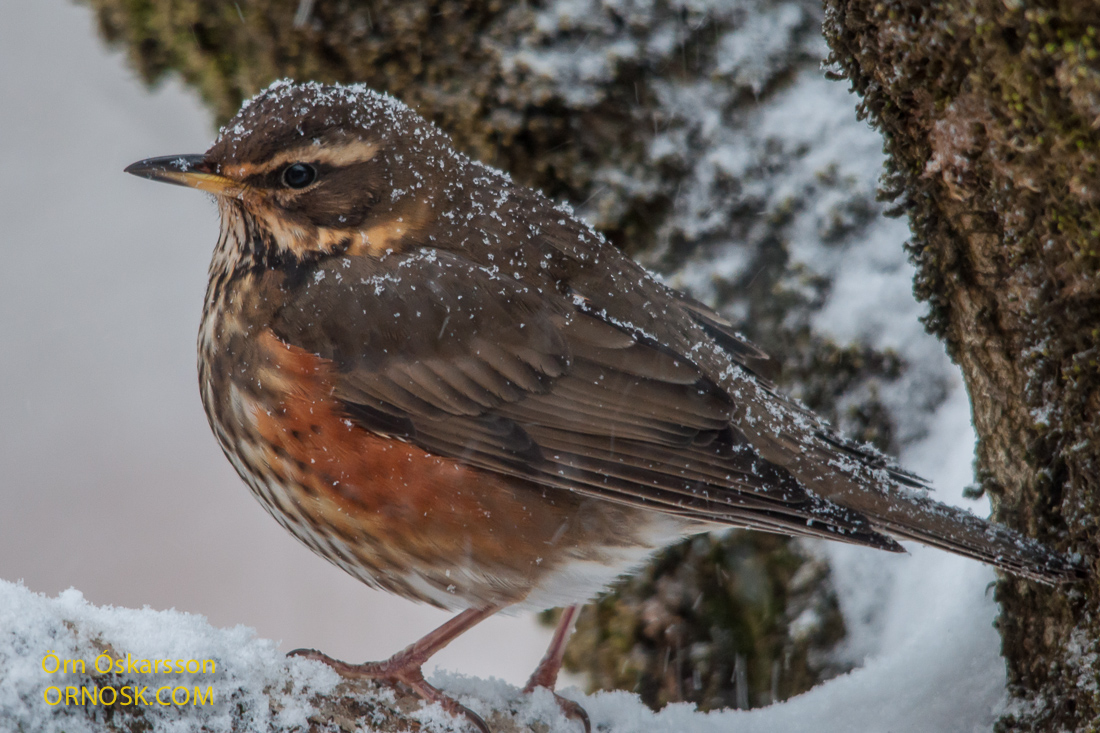
More and more Redwings stay in Iceland during the winter time. This one is probably thinking of flying South next year and not without reason. – This winter has been exceptionally cold and windy.
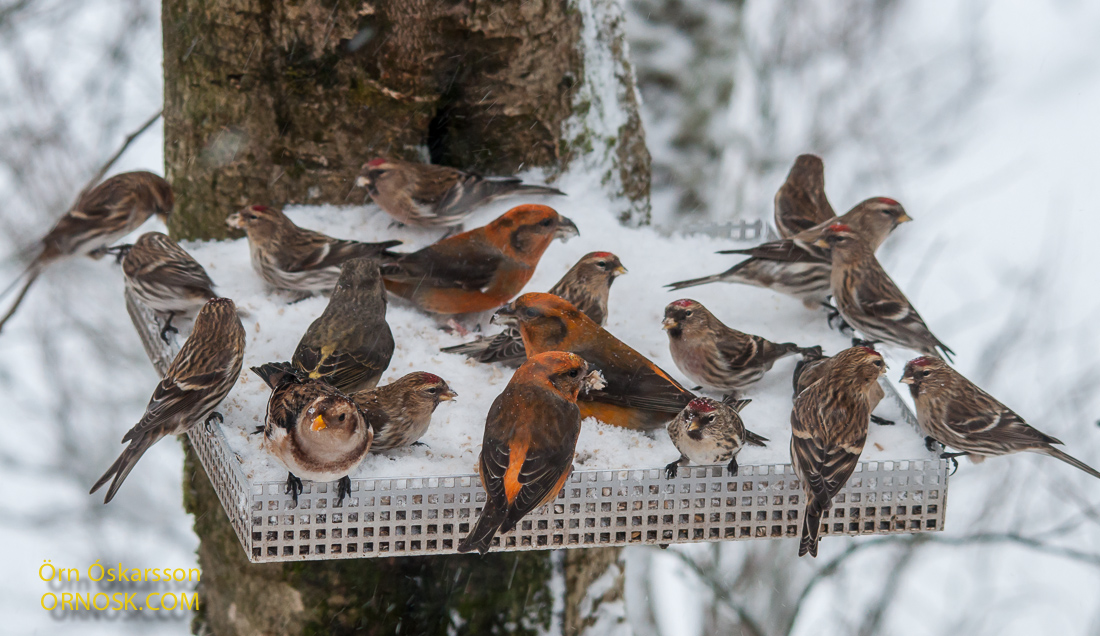
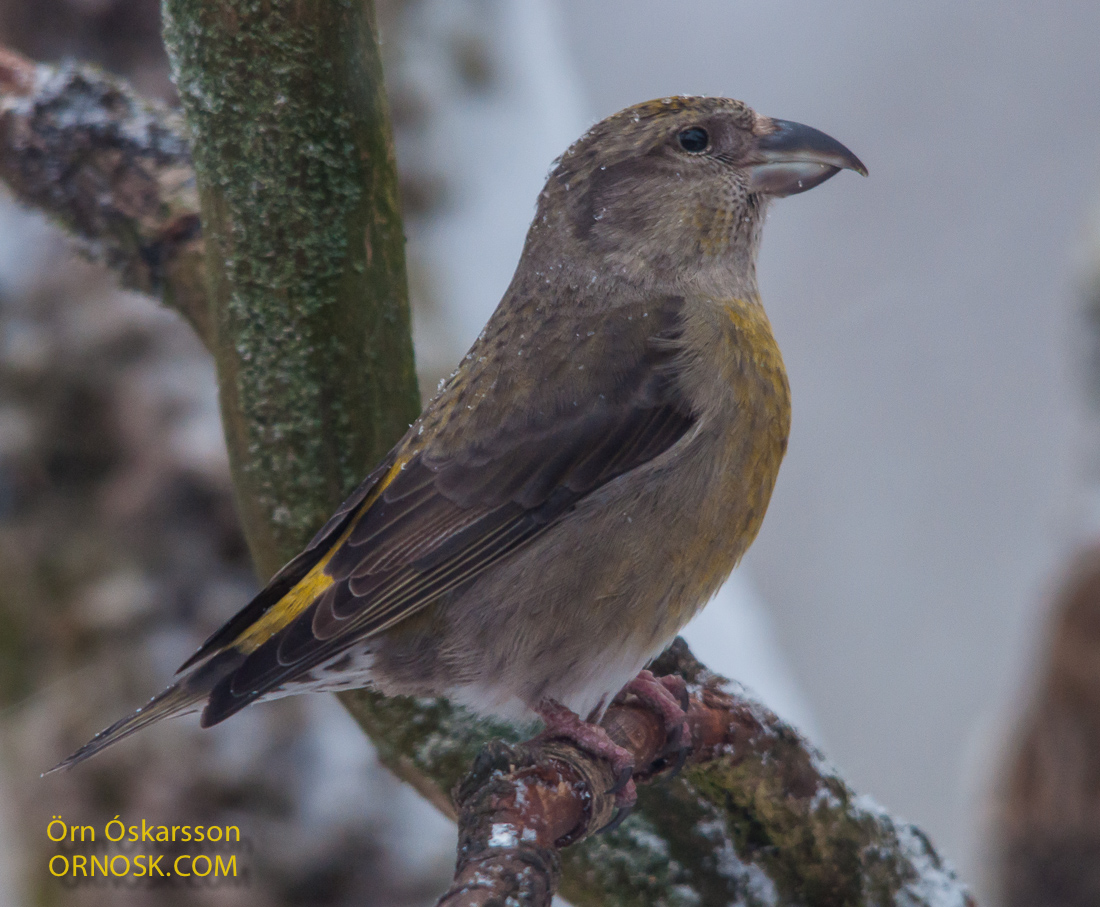
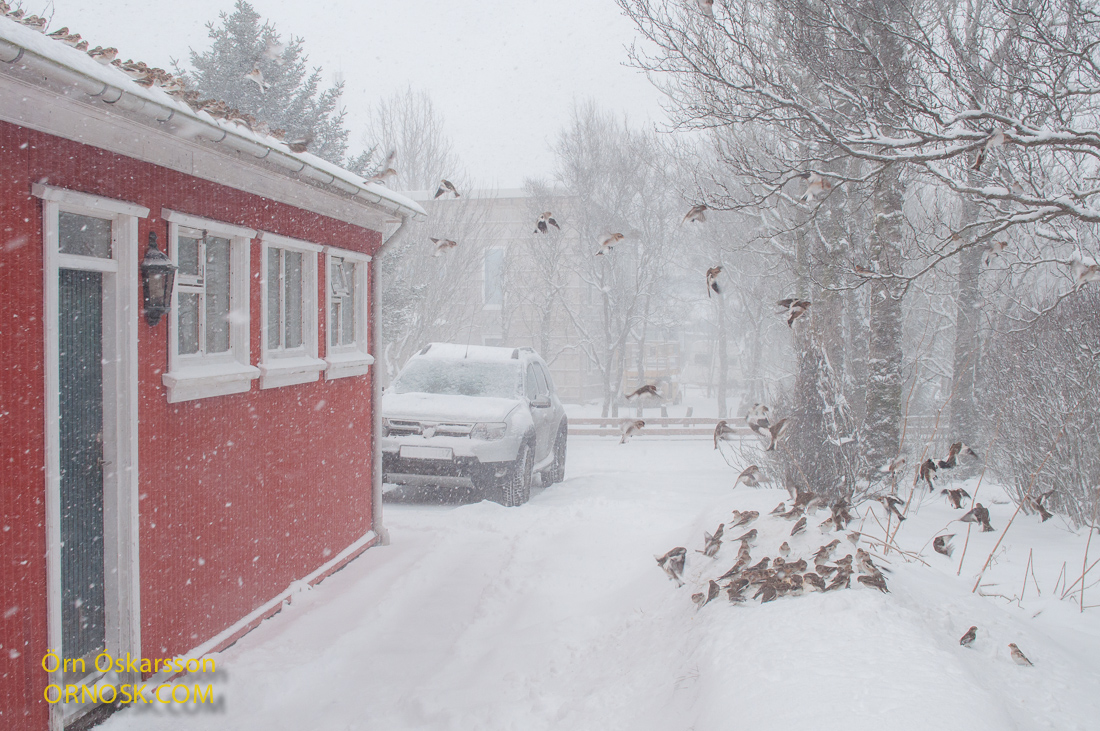
It continued to snow today and more and more birds visit the garden in search of food. Today we had 8 Common Crossbills, or Red Crossbills as they are called in USA.
Crossbills, Redpolls and a Snow Bunting on the feederCommon Crossbill / Red Crossbill – Loxia curvirostra – femaleCommon Crossbill / Red Crossbill – Loxia curvirostra – male
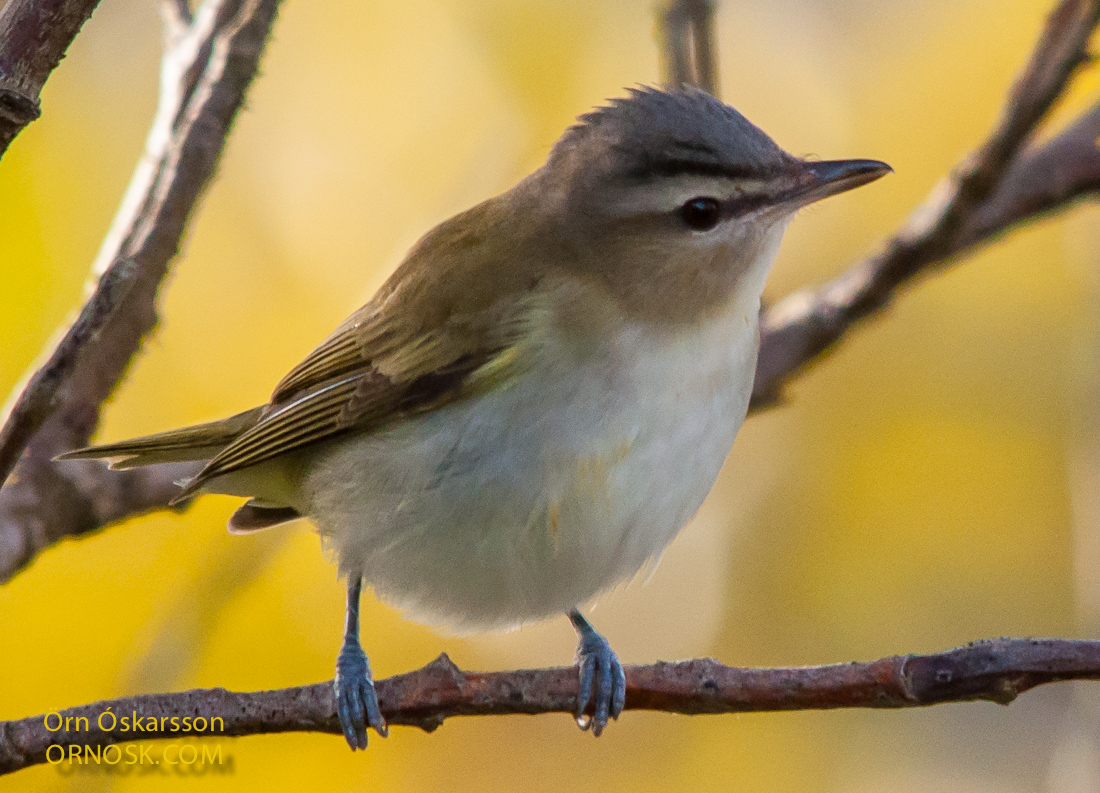
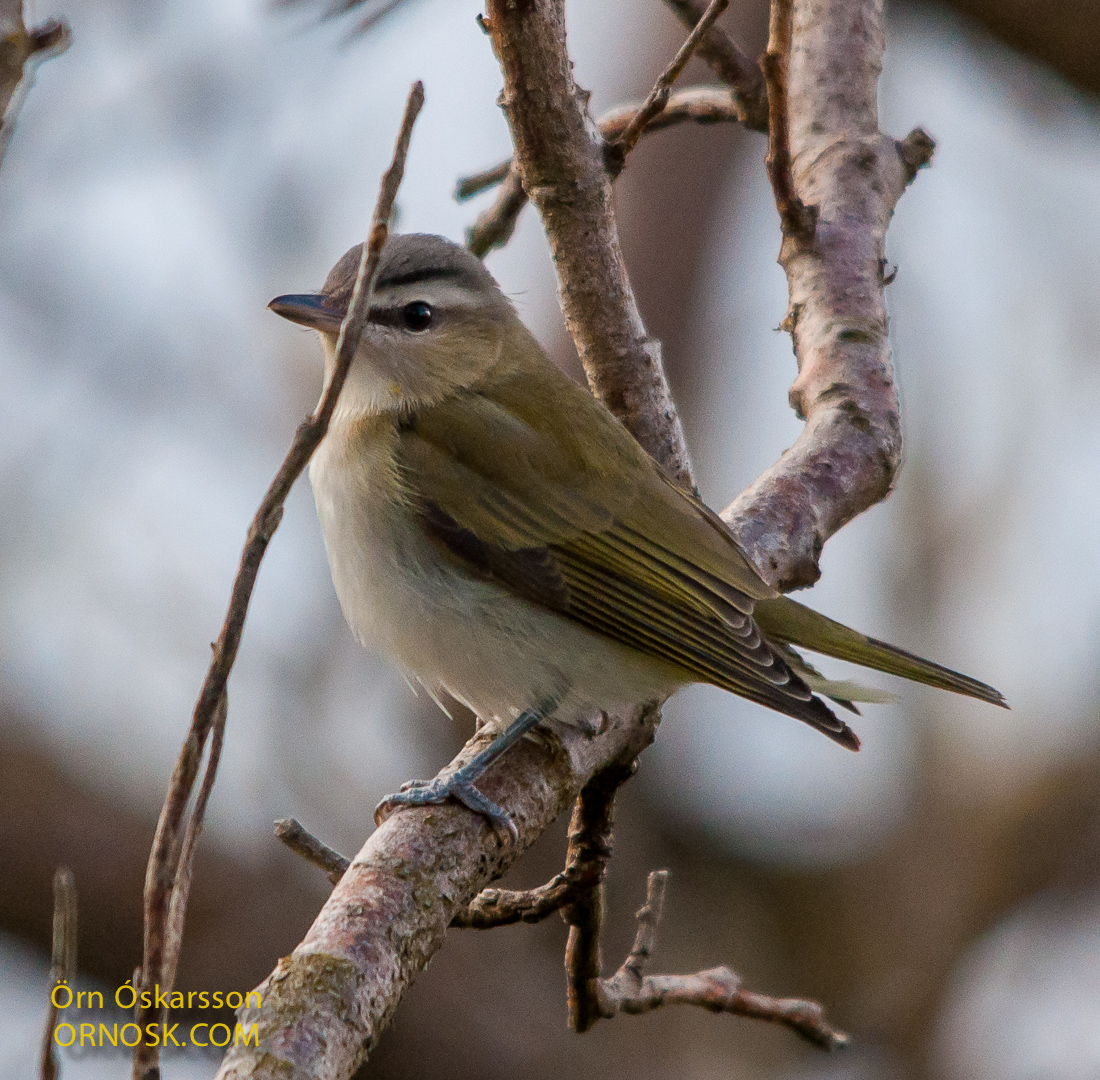
American vagrants are rare in Iceland but usually there is a bird or two that accidentally gets blown over here every year. The Red-eyed Vireo (Vireo olivaceus) is one of the most common small American vagrants and has been recorded here 21 times. This little vagrant has been seen twice in Selfoss and once here in our garden.
Græningi – Red-eyed Vireo – Vireo olivaceus
These photoes are taken in Stokkseyri, South Iceland, September 30, 2014.
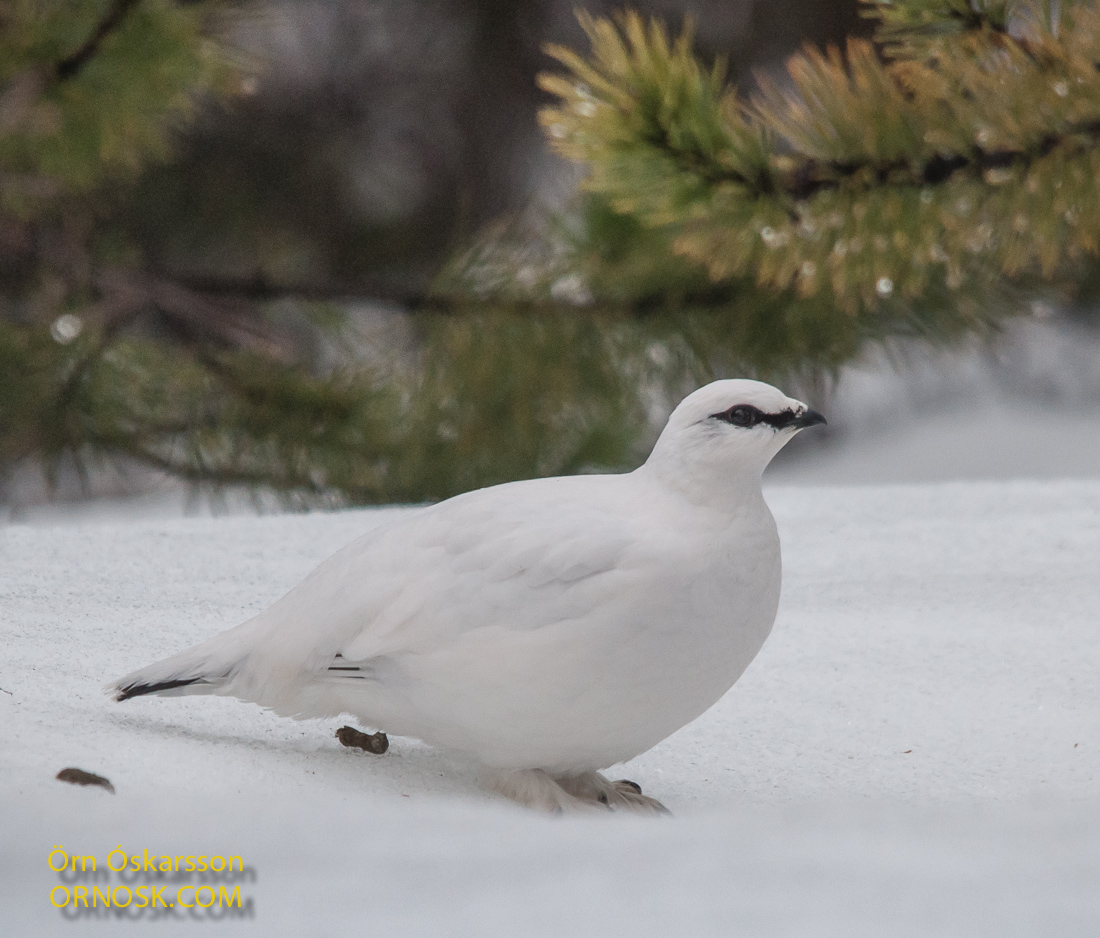
The Ptarmigan changes its colour to white in the winter. Nature is peculiar. The male stays whiter longer but the female gets its camouflage colours earlier to match the colours of nature. The female needs to go unnoticed while keeping the eggs warm in the nest. The male is white and thus catches the attention of predators, keeping them away from the nest.
This photo is taken in the Icelandic Westfjords in the beginning June, 2012.
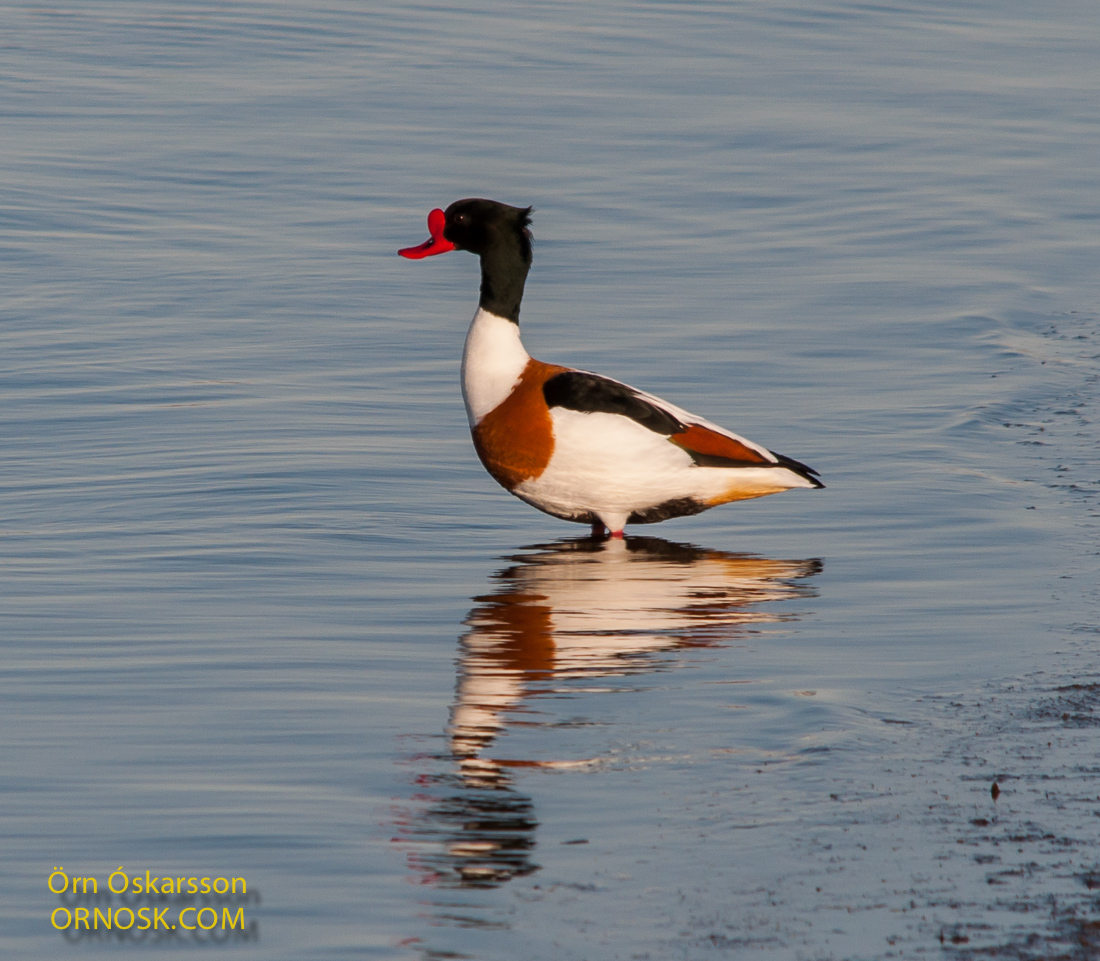
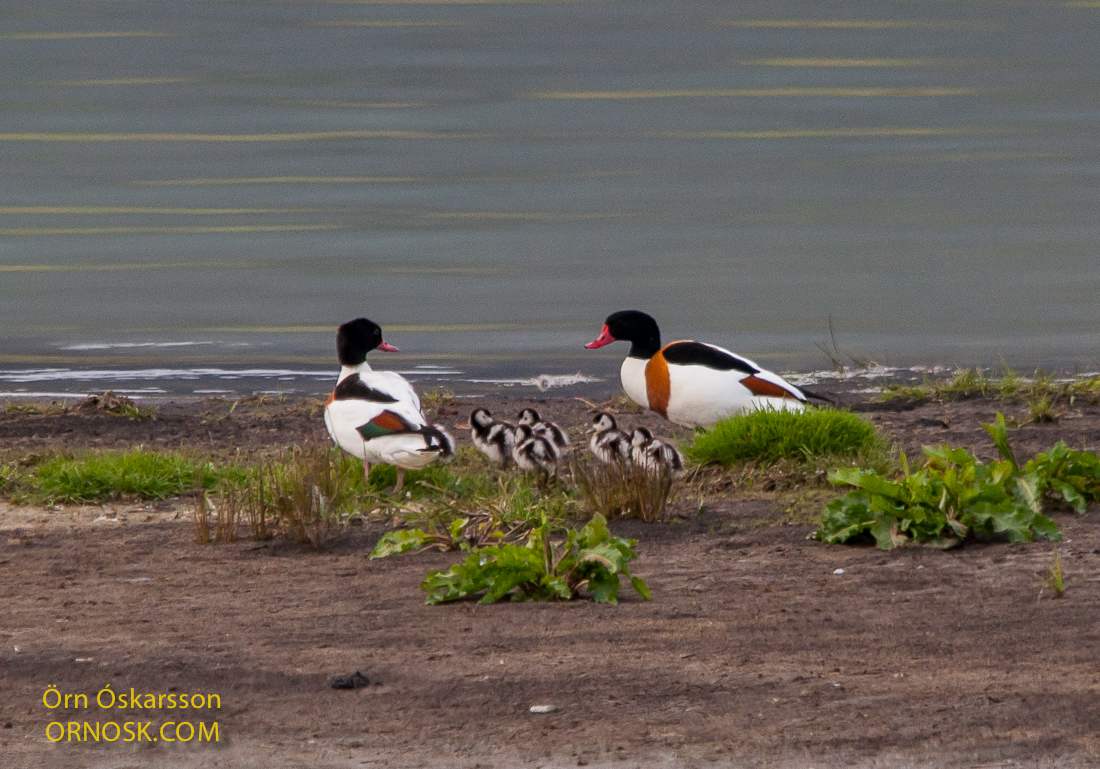
The Shelduck (Tadorna tadorna) is a new breeeding bird in Iceland. The first known breeding was recorded in 1990 in Eyjafjörður, North Iceland.
Brandönd – Shelduck – Tadorna tadorna
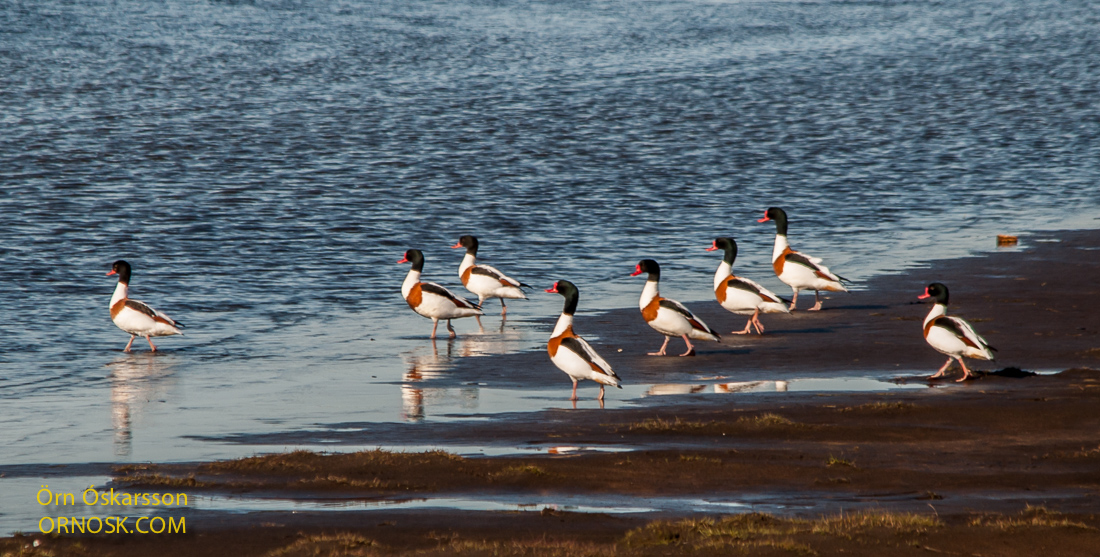
Shelducks were first seen by the river Ölfusá in Selfoss about 10 years ago. They have slowly been increasing in numbers and last spring 16 Shelducks were spotted by the river near Selfoss. They are seen on the river every year with their chicks but nests have never been found.
The days are getting longer and although summer is still a long way off we have begun to think of spring. It’s time to start preparing by sowing summer plants and vegetables. The Icelandic summer is so short that to secure a harvest in the autumn preparations have to begin early. That will be this weekend’s project 🙂
During the winter time the Ptarmigan takes on the white colour of the snow, Being white offers protection from birds of prey and foxes. It is difficult to spot the Ptarmigan nestling in the dense forest.
Rjúpa – Ptarmigan – Lagopus mutus
This male Ptarmigan is awaiting spring in a pine grove in Grímsnes, South Iceland. Photo taken last weekend.
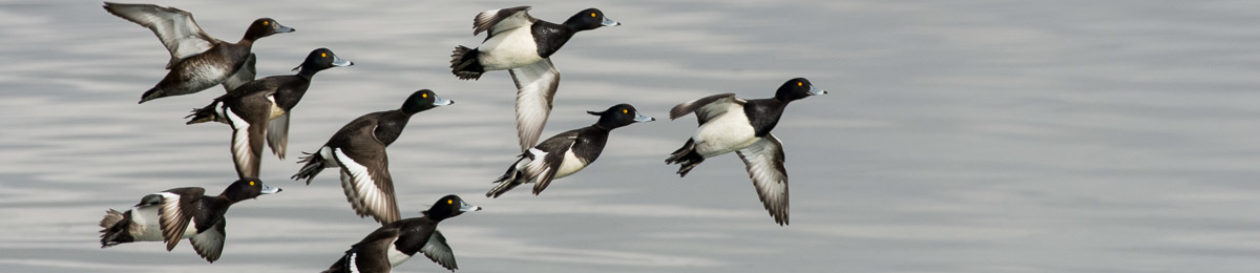
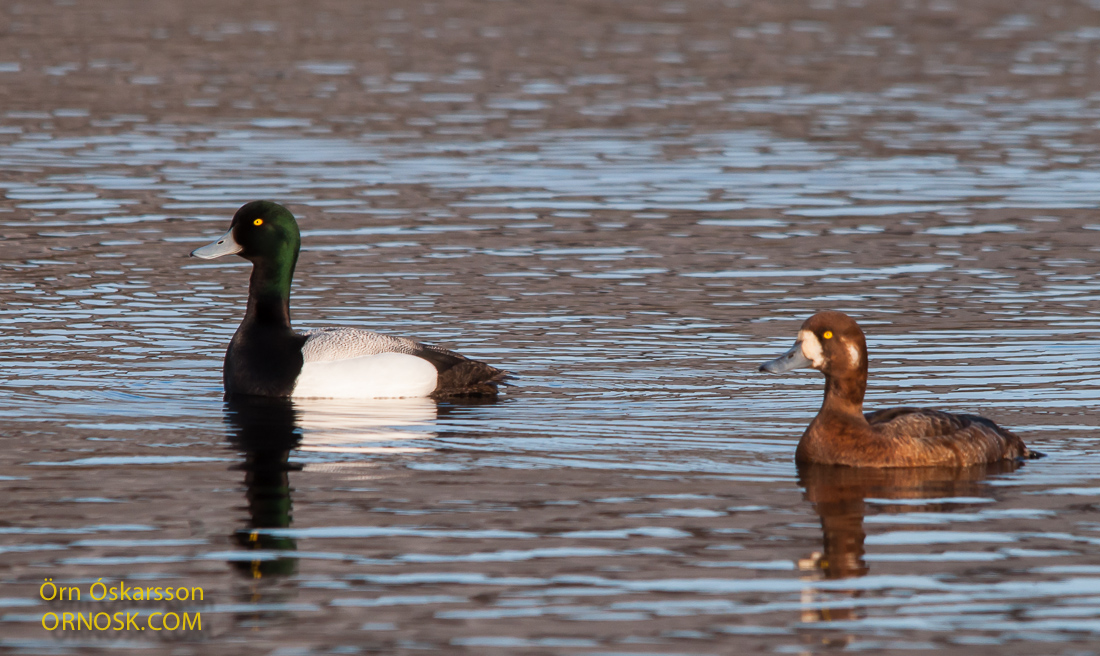
The Scaup (Aythya marila) is a common duck in ponds and lakes both in the Icelandic lowlands and highlands, especially in the North and the East. The breeding populations counts around 2000-5000 pairs. Most of them leave the country in the autumn and overwinter by the shores of Irland and Britain.
Scaup, female
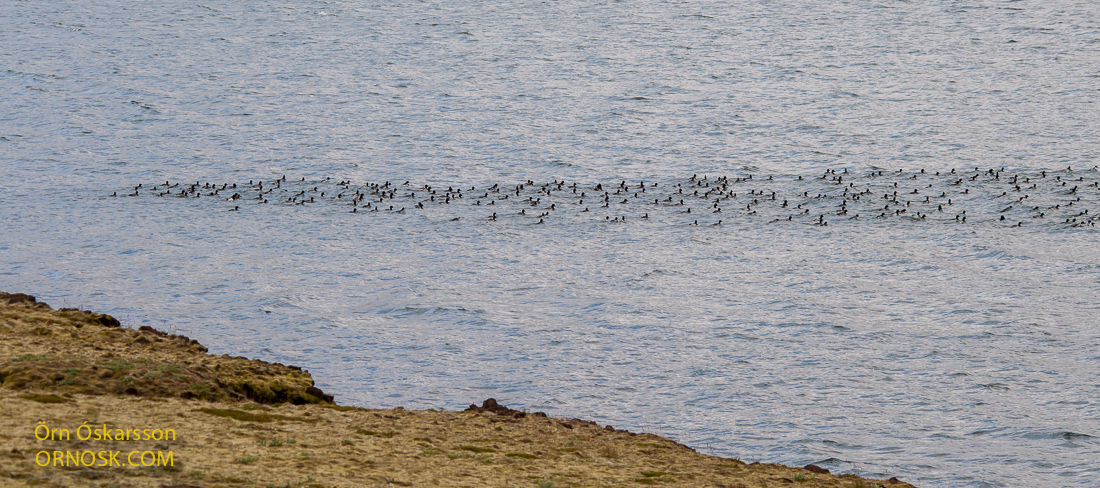
The Scaup is a common breeding bird in Veiðivötn in the southern interior of Iceland. There the males gather in big groups in July and shed, or moult,their feathers . You can see up to 700 birds in a group. Scaups are synchronous moulters, they change their flight feathers all at once in a period of two to four weeks. During this period they cannot fly.
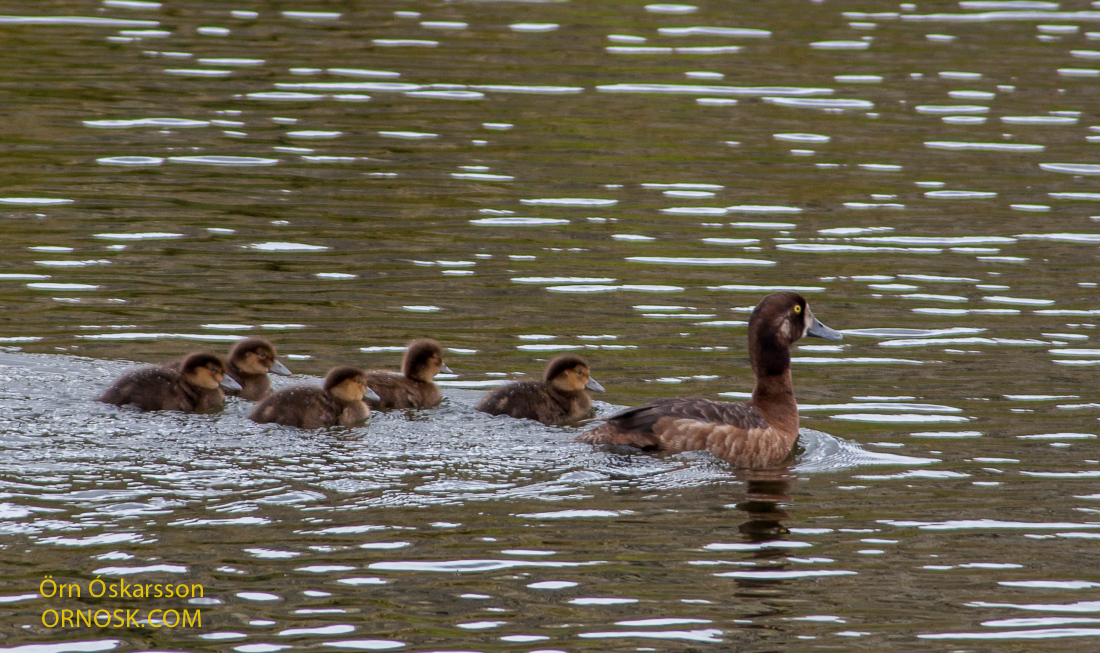
Scaup female and young ducklings
The photoes are taken in Veiðivötn, in the South Interior.
A part of a group of scaups during the process of moulting